How should scallion cultivation be managed to achieve high yields?
How should scallion cultivation be managed to achieve high yields? Please provide an introduction to the methods. After scallions are planted between Grain in Ear (early June) and Minor Heat (early July), to obtain high-yield, high-quality marketable scallions, in addition to selecting good soil, crop rotation, and varieties, field management is especially important. Here are a few points: 1. Watering During the seedling recovery stage of scallions...
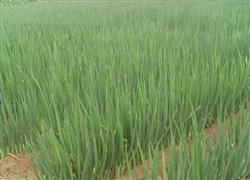
How should scallion cultivation be managed to achieve high yields? Please provide an introduction to the methods
After scallions are planted between Grain in Ear (early June) and Minor Heat (early July), to obtain high-yield, high-quality marketable scallions, in addition to selecting good soil, crop rotation, and varieties, field management is especially important. Here are a few points:
1. Watering: The seedling recovery stage of scallions falls in the hot, rainy season, so attention must be paid to drainage to prevent root rot. Generally, no watering is done during this period, allowing the root system to renew quickly and the plants to turn green again. In early to mid-August, when the weather turns cooler, the white stalk is at the early growth stage. The temperature is still relatively high, plant growth is still slow, and water demand is not high, so water sparingly and avoid watering at noon. Generally, water 2-3 times during this period. After End of Heat, scallions enter the vigorous growth stage. The weight of leaves and white stalks increases rapidly, and water demand increases greatly. Combined with topdressing and hilling, water once every 4-5 days, and the amount should be generous, applied evenly and thoroughly. Generally, water 8-10 times during this period. After Frost's Descent, the temperature drops, scallions have basically matured, and they enter the filling stage of the (false stem) white stalk. Plant growth slows, water demand decreases, but the soil still needs to be kept moist so the false stem can fill out, the leaf mesophyll becomes thick, the gel content becomes full, and the white stalk becomes fresh, tender, and plump. Generally, water 2 times during this period. Stop watering 7-10 days before harvest to facilitate harvesting, storage, and transport.
2. Topdressing: Timely topdressing can meet the needs of scallion growth and development and is an important measure for obtaining high-yield, high-quality scallions.
1. Early stage of white stalk growth: Just after the hot summer, when the weather turns cooler, scallion plants gradually grow faster. Apply a leaf-promoting fertilizer once, applying 1000-1500 kg of decomposed farmyard manure, 100 kg of plant ash, and 15-20 kg of superphosphate per mu on the ridges of the furrows, mix evenly with intertillage, hoe into the furrow, and then water once. This can promote scallion growth and supply the needs of leaf increase and growth.
2. Vigorous growth stage of the white stalk: This is the fastest period of scallion yield formation. The plants grow rapidly and the white stalk thickens, requiring large amounts of water and nutrients. Topdressing should be mainly nitrogen fertilizer, with appropriate additional applications of superphosphate and plant ash, applied continuously 2-3 times. Each time, apply 10-15 kg of urea and 15 kg of superphosphate per mu. Add 10-15 kg of potassium sulfate to the first fertilizer application to improve white stalk quality.
3. Hilling: Hilling is an important measure for softening leaf sheaths, preventing lodging, and increasing white stalk yield and quality. Carrying out hilling while strengthening fertilizer and water supply can soften the false stem, extend the length of the white stalk, and improve white stalk quality. After scallions enter the vigorous growth stage, as the leaf sheaths lengthen, carry out timely inter-row cultivation and hill in stages, generally hilling 4 times. The height of each hilling depends on the growth height of the false stem, about 3-4 cm, hilling soil up to the boundary between the leaf sheath and leaf blade, that is, bury only the leaf sheath, not the leaf blade, to avoid causing leaf rot. Hilling should be done when soil moisture is suitable, generally in the afternoon, to avoid damaging leaves when morning dew is heavy and humidity is high.
Click to get more scallion cultivation techniques
Click to get more vegetable cultivation techniques