-

Podocarpus bonsai pruning, shaping, and leaf blight prevention and control methods
Podocarpus bonsai, with its tender green new leaves interspersed among the dense green foliage, has a quaint and elegant posture and is quite beautiful, making it a top-grade material for bonsai creation. So do you know how to prune and shape a Podocarpus bonsai? How do you prevent and control leaf blight? How to prune and shape a Podocarpus bonsai
-
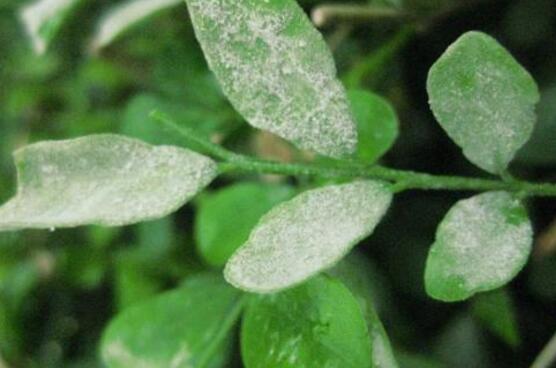
What to Do When Orange Jessamine Gets Leaf Blight? Detailed Control Methods
[Symptoms] The disease occurs on the leaves, mostly starting from the leaf tips and margins, and in severe cases can also spread to the shoot tips and young stems. The lesions first appear as faded green yellow spots, spread rapidly, and soon infect the whole leaf, turning it yellowish-brown. In the later stage, the leaves dry up and are covered with black granular bodies, which are the pycnidia of the pathogen.
-
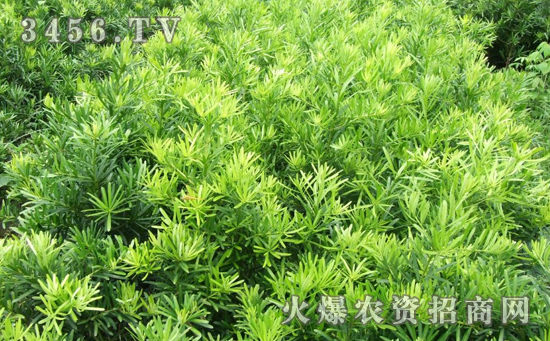
What are the control methods for Podocarpus leaf blight?
[Distribution]South China, Southwest China, Central China, East China, greenhouses in the north. [Symptoms]Occurs on Podocarpus leaves. In the early stage, the lesions mostly appear at the leaf tip, as yellow withered spots with a clear boundary between diseased and healthy tissue; in the later stage, the lesions turn grayish-yellow, dry up, and bear black granular bodies. [Occurrence pattern]The pathogen is a weak parasite
-
How to prevent and treat leaf blight in areca palms? Understand the disease pattern to prevent and treat it early
Understand the pattern and treat promptly: areca palm leaf blight
-
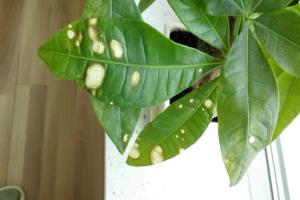
Brown spots on money tree leaves: how to distinguish leaf blight from leaf spot disease
Brown spots on money tree leaves: be careful to distinguish leaf blight from leaf spot disease
-
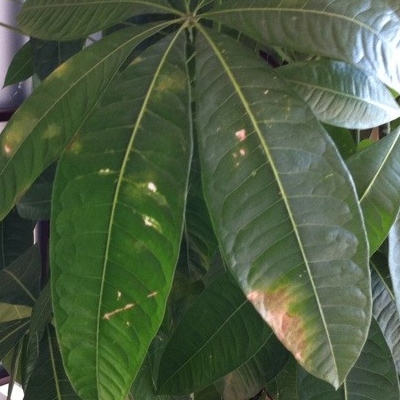
What to Do When a Money Tree's Leaves Get Spots and Leaf Blight
Money tree (Pachira aquatica) is something many people absolutely love. Isn't the name super auspicious? Let's take a look at what to do when a money tree's leaves get spots. What to do about money tree leaf blight: What to do when a money tree's leaves get spots: Leaf spot disease is very easy to identify. At the beginning, dark brown or brown spots appear on the leaves.
-

How to prevent and treat tulip leaf blight? A few practical methods to teach you
Symptoms: Infected leaf buds develop poorly, appearing deformed and curled; once young buds are affected, the leaves that grow from them become curled. If the environment is humid, a large number of gray mold-like conidia are produced on the diseased tissue, spreading to nearby healthy plants and causing leaf infection, so bulb growth is greatly affected. After flowers are affected, white or light yellowish-brown lesions first appear, then rapidly expand and cause the flowers to wither and drop, or turn brown and dry up. Ring-like bands also appear on the flower stalk, sometimes with a layer of conidia on them. At every stage of the disease
-
Symptoms of Schisandra Leaf Blight and Its Prevention and Control Methods
Schisandra leaf blight is a common disease, widely distributed in Liaoning, Jilin, Heilongjiang and other provinces, and can cause serious consequences such as early defoliation, fruit drop, death of new shoots, weakened tree vigor, decreased fruit quality, and reduced yield. 1. Disease symptoms Leaf blight mainly damages leaves. According to the different initial sites on the leaves and the size of the lesions, it can be divided into two types. ① The disease first starts from the leaf tip or edge, then spreads to the leaf margins on both sides, and then extends toward the center, gradually forming large brown patches; as the disease further
-
How to prevent and control leaf blight in Schisandra chinensis? Practical tips shared
Leaf blight in Schisandra chinensis mostly occurs from late May to mid-July, with the lesions appearing scorched yellow. It initially starts at the leaf tip and gradually expands and spreads; in severe cases, the entire leaf turns yellow and dies. The disease is severe under high temperature and high humidity with poor ventilation. Control methods: spray with 400-500 times zineb and 1500 times thiophanate-methyl; it is best to spray once a week before the disease occurs, for 2-3 consecutive sprays, or use Bordeaux mixture sprayed once a day.
-
Occurrence Patterns and Control Methods of Lily Leaf Blight
Lilies originate from the eastern and central regions of China. They are relatively cold-tolerant, prefer strong light, and do not tolerate shade. Insufficient light will affect growth and flowering. A well-drained sandy loam rich in organic matter is suitable. Their disease resistance is poor, and they are susceptible to disease under high temperature and high humidity conditions. Lily plants are upright and elegant, with large, brightly colored flowers and many varieties. They are suitable for planting in patches or clumps at the edges of lawns or for forming flower borders, creating a quiet and harmonious effect. Lilies are also treasures for potted flowers and cut flowers. Lily leaf blight, also known as lily gray mold, affects the plant's photosynthesis, hinders growth, and reduces ornamental value. When the disease occurs severely,
条件筛选