-
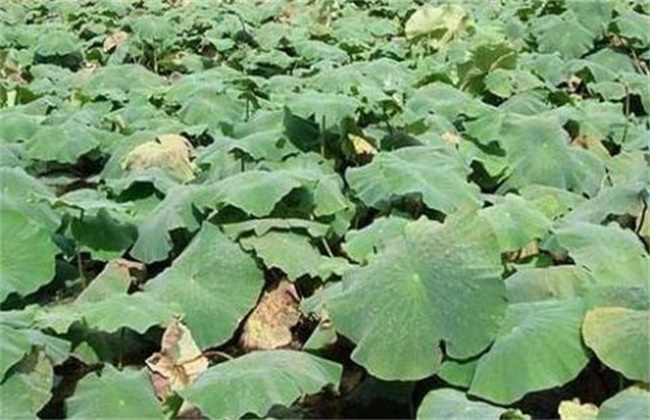
Detailed Explanation of the Causes of Lotus Root Leaf Blight and Control Measures
Causes of Lotus Root Leaf Blight and Control Measures
-

How to treat garlic leaf blight? Master integrated control techniques in one article
Shandong is a major garlic-producing region, and garlic suffers fewer diseases than other vegetables. However, in recent years, a relatively rare new disease, garlic leaf blight, has appeared in garlic-growing areas, and it strikes fiercely and causes severe damage. Once this disease occurs, it can cause major yield reductions. I. Symptom identification This disease mainly affects leaves and leaf sheaths. Leaf infection falls into two types: first, the tip-blight type, which mainly occurs in the initial infection stage, with the leaf tip turning dark brown and forming many dark purplish-brown oblique parallel stripes on it; in severe cases the lesions extend to 1/3 to 4
-
How to prevent and control garlic leaf blight? These methods you need to master
Control measures for garlic leaf blight: 1) Promptly remove damaged leaves and flower stalks; 2) Strengthen field management, plant at a reasonable density, drain promptly after rain, and improve the host's disease resistance; 3) Starting at the early stage of the disease, spray 75% chlorothalonil wettable powder at 600 times dilution, or 50% iprodione wettable powder at 1500 times dilution, 64% oxadixyl-mancozeb wettable powder at 500 times dilution, 50% copper sulfate-ammonium salt wettable powder at 500 times dilution, 60% fosetyl-aluminum wettable powder at 500 times dilution, 14% copper ammonia complex aqueous solution at 300 times dilution, 1:1
-
Symptom Identification and Control Methods for Ginger Leaf Blight
[Pathogen scientific name] Septoria zingiberis [Host crop] Ginger. [Disease diagnosis] It affects the leaves. When the leaves become diseased, small water-soaked spots appear at first, and after gradually expanding, the lesions become nearly fusiform, light brown, with a grayish-white center; later the lesions extend upward and downward into long streaks. Many small black dots are scattered on the lesions. In severe cases, the lesions may split longitudinally, and the leaves die. The pathogenic fungus is Septoria zingiberis. The pycnidia are superficial or borne on both sides of the leaf, spherical or subspherical, dark brown, and contain
-
Symptom Identification and Control Methods of Garlic Leaf Blight
Leaf blight is a major disease of green garlic and, in severe cases, causes the entire leaf to die off, affecting yield. I. Symptom identification This disease mainly damages leaves and flower stalks. When leaves are infected, it usually starts from the leaf tip and gradually develops toward the leaf base, spreading from the bottom upward. At first, pale white small round spots appear, which later expand into oval or irregular grayish-white or grayish-brown lesions, and black mold-like growth develops on the diseased parts; in severe cases, the entire leaf dies off. When flower stalks are infected, they tend to break at the diseased part, and finally many small black grains are scattered on the lesions.
-
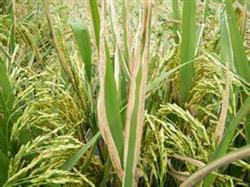
Detailed Explanation of the Causes and Control Techniques of Rice Bacterial Leaf Blight
The pathogen of rice bacterial leaf blight is Xanthomonas oryzae, a bacterium belonging to the genus Xanthomonas. Bacterial leaf blight is one of the major diseases of rice. Once it occurs, it generally reduces yield by 10%, and in severe cases by 50-60%. Therefore, strengthening the control of bacterial leaf blight is very important. 1. Causes of the disease 1.1 Relationship between disease occurrence and climatic conditions...
-
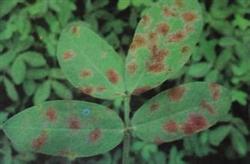
How to identify peanut leaf blight? A simple method anyone can understand at a glance
Peanut web blotch, also known as cloud-pattern blotch or net-blotch, was first discovered in the United States in the mid-1940s. In the late 1970s, China's Liaoning Province reported the occurrence and damage of this disease for the first time. In recent years, the disease has been fairly common in production areas in northern China, with relatively severe damage, generally reducing yield by about 20%, and in severe cases reducing yield by 4...
-
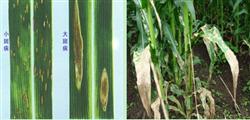
Control Techniques for Northern Corn Leaf Blight and Southern Corn Leaf Blight
Northern corn leaf blight and southern corn leaf blight mainly damage the leaves, and sometimes also infect the leaf sheaths and husks; southern corn leaf blight, in addition to damaging the above parts, can also damage the ear. In many regions these two diseases are collectively called "corn leaf blight." 1. Symptom identification: The typical symptom of northern corn leaf blight is that small lesions rapidly expand into large elongated spindle-shaped spots...
-
Symptoms and Control Methods of Sorghum Banded Leaf and Sheath Blight
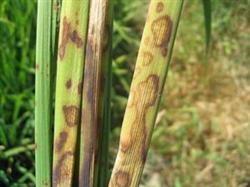
Symptoms: This disease occurs commonly in northern China and Taiwan, China, and is more severe in hybrid sorghum; it also occurs in central and southwestern China. It mainly affects the leaf sheath, but can also affect the leaves. After infection, water-soaked lesions first appear on the stem near the ground, followed by lesions on the leaf sheath with alternating purplish-red and grayish-white bands. In the late growth stage or under rainy and humid weather...
-
What is garland chrysanthemum leaf blight? A complete guide to this disease
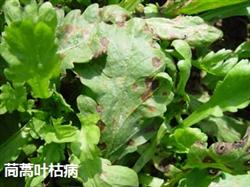
What is garland chrysanthemum leaf blight? An introduction to its causes and control methods. Garland chrysanthemum leaf blight infects only the leaves; the lesions are round or irregular, light gray in the center with brown edges. When humidity is high, a black mist-like growth appears on both the upper and lower surfaces. In the later stages, the lesions merge into patches, causing the leaves to wither and die. The main cause of garland chrysanthemum leaf blight is...
条件筛选