-

How to prevent cotton red leaf stem blight? These integrated measures must be mastered
Cotton red leaf stem blight is a physiological disease. In recent years, it has occurred in large amounts in the cotton region of the Yangtze River Basin in our area. It begins at the early flowering stage, and is more severe and widespread from the full flowering stage to the boll-setting stage. In our area specifically, it occurs sporadically in July and August. It reaches its peak from mid-to-late September to October. Lightly affected plants are yellow and thin, with few and small bolls, short fiber, and poor boll opening; severely affected plants die prematurely, and the bolls cannot mature, greatly affecting yield. 1. Disease symptoms. At the early stage of the disease, red and purple spots appear on the leaves, gradually spreading until the whole leaf turns red
-
How to prevent and control cotton red leaf stem blight? A full analysis of control measures
I. Symptom identification After the plant is affected, the leaves turn dark green and become thick and brittle, then small red dots are scattered on the leaves, and finally the whole leaf turns red while the veins remain green, which is red leaf stem blight. When the disease is severe, the base of the petiole becomes soft, loses water and shrinks, causing the leaves to wither and fall off, and the top of the stem becomes scorched and dry. At the same time, it easily triggers repeated infection by target spot and brown spot, causing the diseased plant to scorch and die. Some plants can still grow adventitious buds after the diseased leaves fall off. Plants with severe and early onset are short, with poor root development, and both the main root and lateral roots are
-
Symptoms and Control Methods of Leaf Blight in Hybrid Magnolia
The main symptoms occur on the leaves, and in severe cases can spread to the petioles and flower buds. The lesions mostly occur at the leaf margins. In the early stage, they are chlorotic yellow spots, water-soaked in appearance. Numerous lesions merge into patches, expanding outward in a fan shape, with dark brown edges and grayish-yellow centers, which can cause early defoliation. In humid environments, black-gray granular bodies appear on the fallen leaves. Causes of the disease: This disease is a fungal disease; the pathogen survives in leaf buds and on diseased plant residues, spreads via air currents, and can directly infect and damage through the stomata of leaves that are weak in growth or physiologically injured. Injured plants and environmental conditions with high wind speed
-
Symptom Identification and Control Methods of Garlic Leaf Blight
Leaf blight is a major disease of green garlic and, in severe cases, causes the entire leaf to die off, affecting yield. I. Symptom identification This disease mainly damages leaves and flower stalks. When leaves are infected, it usually starts from the leaf tip and gradually develops toward the leaf base, spreading from the bottom upward. At first, pale white small round spots appear, which later expand into oval or irregular grayish-white or grayish-brown lesions, and black mold-like growth develops on the diseased parts; in severe cases, the entire leaf dies off. When flower stalks are infected, they tend to break at the diseased part, and finally many small black grains are scattered on the lesions.
-
Symptoms and Control Methods of Cotton Leaf Blight
Symptoms Also known as cotton Cercospora leaf spot. It mainly damages leaves. Infection usually occurs in the late growth stage of cotton. At first, many dark red small spots appear on the leaves, then expand into nearly round lesions with purplish red, slightly raised edges and brown centers. Under moist conditions, a white mold layer forms, which is the pathogen's conidiophores and conidia. Affected leaves break very easily. Pathogen Mycosphaerella gossypina (Cooke) Earle, called cotton ball fungus, belongs to the Ascomycota fungi. The ascocarp is spherical and black, and the ascospores
-
Cotton red leaf blight is prone to outbreak after heavy rain, growers need to be vigilant
Recently, cotton regions have generally experienced heavy to torrential rain, and for cotton that has endured a long drought, red leaf blight is extremely prone to outbreak. Cotton red leaf blight is a physiological disease. It starts from the main stem growing point or the top of the fruiting branch, and generally develops from top to bottom and from outside to inside. The main stem withers and dies, but the dissected vascular bundles show no discoloration. The root system is thick and short, with few fibrous roots and poor development. The causes of cotton red leaf blight outbreaks are: first, extensive farming in cotton fields, resulting in poor cotton root development; second, cotton fields with poor drainage; third, excessive application of nitrogen fertilizer, vigorous cotton growth,
-
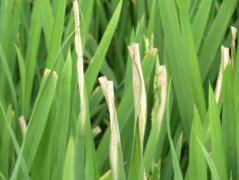
Success in Controlling Rice Bacterial Leaf Blight: Xingda Releases 2 Disease-Resistant Rice Varieties
Rice bacterial leaf blight, be gone! Xingda releases 2 disease-resistant rice varieties. Do you know which two rice varieties they are? Let's take a look. When farmers grow rice, what they fear most is encountering bacterial leaf blight, rice blast and sheath blight. The appearance of these diseases means reduced yields and affected rice qual
-

What to Do When Sunflower Leaves Wilt? Leaf Blight, Nutrient Deficiency, and Planting Methods
If asked to name the easiest plants to grow, many people would think of sunflowers. Yet some people find that the sunflowers they are growing have wilted leaves, and some are at a loss about what to do. In fact, with reasonable measures they can be saved.
-

What are the control methods for leaf blight in areca palms?
Areca palm leaf blight is a common disease caused by fungal infection, and it has a major impact on the growth of areca palms. In mild cases it causes the leaves to dry up, and in severe cases it can cause the entire plant to die. It is severe in summer and during rainy autumn weather. In the north it mostly occurs in greenhouses with high humidity and high temperatures
-

What to Do When Amaryllis Gets Leaf Blight? A Detailed Guide to Prevention and Treatment
When temperatures are high, humidity is high, and ventilation is poor, amaryllis leaves are prone to leaf blight infection. In the early stages of the disease, brown spots appear at the leaf tips and leaf margins, then expand into red lesions; in severe cases, small black granules appear on the lesions, causing the leaves to turn yellow and wither prematurely. The prevention and treatment methods are as follows: 1. Strengthen care
条件筛选