How to prevent and treat leaf blight in areca palms? Understand the disease pattern to prevent and treat it early
The areca palm (Dypsis lutescens) is deeply popular with families for its elegant form, making it a common ornamental plant in the home. However, areca palms can also develop diseases when improperly cared for, and the relatively common leaf blight is one of them, greatly reducing the ornamental value of the areca palm.
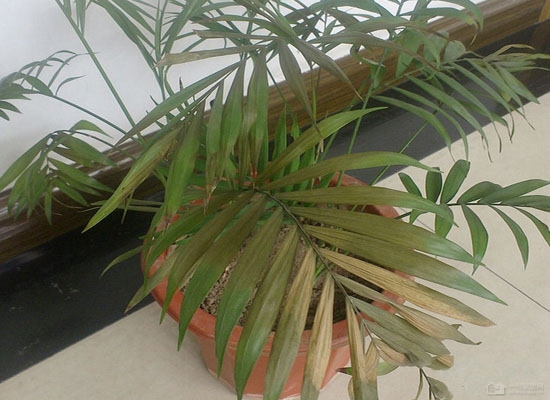
Areca palm leaf blight is a common disease caused by fungal infection, and it has a great impact on the growth of areca palms; in mild cases it dries out the leaves, and in severe cases it causes the entire plant to die.
This pathogen first infects the leaf tips and leaf margins; in the early stage of the disease the infected areas appear as brown spots or strip-like patches, in the middle stage the spots or patches gradually expand and connect with each other, and in the late stage the leaves appear grayish-white and dried out.
These pathogenic fungi overwinter on diseased plants or in the soil, and spread via conidia through wind, rain, and spray watering; the pathogen invades through wounds on the plant. High temperature, high humidity, and poorly ventilated, crowded environments make this disease more likely.
Now that we understand the causes and patterns of areca palm leaf blight, we should start with "prevention."
First, strengthen disease inspections and do not introduce diseased plants. This is the most fundamental means of control. If diseased plants are introduced, then the methods used afterward can only be "treatment," not prevention.
Second, strengthen ventilation. Since high temperature, high humidity, and poor ventilation are the conditions that cause the disease, when growing areca palms you should pay attention to avoiding the above situations, strengthen ventilation, water reasonably, and dissipate heat in time.
If leaf blight inevitably occurs, then it must be treated promptly:
1. During the disease period, avoid rain exposure and spray watering;
2. Promptly prune away the affected branches and leaves to stop further infection; after pruning, apply Dacomine ointment to the wounds for treatment;
3. If disease occurs, spray with 70% thiophanate-methyl 800 solution or 75% chlorothalonil 1000-fold solution, applying once every 7 to 10 days for 3 to 4 consecutive applications, which can effectively control the condition.
Scientific cultivation of areca palms can be said to be the most effective way to prevent areca palm leaf blight. And once disease appears, prompt and scientific treatment is very necessary.