-

Key Points of Winter Pruning Techniques for London Plane
London plane, commonly known as plane tree, is a large deciduous tree that can reach 30 m in height. It is a famous shade tree and street tree species, cultivated throughout China, generally used as a street tree. Winter shaping and pruning have an important effect on the growth and tree form of London plane. Without timely and reasonable winter pruning, the tree form will become chaotic, with long main branches, few leaves or low bushy growth, greatly reducing its ornamental value and shading effect. Timely and reasonable pruning can, within a short period, give the tree a majestic, upright, tall and graceful form, with branches well-spaced and orderly, many well-proportioned lateral branches, dense dark green foliage, and enhanced natural immunity of the tree.
-
Key points for winter care of Phalaenopsis orchids: do these well for a safe overwintering
In the north, Phalaenopsis orchids need to be cultivated in a heated greenhouse in winter. To create environmental conditions suitable for the growth of Phalaenopsis, the following aspects should mainly be done well: 1. Temperature: the suitable temperature for Phalaenopsis growth is 25°C-30°C during the day; above 32°C is unfavorable for growth and flower bud differentiation; at night 18°C-20°C, and it must not be lower than 15°C. If a relatively high temperature is maintained continuously, it is favorable for flowering. 2. Humidity: Phalaenopsis likes relatively high air humidity, and during the growth period it should be kept at 70%-8
-
Ten Practical Recipes for Fattening Thin Rabbits in Autumn and Winter
After enduring the hot summer, most domestic rabbits are weak and thin, so as soon as autumn begins you must quickly increase feed to fatten them up, in order to improve the rabbits' physical strength and production performance. The following methods can be used to fatten thin rabbits in autumn and winter. 1. For rabbits with rough, messy fur and poor spirits, take an appropriate amount of tea leaves, plus 15 grams each of Boschniakia rossica and honeysuckle (Lonicera japonica), decoct the juice for oral administration, 2 times a day, 10-15 milliliters per rabbit each time, for 3-5 consecutive days, with marked effect. 2. Dissolve 5-7 grams of white sugar per rabbit per day in warm water and let the rabbit drink it freely. Generally, after 15-2
-
American plumcot is the newest fruit variety internationally.
On December 11, 2003, the most authoritative science and technology newspaper with the largest national circulation, Hunan Science and Technology News, published a special feature on American plumcot, and interviewed expert Li Fangdong of the Chinese Academy of Forestry's "Plumcot Research Group" (a doctorate holder and researcher in non-timber forest products). Reporter: How was the American plumcot introduced? Dr. Li Fangdong: In August 1994, the State Council approved the establishment of the national "948" project, aimed at introducing excellent new farm product varieties and new
-
How to prevent and control yellowing of wheat seedlings before winter? The key lies in treating according to the condition of the seedlings
After barley and wheat are sown and emerge, due to the influence of adverse conditions and cultivation management, varying degrees of yellowing often occur before winter. There are many reasons for wheat seedlings turning yellow before winter, such as drought, insect pests, nitrogen deficiency and potassium deficiency, etc. The remedy should be applied according to the different causes, so as to promote the yellowing wheat seedlings to transform into strong overwintering seedlings. Drought-induced yellowing: in a dry winter year, with long periods of clear weather and no rain, soil hardening, and insufficient water, root extension is difficult, which often leads to yellowing of wheat seedling leaves, slow growth, and delayed tillering stage. For wheat seedlings yellowing due to water shortage and drought, timely watering for drought relief should be carried out. For drought relief,
-
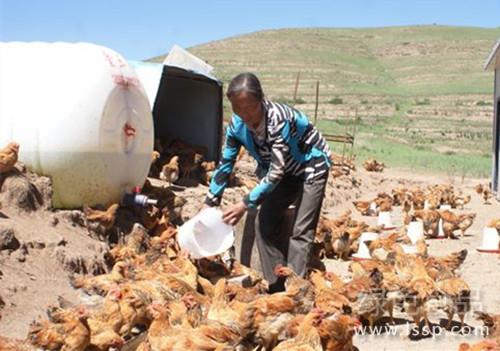
Laying hens have high water requirements during peak laying periods; they drink more in summer and no less in winter
They drink more in summer and no less in winter: water requirements of laying hens during peak laying
-
How to develop and utilize reishi mushroom? A comprehensive interpretation of its value and approaches
Reishi mushroom, also known as lingzhi cao, mujilingzhi, hongzhi, chizhi, wannianxun and lingzhi xiancao, etc. Reishi is a fungus used both as food and medicine. Folk legend says: eat lingzhi cao and you can live forever, which fully demonstrates that reishi indeed has high medicinal value. In the "Shennong Bencao Jing" (Divine Farmer's Materia Medica), reishi is listed as a top-grade herb. Traditional Chinese medicine holds that reishi has tonic, brain-strengthening, body-invigorating, anti-inflammatory, diuretic and stomach-benefiting effects; it can also treat neurasthenia, palpitations and dizziness, insomnia and forgetfulness, chronic hepatitis, pyelonephritis, bronchial asthma, bronchitis, stomach diseases, coronary
-
Which edible mushroom varieties are suitable for cultivation in autumn and winter?
In autumn and winter, as mid-to-late rice, corn, cotton and sugarcane are harvested, not only is space and labor freed up for developing edible mushrooms, but waste materials such as straw, cottonseed hulls, bagasse, corn cobs and mixed wood shavings are also good raw materials for cultivating edible mushrooms. Therefore, autumn and winter are among the best periods for developing edible mushrooms. The button mushroom, commonly known as the mushroom, can be cultivated in open fields using mid-to-late rice paddies. Wheat straw, corn stalks, rice straw and thatch leaves can be used as raw materials; from composting to fruiting takes about 50 days.
-
How to Eliminate Diseases in Autumn and Winter Edible Mushroom Cultivation? Detailed Explanation of Prevention and Control Measures
1. Prevention and Control Measures at the Spawn Stage. Excessively high humidity conditions are extremely unfavorable to spawn production. First, when the cotton plug of first-level spawn becomes damp, the moisture from the sterilization stage cannot evaporate, and it continues to absorb water through respiration; the dampened cotton plug is highly susceptible to contamination by foreign fungi. Second, the respiratory metabolism of second-level spawn is insufficient, seriously affecting mycelial vigor; the surface characteristic is that the entire spawn bottle appears misty, as if washed with water, and the mycelium is thin and weak. Third, the tied opening of third-level spawn is directly connected to the outside air, manifesting as fine mycelium, slow growth, and a wet, heavy feeling when the spawn bag is grasped by hand.
-
Pest Control Methods for Edible Mushrooms in Autumn and Winter
Recently there have been many inquiries about pest problems in autumn-cultivated edible mushrooms. Field research has found that pest damage in edible mushrooms was relatively severe this autumn. Some mushroom sheds had almost become "pest sheds," and the pest damage triggered massive contamination by weed molds and serious diseases, causing heavy losses for mushroom growers. Today, based on the research findings, we have invited experts to explain the "prevention" and "treatment" of pests in autumn and winter to fellow mushroom growers, in order to reduce their losses. Types of pest outbreaks and their identification: 1. Mushroom gnats and mushroom flies: Autumn cultivation generally uses fermented substrate, such as oyster mushrooms, shaggy mane mushrooms, and button mushrooms. The smaller mushroom gnats, oyster mushroom eye gnats, mushroom eye gnats, spinous eye gnats, heterogeneous eye gnats, dung flies, phorid flies, fruit flies, and other adults lay eggs near the substrate. The adults and eggs themselves do not cause direct harm; when the temperature is between 16°C and 30°C, the eggs hatch into larvae in about 4 days. The larvae feed on mycelium or fruiting bodies, causing damage for about 7 to 18 days before pupating. The pupal stage generally lasts about 2 to 8 days, after which they emerge as adults. After emergence, adults can mate again on the same day or the next day, and can lay eggs on the day of mating. Generally, each mushroom gnat lays more than 10 eggs, with the maximum reaching 270 eggs. Mushroom gnat adults are relatively large, with most species having a body length of more than 3.5 mm, and the largest can exceed 6 mm. Larvae generally have a body length of about 5 mm, with the largest exceeding 16 mm. Mushroom flies are smaller in size, with the largest phorid fly adults having a body length of only about 1.5 mm, and larvae between 2 mm and 3 mm. However, fruit fly adults and their larvae can reach about 5 mm in body length, similar to mushroom gnats.
条件筛选