-

Scraping bark from pear trees in winter is the key to growing good pears
The farming proverb says: "If you want to eat good pears, scrape the bark in winter." In the cold winter season, scraping off the old bark from pear trees that have already borne fruit can effectively eliminate the fungal spores of pear scab, ring rot, anthracnose, pear rust and other diseases that remain inside and outside the old cracked bark of pear trees, as well as the eggs of many pear tree pests such as pear psylla, aphids, fruit borers and scale insects, ensuring healthy growth of the pear trees, high quality, high yield and high returns. Scraping the bark must be thorough. When scraping bark from pear trees, you must remove the old cracked bark, rotten disease, pear scab, ring rot, anthracnose, scale insects, pear psylla,
-
Causes of Spring Yellowing in Winter Onions and Control Methods
For some time now, the author has continuously received letters or phone calls from the public asking about spring management of winter onions. Some people report that winter onions which grew well under low-temperature conditions developed yellowing leaves, root aging, and even death after temperatures rose in early spring, and that cold-resistant winter onion seedlings actually grew worse than local winter onions. Why? Through field observation, the author learned that in spring 2005, winter onions in most regions nationwide showed similar conditions. On the Jiaodong Peninsula, which has the largest planting area in the country, many
-
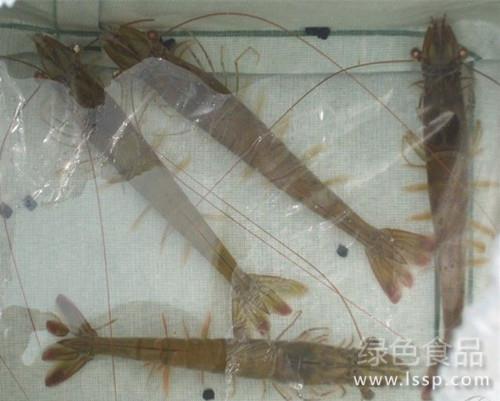
8 key points for the safe overwintering of broodstock shrimp: raise them well and get high breeding returns
Raise broodstock shrimp well for high breeding returns: 8 key points for safe overwintering of broodstock shrimp
-
Schisandra intercropping pattern offers good returns
Northern Schisandra is derived from the mature dried fruit of Schisandra chinensis of the genus Schisandra in the family Magnoliaceae. The plant is a perennial deciduous woody climbing vine, with woody stems reaching 8-10 m long. It grows wild in forests and forest margins, climbing trees. It flowers from May to July each year, and the fruit ripens from August to early October. The ripe red spike-like berries are picked for medicinal use. Schisandra cultivation techniques (1) Suitable growing environment for Schisandra. Schisandra prefers a cool, moist living environment and is shade-tolerant, with a suitable shading level of about 20%. The first
-
Key Points of Winter Pruning Techniques for Schisandra chinensis and Magnolia biondii
I. Schisandra chinensis (five-flavor berry): Based on the growth and flowering/fruiting habits of short fruiting branches, medium fruiting branches, long fruiting branches and basal shoots, the following pruning methods and principles are determined: since short fruiting branches have poor fruiting capacity, few should be retained; in particular, short fruiting branches that do not flower or bear only male flowers should all be pruned off. Medium and long fruiting branches are the main fruiting branches and grow vigorously; they should be thinned at a spacing of 10-20 cm to facilitate ventilation and light penetration and increase fruit yield. For basal shoots, select and retain 3-4 thick, strong branches per plant as renewal branches, and cut off all the rest. II. Magnolia biondii
-
Grain-mushroom intercropping planting model boosts yield and income
Corn-oyster mushroom intercropping uses a 2:1 intercropping cultivation form, improving field ventilation and light penetration; the oyster mushroom production requires more watering, which is very beneficial to corn growth. The spent mushroom substrate still contains relatively rich organic nutrients and can be turned into the soil as high-quality farmyard manure to build soil fertility. Intercropped corn can be sown in late April; on the basis of early-spring plowing and harrowing, spread farmyard manure, form ridges 60 cm wide, with plant spacing smaller than that of pure corn stands, and add the corn plants from the mushroom rows to the rows on both sides respectively, ensuring
-
Key Techniques for High-Yield Winter Cultivation of Cut Roses
Winter is the season when cut roses are in short supply in northern regions, and cut flower prices are also higher during this season. The key technical points for high-yield winter cultivation of cut roses in solar greenhouses are briefly introduced as follows: 1. Adopt various insulation measures to raise the greenhouse air temperature and soil temperature. First, a reasonable greenhouse structure should be used to ensure the greenhouse can absorb solar energy to the maximum extent, raise the indoor temperature, and maintain the daytime room temperature at around 25°C, with a maximum not exceeding 28°C. Second, cover the greenhouse with cattail mats, straw mats, insulation quilts or paper quilts to reduce heat loss.
-
Key Techniques for High-Yield Winter Cultivation of Cut Rose
Winter is the season when cut roses are in relatively short supply in northern regions, and cut flower prices are also higher in this season. Therefore, increasing the winter yield of cut roses is extremely important for increasing the annual income from cut roses. A set of high-yield techniques for cut roses in solar greenhouses is introduced here: 1. Ensure greenhouse temperature and soil temperature. First, adopt a reasonable greenhouse structure to ensure the greenhouse absorbs solar energy to the maximum extent, raise the indoor temperature, and keep the daytime room temperature at around 25°C, with the maximum not exceeding 28°C. Second, use
-
Key Points for Winter Production Techniques of Cut Rose in Northern China
The off-season production of roses requires the flowering period to be from September to April of the following year. Therefore, management must include both summer control of top growth and promotion of root development, as well as winter greenhouse management. Varieties with strong adaptability can be selected, such as Xianyi Shangjiao, Sabensha, etc. 1. Fertilization and density requirements: Before planting roses, sufficient base fertilizer should be applied. Generally, 5 cubic meters of farmyard manure and 2 cubic meters of chicken manure per greenhouse, mix well and plow into the ground, then rake level. Make beds in a north-south direction, bed width 1 m, length limited by the greenhouse width. Each bed can plant two rows, row spacing 0.4 m, plant spacing 0.3 m, generally 7-8 plants per sq m is suitable.
-
Rose Winter Cutting Methods and Technical Key Points
From mid-October to early November, in conjunction with winter pruning of roses, select branches with evenly spaced internodes and plump dormant buds, remove the leaves, and cut them into 10 cm long cuttings (about 3 nodes), with the upper end cut flat and sealed with paint, and the lower end cut at an angle for later use. 2. Preparation of seedbed and nutrient bags: Choose a plot that is sheltered from the wind, faces the sun, has flat terrain, and loose soil, and make a seedbed 1 m wide, 5-6 m long, and 20-30 cm deep. Mix fully decomposed nutrient soil and fine sandy soil in equal halves to make moist nutrient soil, and treat with zinc
条件筛选