-
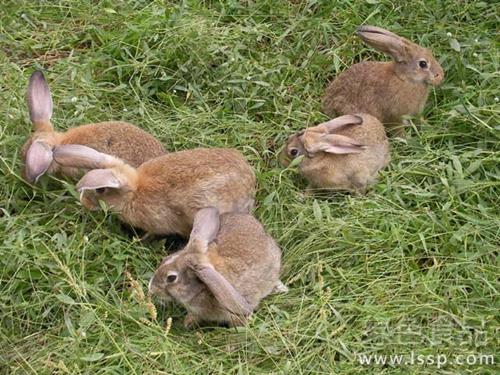
How to prevent and treat cold, pneumonia, diarrhea, mange and constipation in domestic rabbits in winter
Prevention and treatment of common diseases of domestic rabbits in winter: cold, pneumonia, diarrhea, mange and constipation
-

Key Technical Points for Winter Management of Lentinula edodes (Shiitake) Cultivation on Substitute Substrate
After the onset of winter, temperatures drop and relative air humidity is low, so management should center on raising the bed temperature, controlling ventilation, and keeping warm and protecting against cold. Corresponding management measures should be taken for different strains. For medium- and high-temperature-type strains, there is almost no hope of further fruiting below 10°C; at this time, water should be sprayed in the afternoon each day along with brief ventilation, just keeping the logs moist so they can overwinter smoothly. For medium-temperature-type or slightly lower-medium-temperature-type strains, there is still hope of fruiting in provinces where winter is not pronounced. Based on weather forecasts, cold waves can be avoided, and the brief periods when temperatures rise can be used
-
Eight preventive measures for bagged shiitake mushrooms to safely overwinter the summer, explained in detail
Based on our investigation and analysis of the summer-survival problems in large-scale bagged shiitake mushroom cultivation in Xixia over more than ten years, we have summarized a set of preventive measures for bagged shiitake mushrooms to safely get through the summer. They are presented below for reference. 1. Prevent contaminated spawn. There are many factors that can cause contamination in spawn, for example: incomplete sterilization of the substrate, lax disinfection during inoculation, introduction of pathogens during inoculation operations, air forced in through the cotton plug, respiration or damage during spawn transport, inoculation with contaminated spawn, and other such reasons. If contaminated spawn is used for production, it can harbor incalculable losses. 1.1
-
Key Techniques for Winter Care of Azalea Bonsai
Azalea bonsai is prized by people for its excellent posture, form and color. The following aspects should be noted in winter care. 1. Regulating temperature: Different types of azaleas have different temperature requirements, so they must be treated differently. Spring azaleas, summer azaleas and hairy azaleas are relatively cold-tolerant; as long as the room temperature is not below 0°C, they will basically not suffer cold damage. Western azaleas, however, should be kept at a room temperature above 2°C to overwinter safely; if the room temperature cannot reach this, heating is needed, such as using lights, stoves and other cold protection measures, otherwise the plant's leaves will become scorched from freezing and the plant may even freeze to death. Azalea
-
How to fatten donkeys in winter? These fattening key points you need to master
Donkeys are herbivorous animals with strong disease resistance, are easy to raise and manage, reproduce quickly, can be kept either free-range or confined, and require little investment, making them very suitable for small-scale raising by farming households. After short-term winter fattening, the body weight of young donkeys can reach 150-200 kg, and that of adult donkeys can reach 250-300 kg. Based on current market conditions, raising one donkey can yield a profit of 600-1,000 yuan. 1. Selecting donkeys for fattening Guanzhong donkeys and Dezhou donkeys are the first choice. Guanzhong donkeys are mainly produced in the Guanzhong Plain area of Shaanxi Province, and after fattening their body weight
-
Detailed Explanation of the Garlic-Ginger Intercropping Model: How to Achieve High Yield and High Efficiency
This model is suitable for irrigated land in autumn-sown garlic areas. Yield per mu: ginger 2500-3000 kg, garlic scapes 400-500 kg, garlic bulbs 800-1000 kg. Planting arrangement: make beds running east-west, bed width 1 m, plant 4 rows of garlic, intercropped with 2 rows of ginger. Garlic is planted in wide and narrow rows, with wide row spacing of 30 cm, narrow row spacing of 20 cm, and plant spacing of 6-8 cm, planting 33,000-35,000 plants per mu. The 2 rows of ginger are intercropped in the wide rows of the garlic, with row spacing of 50 cm, plant spacing of 12-15 cm
-
Detailed Explanation of Key Points for Intercropping Ophiopogon japonicus
Ophiopogon japonicus has a long growing period and a short plant height, grows slowly in the early stage, and requires a certain degree of shade. Therefore, interplanting some crops in the early stage can provide shade, and when managing the intercrops, soil compaction and weed growth can be reduced, which is beneficial to the growth of Ophiopogon japonicus. Leguminous crops or vegetables are preferable as intercrops, and corn or taro can also be planted, but the intercrops must have a short growing period and must be harvested in September, so as not to affect the growth of the tuberous roots of Ophiopogon japonicus.
-
Three defenses to do well in winter fish farming management
In winter, the water temperature is low and there is little light, so there is less phytoplankton in the pond water of fish ponds and the oxygen-producing capacity is poor. Because fish feed and move less, their constitution is relatively weak, which has a great impact on safe overwintering and growth. To ensure the safety and growth of fish in winter, the water quality regulation and management of fish ponds in winter should focus on three defenses. Guard against shallow water. Some fish farmers believe that shallow pond water in winter is good for fish, but in fact this is a misunderstanding. In winter, when the pond water level is shallow, the water temperature changes quickly and the temperature difference is large, which will cause freeze damage to fish and is extremely unfavorable to their overwintering and growth. Winter fish ponds
-
Technical key points and precautions for stocking fish fingerlings in winter
1. "Five conversions" of fish ponds. Convert "small ponds" to "large ponds", "stagnant ponds" to "live-water ponds", "shallow ponds" to "deep ponds", "leaking ponds" to "water-retaining ponds", and "emergency ponds" to "flood-control ponds". When renovating ponds, first drain the pond water, and after sun-drying, remove excess sludge from the pond bottom, keeping only a 15-20 cm layer. Remove weeds, dredge channels, and raise the pond embankments. 2. Pond clearing and disinfection. Keep the pond at a water depth of 10 cm. First, for every 667 sq m of water surface, use 90 kg of quicklime or 4 kg of bleaching powder containing 30% chlorine,
-
What are the prevention and treatment methods for winter diarrhea in pigs?
Winter diarrhea is winter epidemic diarrhea in pigs. The peak incidence period is from mid-December each year to mid-January of the following year; the onset is acute, the spread is rapid, and the epidemic area is wide; the incidence rate is high and the mortality rate is low, seriously affecting the growth and development of pigs. Symptoms The incubation period of the disease is generally 12 hours to 18 hours. After infection, adult pigs show symptoms of watery diarrhea. The feces are initially grayish-white, gradually becoming yellowish-green, with an offensive fishy odor. Abdominal distension, vomiting, and body temperature initially rises to 40°C to 41°C. Once the diarrhea passes, the body temperature drops, and the pigs are thirsty and eager to drink. 10
条件筛选