-
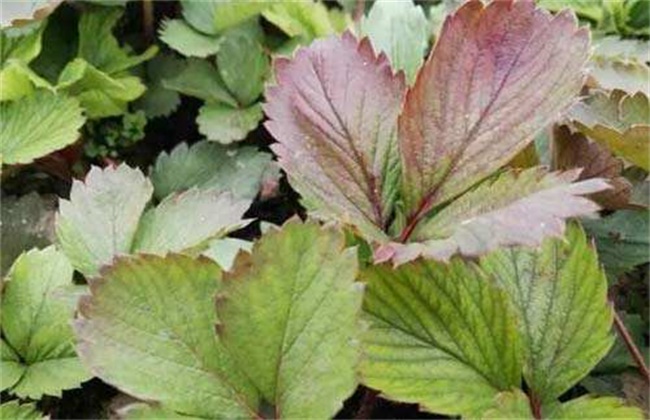
Detailed Explanation of the Harm Caused by Strawberry Nutrient Deficiency and Its Prevention Measures
The Harm of Strawberry Nutrient Deficiency and Prevention Measures
-
How harmful are pesticide residues in fruits and vegetables, really?
The harm of pesticide residues: every day the human body needs to obtain nutrients from food to meet the body's needs. According to the recommendations of the Chinese Nutrition Society, the human body needs about 1 jin of...
-

The Poetry and Floral Charm of Apricot Blossoms: Experiencing the Beauty of Spring Flower Viewing
The messenger of wine. In the third month of spring, with gentle breezes and bright sunshine, pink peach blossoms and white plum blossoms stir the soul. The cultivation of apricot blossoms can be traced back to the Warring States period. "During the Qingming season, the rain falls thick and fast; travelers on the road look as if their souls will break. I ask where a tavern can be found; a shepherd boy points far off to Apricot Blossom Village." Where exactly Apricot Blossom Village is has long been debated. One account places it in Fenyang, Shanxi; another places it at Phoenix Terrace in Jinling; and there is also Apricot Blossom Village in Guichi, Anhui, with a stretch of apricot groves extending for ten li around. When the lovely spring month of March arrives, "on the apricot branches the spring wind settles; for ten li the misty village is all one red" - this is one of the ten famous sights of Guichi.
-
Harm and Control Methods of the White Peach Scale
Distribution area: Morphological characteristics: The female adult is orange-yellow, broadly oval, with a body length of 1-1.3 mm; the body surface is covered by a scale cover, which is 2-2.5 mm long, grayish white, nearly circular, convex on the back, with the shell point yellowish brown. The male adult is 0.65-0.7 mm long, orange, with grayish white wings. The male scale cover is about 1 mm long, grayish white, long cylindrical, with 3 ridges on the back; the shell point is orange-yellow and located at the front end. Eggs are oval, orange. Nymphs are flat and round, orange.
-
A Detailed Guide to the Harm Caused by the Jujube Leaf Beetle and Its Control Methods
The jujube leaf beetle belongs to the order Coleoptera, family Chrysomelidae. The larvae and adults of this insect damage jujube leaves and tender shoots. In outbreak years, the leaves are eaten bare, leaving only the bare fruiting branchlets, which greatly affects yield. The peak damage period for this insect is from mid-April to mid-May. Both larvae and adults damage jujube leaves, tender shoots, flower buds and flowers. Control methods: spraying mainly for flower protection is the primary approach. During the occurrence period of larvae and adults, spray 90% trichlorfon at 1500 times dilution or deltamethrin at 1.5 ten-thousand to 1.6 ten-thousand times dilution; generally the insecticidal effect is very good.
-
New almond cultivar 'Charm' is suitable for early spring flower viewing
The ornamental almond 'Charm' is an ornamental cultivar with bright flower colors and multiple petals, discovered and selected from seedlings of Uzbek almond. It belongs to the genus Prunus in the subfamily Prunoideae of the Rosaceae family. 'Charm' has white or pink flowers, emerald green leaves, and a graceful tree form, with an ornamental effect similar to that of peach and ornamental peach. However, in landscaping practice, peach and ornamental peach are seriously affected by aphids, scale insects, and sooty mold, which greatly reduces their ornamental effect; 'Charm' precisely has characteristics such as resistance to scale insects, resistance to aphids, resistance to sooty mold, and tolerance to poor soil, so it can replace peach and ornamental peach in relatively weak environments such as forest parks,
-
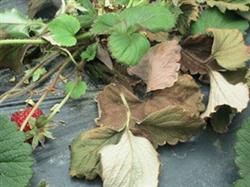
The Harm of Strawberry Verticillium Wilt and Its Comprehensive Control Methods
Strawberry Verticillium wilt is a soil-borne disease. It has been an important factor affecting and troubling the expansion of strawberry production in recent years. Because strawberry is a perennial plant, continuous cropping in the same field for many years causes a large accumulation of pathogens in the soil, and combined with factors such as declining varietal disease resistance and poor field management, it leads to strawberry...
-
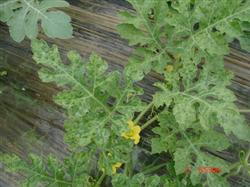
Be Alert to the Harm of a New Watermelon Virus, Growers Should Pay Attention to Early Prevention and Control
A quarantine viral disease, Cucumber green mottle mosaic virus, has been detected. Taking precautions is warranted, but pulling up plants and replanting without any reason is unnecessary. Here, we introduce this newly emerging viral disease. Cucumber green mottle mosaic virus has a relatively narrow host range, occurring mainly on cucurbits...
-
What species of aphids harm pear trees?
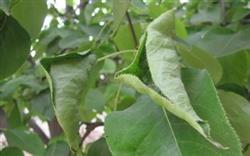
The aphids that harm pear trees are mainly 3 species: the pear two-tailed aphid, the pear yellow powdery aphid, and the Chinese pear original-tail aphid. These 3 aphids harm only pear trees; the two-tailed aphid and the yellow powdery aphid occur commonly and severely, while the original-tail aphid rarely occurs and causes lighter damage. Their morphological differences are as follows: (1) Pear two-tailed aphid: ① The wingless viviparous female aphid is 2 mm long, green or dark green...
-
What are the harmful effects of continuous cropping of greenhouse strawberries? A detailed explanation of prevention and control techniques
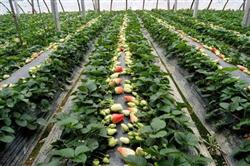
1. Harmful effects of continuous cropping of greenhouse strawberries 1.1 Causes long-term accumulation of pathogenic microorganisms. Planting strawberries continuously on the same plot of land causes obvious changes in the soil microbial community, and suddenly, suddenly nematodes and pathogenic bacteria multiply in large numbers, leading to major outbreaks of pests and diseases. 1.2 Causes imbalance of strawberry nutrients...
条件筛选