The Harm of Strawberry Verticillium Wilt and Its Comprehensive Control Methods
Strawberry Verticillium wilt is a soil-borne disease. It has been an important factor affecting and troubling the expansion of strawberry production in recent years. Because strawberry is a perennial plant, continuous cropping in the same field for many years causes a large accumulation of pathogens in the soil, and combined with factors such as declining varietal disease resistance and poor field management, it leads to strawberry...
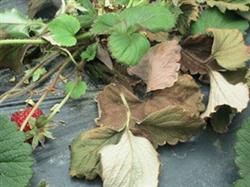
Strawberry Verticillium wilt is a soil-borne disease. It has been an important factor affecting and troubling the expansion of strawberry production in recent years. Because strawberry is a perennial plant, continuous cropping in the same field for many years causes a large accumulation of pathogens in the soil, and combined with factors such as declining varietal disease resistance and poor field management, the incidence of strawberry Verticillium wilt has increased year by year, and it has become an important disease in strawberry production.
Strawberry Verticillium wilt mainly occurs during the runner-producing period, invading from the roots and showing symptoms on the aboveground parts. In affected seedlings, the new leaves lose green and turn yellow or become curved and deformed, the leaves are narrow and small and boat-shaped, the two lateral leaflets on the compound leaf are asymmetrical and deformed, most become hardened, and the leaf color turns yellow. Affected plants grow poorly and lack vigor, the leaf surface is rough and lusterless, and wilting and browning begin from the leaf margins, finally causing the plant to die. The vascular bundles of the underground roots, petioles and stems turn brown and even black.
Chemical control has a poor effect on strawberry Verticillium wilt, so control should focus on the application of comprehensive control measures. ① Select healthy plants from disease-free plots for seed production, and plant disease-free, vigorous seedlings. Disease-free mother plants can be obtained by the space seedling collection method, that is, cutting the runner tips before they touch the ground and inserting them into disease-free soil so that they root, and then using them as mother plants for raising seedlings. ② Avoid continuous cropping and repeated cropping, and implement crop rotation of more than 3 years. ③ Strictly disinfect and sterilize the soil before sowing or planting. The method is to use 13.5-20 liters of chloropicrin per 667 sq m, apply it in holes or furrows, seal the soil and cover with film after application, remove the film and let it air out, and only raise seedlings or transplant after there is no phytotoxicity; solar disinfection can also be used, choosing the high-temperature period in July, deep plowing, irrigating, and covering with plastic film, using the high temperature under the film to sterilize. ④ Strengthen cultivation management measures. Note that the soil must not be too dry or too wet after strawberry planting; remove diseased and old leaves in time; if diseased plants are found, pull them out as early as possible and replant in time, and bury them deeply or burn them to reduce sources of pathogen infection. ⑤ Before planting or at the early stage of disease onset, use 70% thiophanate-methyl wettable powder at 300-500 times dilution to soak the roots for disinfection or drench the roots after planting.