-
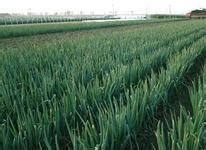
Key Points of Pollution-Free Pest Control Techniques in Welsh Onion Fields
I. Onion thrips, also known as small white insect or tobacco thrips. Adults and nymphs use their rasping-sucking mouthparts to suck sap from within the leaves, causing many fine, dense, long yellowish-white spots to form on the onion leaves. In severe cases, the leaves turn yellow and white, twist, die, and droop, seriously affecting the yield and quality of welsh onion. 1. Occurrence pattern. Onion thrips...
-
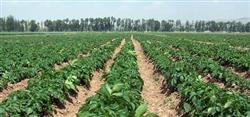
How to control broadleaf weeds in potato fields
It is currently the season for harvesting no-till potatoes in Guangxi. At the no-till potato base in Baqiao Village, Shuangqiao Town, Wuming County, Guangxi, on-site yield measurement showed that the average yield of no-till potatoes reached 25 sha-kilograms per mu, more than 1.5 times the national average potato yield per mu. Renowned potato expert Sun Huisheng said that Guangxi's rice-straw-mulched no-till cultivation...
-
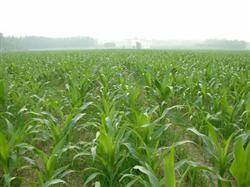
Why should weeds in summer corn fields be cleared as early as possible?
Weeds in corn fields grow fast and concentrated. When soil moisture is good, about 10 days after sowing, weed emergence reaches its peak, and after 15 days the emergence rate reaches about 90%; if there is rainfall or watering, a small emergence peak appears in 4 days. When subjected to weed damage at the seedling stage, plants appear short, with thin stalks and yellow leaves, which also aggravates the occurrence and damage of diseases and pests in corn fields,...
-
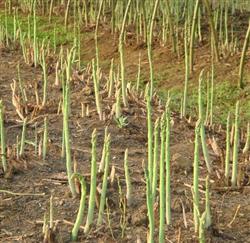
Detailed Explanation of Chemical Weed Control Techniques in Asparagus Fields
Asparagus has wide row spacing and is prone to weed growth. During the white asparagus harvest period, ridges are formed, the spears do not emerge from the ground, and chemical weed control is also difficult to implement. The main weeds in asparagus fields include lamb's quarters (goosefoot), field bindweed, purple nutsedge (three-square grass), thistle, crabgrass, barnyardgrass, and green foxtail. During the spring harvest period, contact herbicides are mostly used...
-
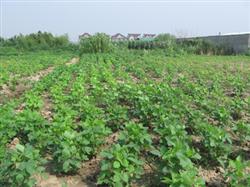
Correct methods for using herbicides in soybean fields
When choosing herbicide varieties for soybean fields, safety to the crop and low risk of herbicide injury come first; the second consideration is the control effect on weeds, that is, the control effect must be good. Under the condition of good control effect, choose varieties with lower drug costs as much as possible. The weeds in soybean fields fall into two major categories: grass weeds and broadleaf weeds. Grass weeds...
-
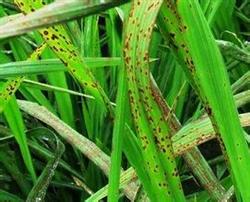
Identifying Zinc Deficiency Symptoms in Rice and Techniques for Skillfully Applying Zinc Fertilizer in Paddy Fields
Zinc is one of the essential trace elements for the growth and development of rice. Zinc deficiency in rice shows obvious symptoms. When rice is deficient in zinc, chlorotic yellow-white spots first appear in the midrib area of the lower leaves, with reddish-brown spots and irregular patches forming on them, which then gradually expand into reddish-brown streaks, turning reddish-brown and drying from the leaf tip downward, and from...
-
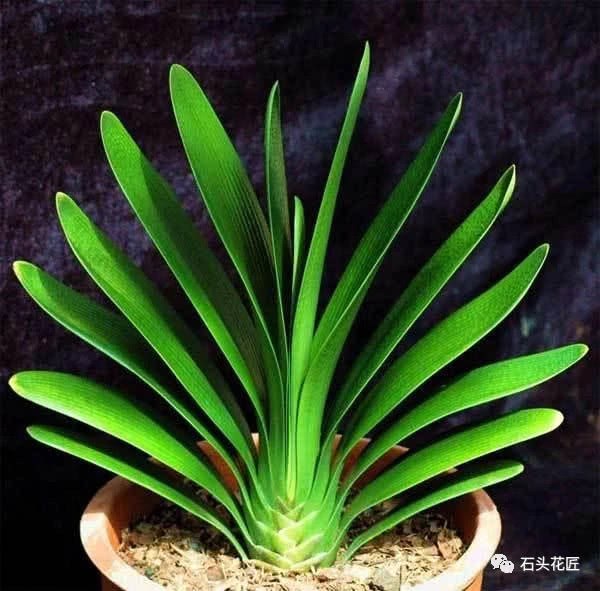
In autumn, the fruits covering the mountains and fields can be turned into flower fertilizer, sterilizing and disinfecting, making any flower thrive
With the improvement of people's living standards and conditions, many people have begun to pay attention to physical health and healthy living. Not only do they demand green and healthy food, but they also demand a comfortable and healthy living environment. Especially for those living in cities...
-

How to intercrop and relay-crop kidney beans in cotton fields? Detailed technical key points
1. Choose good varieties. Varieties should be selected that have wide adaptability, strong stress resistance, a high pod-setting rate, and high yield. 2. Sow at the right time. During cultivation, the appropriate sowing time should be grasped, and seeds that are plump and glossy should be selected for sowing, so that plant growth and development are under good environmental conditions, reducing flower and pod drop and improving...
-
Five key steps for transplanting rapeseed on stubble fields
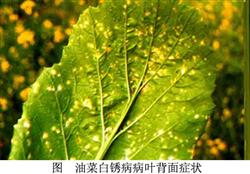
1. Symptom characteristics. Rapeseed white rust mainly infects leaves, stems, flower stalks and floral organs. The symptoms on leaves and stems are characterized by blister-like lesions. The blister surface is white or milky white, slightly raised, small (ranging from 1 to 3 mm), and numerous; after rupturing, it releases a white powdery substance (the sign of disease), eventually causing the leaves to turn yellow and drop early....
-
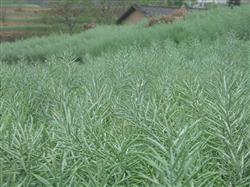
Weed Occurrence Characteristics and Control Methods in Rapeseed Fields
To obtain high quality and high yield in cultivated rapeseed, in addition to normal management such as timely sowing to secure seedlings, weeding and reducing waterlogging, skillful fertilizer application is the key to high yield. 1. Apply sufficient base fertilizer. Applying sufficient base fertilizer is the foundation for high rapeseed yield and should account for about 60% of the total for the whole growing period. To achieve a yield target of about 250 kg per mu, for medium-fertility...
条件筛选