Why should weeds in summer corn fields be cleared as early as possible?
Weeds in corn fields grow fast and concentrated. When soil moisture is good, about 10 days after sowing, weed emergence reaches its peak, and after 15 days the emergence rate reaches about 90%; if there is rainfall or watering, a small emergence peak appears in 4 days. When subjected to weed damage at the seedling stage, plants appear short, with thin stalks and yellow leaves, which also aggravates the occurrence and damage of diseases and pests in corn fields,...
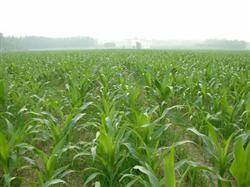
Weeds in corn fields grow fast and concentrated. When soil moisture is good, about 10 days after sowing, weed emergence reaches its peak, and after 15 days the emergence rate reaches about 90%; if there is rainfall or watering, a small emergence peak appears in 4 days. When subjected to weed damage at the seedling stage, plants appear short, with thin stalks and yellow leaves, which also aggravates the occurrence and damage of diseases and pests in corn fields, leading to poor growth in the middle and late stages and reduced yield. This is an important limiting factor for high corn yields.
Chemical control:
Post-emergence stem and leaf treatment of corn seedlings. The herbicides used at this stage are mainly stem and leaf treatment agents. The best time for post-emergence weed control is the 5-7 leaf stage of corn (2-3 leaf stage of weeds), when the weeds have all emerged and corn has high resistance, making it less prone to herbicide damage. Herbicides can include nicosulfuron·atrazine, nicosulfuron, topramezone, etc. You can use 52% nicosulfuron·atrazine wettable powder at 60 grams per mu plus 40 milliliters of spreader, mixed with 30 kilograms of water for stem and leaf spraying.
At the 4-6 leaf stage of corn or a few days later, use inter-row protective application and directed spraying techniques to control all weeds in the corn field. The selected agent is a non-selective contact stem and leaf treatment agent. You can use 20% paraquat at 200 milliliters/mu or 20% gramoxone at 100-120 milliliters/mu for spray control. When using, do not spray on corn leaves, and spray evenly.
Precautions
1. Correctly select corn herbicides. According to the types of weeds in the corn field and the method of use, purchase the appropriate herbicide.
2. Use correct application techniques. Accurately calculate the dosage according to the area of the corn field. When applying, spray evenly, without overlapping or missing spots. The sprayer nozzle should preferably use a fan nozzle to ensure even distribution of the spray liquid.
3. Determine the dosage according to soil moisture. For plots with poor soil moisture and high wheat stubble, not only should the water volume be increased, but the dosage should also use the upper limit of the recommended dosage. However, do not increase the dosage arbitrarily to avoid herbicide damage. When soil moisture is poor, pay attention to timely sprinkler irrigation after application.
4. Determine the dosage according to soil texture and organic matter content. For fertile soil and soil with high organic matter content, choose the higher amount within the recommended dosage range of the herbicide; for sandy soil, poor soil, and plots with low organic matter content, choose the lower amount.
5. Choose the best timing for application. The corn seedling stage is in a high-temperature season, so application should be done before 10 a.m. and after 4 p.m. to reduce evaporation of the spray liquid, facilitate absorption by the soil and weed stems and leaves, and improve weed control effectiveness. In addition, do not apply in windy weather, to avoid droplet drift, uneven application, reduced efficacy, and herbicide damage to nearby other crops.