Five key steps for transplanting rapeseed on stubble fields
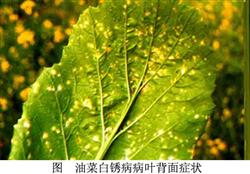
1. Symptom characteristics. Rapeseed white rust mainly infects leaves, stems, flower stalks and floral organs. The symptoms on leaves and stems are characterized by blister-like lesions. The blister surface is white or milky white, slightly raised, small (ranging from 1 to 3 mm), and numerous; after rupturing, it releases a white powdery substance (the sign of disease), eventually causing the leaves to turn yellow and drop early....
 I. Seedling raising. (1) Prepare sufficient seedbed. According to the requirements for raising strong seedlings, the ratio of seedbed to field is 1:6. On the basis of preparing sufficient seedbed, add decomposed organic fertilizer, applying 50 kg of 45% compound fertilizer plus 1 kg of borax per mu, broadcasting and then shallowly rotary tilling into the soil. Prepare the land finely, shape the bed surface into a turtle-back form, and open drainage ditches around the seedbed. (2) Sow sparsely at the appropriate time. Sparse sowing and sparse raising are the key to cultivating strong seedlings. In order to make full use of the temperature and light resources before winter, the suitable sowing period locally is September 12-15. Within the suitable sowing period, strictly control the sowing rate, with the actual sowing rate per mu of seedbed controlled between 0.5-0.75 kg. (3) Manage immediately after sowing. Post-sowing management mainly consists of thinning seedlings at the 1-leaf stage, and at the 3-leaf stage final thinning should remove weak ones and keep strong ones, remove mixed ones and keep pure ones, leaving 15-16 seedlings per square chi. At the same time, at the 3-leaf stage, use 15% paclobutrazol for chemical control. During the seedling raising period, use Kuishaling and imidacloprid to control cabbage caterpillars and aphids.
II. Fertilization. In the field, apply sufficient base fertilizer, apply seedling fertilizer early, apply heavy stem-elongation fertilizer, and apply flower fertilizer skillfully. For specific fertilization amounts, apply 20-25 kg of 45% compound fertilizer, 5-10 kg of urea, and 1 kg of borax per mu as base fertilizer. Specific application method: when digging holes to transplant rapeseed, apply in holes, water and spot-irrigate, or scatter in the transplanting holes and mix with soil (avoid direct contact with roots); for seedling fertilizer, apply 25-30 kg of ammonium bicarbonate per mu according to growth vigor; rapeseed transplanted on stubble fields often receives relatively less base fertilizer at transplanting, so stem-elongation fertilizer should be applied early and heavily, with the specific amount based on growth vigor at 15-20 kg of urea per mu. Flower fertilizer mainly promotes balanced growth and reduces flower and pod shedding and empty pods. Generally, apply 2-3 kg of urea per mu.
III. Weed control. Combine manual weeding and chemical weeding. Before winter, carry out intertillage and weeding to increase soil temperature, enhance cold resistance, and help safe overwintering. In spring, select herbicides for chemical control according to the weed spectrum. For fields mainly with grass weeds, use 10.8% high-efficiency gallant for chemical control; for fields mainly with grass weeds and broadleaf weeds, use 6.9% Fengbao Kuaichu for chemical control.
IV. Disease and pest control. Before winter, use 40% Chongmanjing to control aphids. At the early flowering stage and full flowering stage of rapeseed, use 40% Kejunbao and 10% imidacloprid respectively to control sclerotinia and aphids. At the pod-setting stage of rapeseed, use 10% imidacloprid 2-3 times to control aphids.
V. Ditch opening and waterlogging reduction. Promptly dig the inner and outer three ditches to reduce waterlogging, promote root growth, and reduce the occurrence of sclerotinia and other diseases.