-
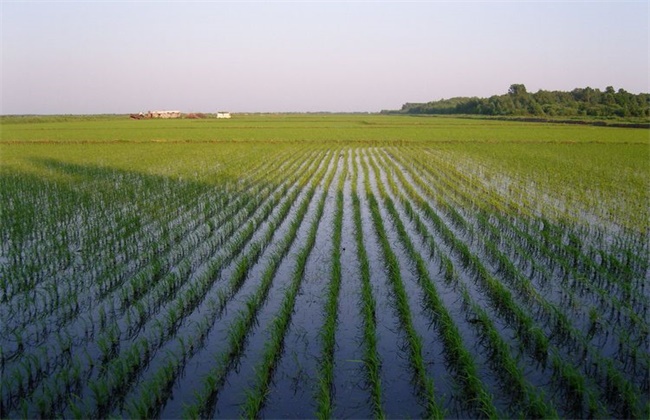
What causes the floating fertilizer phenomenon in rice fields
Causes of the floating fertilizer phenomenon in rice
-

Technical Guidance on Chemical Weed Control in Paddy Fields
Chemical weed control in paddy fields is a key step in achieving high and stable rice yields. There are three main types of weeds in the rice fields of our county: grassy weeds such as barnyardgrass, sprangletop, and crabgrass; broadleaf weeds such as monochoria, pondweed, and Rotala indica; and sedge family weeds. In recent years, because rice planting methods in our county have become diverse, the weed spectrum in paddy fields has undergone considerable change: first, some malignant weeds in paddy fields are on the rise. In addition to barnyardgrass, which remains widespread and abundant, sprangletop and Cyperus serotinus have shown a clear upward trend;
-
How to control broadleaf weeds in potato fields?
(1) Crop rotation: Rotation reduces the density of associated weeds, changes the dominant weed community in the field, and lowers the weed population in the field. (2) Plowing and turning: After the soil is plowed and turned multiple times, perennial weeds such as Ixeris denticulata are buried underground, causing the weeds to gradually decrease or decline in vigor, thereby inhibiting their growth and achieving the purpose of weed control. (3) Inter-row cultivation and hilling: This measure not only controls weeds but also has effects such as deep loosening and water storage and moisture conservation. For example, for open-field potatoes, inter-row cultivation is generally carried out the first time when the seedlings are about 10 cm tall,
-
Growing potatoes in idle winter fields yields good returns
1. Choose good field plots and sow at the right time. Choose double-cropping rice areas below 100 m altitude, with little or no frost in winter and an average annual temperature above 19°C, requiring paddy fields with deep topsoil, loose texture, medium-to-upper fertility, and convenient drainage and irrigation; at the same time, arrange the sowing period reasonably. After the double late rice is harvested in mid-November, immediately plow deep and sun-bleach the soil, sow in early to mid-December, and harvest from late March to early April the following year. 2. Prepare the land finely and make deep furrows and high ridges. Potatoes grown in paddy fields in winter are most afraid of waterlogging, so fine land preparation should be advocated, with deep plowing and high-ridge cultivation, and planting
-
Plastic Film Mulch Cultivation Techniques for Potatoes in Winter Fallow Fields
When cultivating potatoes in winter fallow fields, if the plastic film mulch cultivation method is adopted, the potatoes can be brought to market earlier, thereby achieving higher economic returns. The key cultivation techniques are as follows: 1. Soil selection - Choose slightly acidic light sandy soil that is loose, well-aerated and well-drained for cultivation. Clayey soil is heavy, poorly aerated and drains badly, which is unfavorable for tuber development and unsuitable for growing potatoes. When using harvested late rice paddies to grow spring potatoes, be sure to choose raised fields and second-bank fields with loose soil and good drainage. Potato
-
Cultivation Methods and Technical Key Points for Intercropping Garlic in Cotton Fields
When garlic is intercropped in cotton fields, each mu can produce 93 kg of lint cotton and 1,300 kg of garlic, with a benefit of about 3,300 yuan per mu. 1. Cotton: Use insect-resistant hybrid cotton varieties such as Kemian No. 3 and Kemian No. 6. Before sowing, deeply plow the land 25 cm, and together with plowing, apply 3,000 kg of decomposed livestock and poultry manure and 60 kg of potassium sulfate compound fertilizer per mu. Broadcast 2-3 kg of 5% phoxim granules per mu to control underground pests. The suitable sowing period for cotton in Pizhou City is around April 3. Seize sunny days to raise seedlings in double-film nutritional pots. Prepare about 3,000 pots per mu of field. After watering the seedbed thoroughly, sow dry seeds, 1 seed per pot. About 0.35 kg of coated cotton seed is needed per mu of field. After full emergence, ventilate promptly to reduce humidity and control pests and diseases, and cultivate strong seedlings. Transplant around May 12 when cotton seedlings are at the 4-leaf stage, using equal-row spacing with a row spacing of 1.2 m and a plant spacing of 33 cm, planting about 1,700 plants per mu. In mid-to-late May, together with hilling, apply 15-20 kg of urea, 50 kg of superphosphate, and 20 kg of potassium chloride per mu. Around July 20, apply flower and boll fertilizer according to cotton growth, with 30 kg of urea and 15 kg of potassium chloride per mu. In early August, apply topdressing for boll development, with 7.5-10 kg of urea per mu. Pay attention to spraying trace element solutions such as boron fertilizer and monopotassium phosphate. Use mepiquat chloride for chemical regulation 4 times: 1-1.5 g per mu at the full bud stage, 2-2.5 g per mu at the early flowering stage, 3-4 g per mu at the full flowering stage, and 3-5 g per mu after topping. Top around August 6. Pay attention to controlling the third generation of cotton bollworm, cotton aphid, mirids, red spider mites, tobacco whitefly, and other pests. Pull up cotton stalks in mid-November.
-
Rice fields treated with Penoxsulam herbicide show good safety
Penoxsulam is a sulfonylurea herbicide. The drug is absorbed through weed leaves, stems and roots, and is translocated via the xylem and phloem to the meristematic zones where it acts. When used in rice fields, Penoxsulam provides both foliar treatment and soil residual (pre-emergence) control effects. After Penoxsulam treatment, weeds quickly stop growing; 2-4 days after application the growing points fade, and sometimes the leaf veins turn red; 7-14 days after application the stem tips and leaf buds begin to wither and necrose; 2-4 weeks after application the weeds die. The speed of weed death is related to the accumulation of branched-chain amino acids in the plant. Young
-
What key points should be noted for late-planted rice when transplanting into fields prepared with stored water?
The general requirement for transplanting late-planted rice into fields prepared with stored water is to seize the water, prepare the field, and transplant the seedlings, increasing the number of hills, seedlings, and panicles. For rice fields transplanted with stored water, as soon as rainfall occurs or another water source becomes available, measures such as blocking, diverting, and pumping water should be taken immediately to seize the water, prepare the field, and transplant the seedlings. For late-planted fields, planting density should be increased. For seedlings aged 60-70 days, transplant more than 13,000 hills per mu (8 x 6 cun), with two seedlings per hill (2 grains of rice); for seedlings aged over 70 days, transplant more than 15,000 hills per mu (8 x 5 cun), with about 10 seedlings per hill, so that the number of seedlings planted per mu reaches 150,000
-
How to control shortawn foxtail in garlic fields? Detailed control methods
During the garlic growing season, grass weeds such as shortawn foxtail (Alopecurus aequalis) in the field can be controlled with herbicides such as quizalofop-p-ethyl, haloxyfop-R-methyl, and clethodim. Apply the herbicide early, when the weeds in the field have basically all emerged and are at the 2-4 leaf stage; when the weeds are older, appropriately increase the application rate. In addition, when quizalofop-p-ethyl is used at temperatures below 10°C, its control effect on weeds drops noticeably, so apply it when the temperature is high if possible. Clethodim also has a relatively good control effect on weeds when used at lower temperatures, and since the temperature has been low recently, this herbicide can be given priority.
-
Intercropping melons and peppers in cotton fields yields high comprehensive benefits
Xinchang Town in Shishou City, Hubei Province, located in the middle reaches of the Yangtze River, is a major cotton-producing area, with 23,250 mu of cotton planted year-round. In recent years, the town has actively optimized its planting structure, explored and applied the model of intercropping melons (or peppers) in cotton fields, achieving multiple harvests per year and multiple income sources from one field, improving the overall benefits of cotton fields, and blazing a successful trail in planting structure adjustment. In the past, the town planted cotton alone, generally producing 87 kg of lint cotton per mu, with an output value of 940 yuan. According to a 2002 survey, however, the town's cotton-melon (pepper) intercropping model produced output values of 315
条件筛选