-
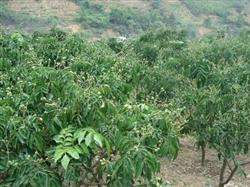
How to manage wampee cultivation? Key technical points explained
How do you manage wampee well when growing it? Please guide the methods. When planting wampee, you can refer to the following methods for management: 1. Base fertilizer management: it can speed up the maturation of new shoots, increase leaf thickness and the accumulation of organic matter, shorten the shoot period, and help multiple new shoots sprout. In addition, organic fertilizer should be deeply applied every winter. 2. Water management...
-
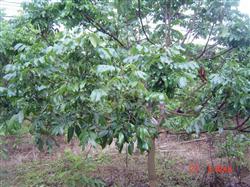
How to Improve Longan Trees? Practical Methods and Techniques Explained
How can longan trees be improved? Please give guidance. Longan tree improvement can be carried out with reference to the following techniques: 1. Improve the soil. ① Expanding holes and improving soil: dig strip-shaped trenches 40-60 cm deep, 30-40 cm wide, and 100-150 cm long at the drip line of the trunk, cutting the roots to promote new root growth. ② Do a good...
-
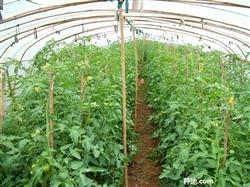
How to Prune Greenhouse Tomatoes? Key Steps and Methods Explained
How to prune greenhouse tomatoes? Please explain the guidance: to achieve early maturity and high yield in greenhouse tomatoes, the single-stem pruning method is often used. For early-maturing varieties, only the main axis of the tomato is kept, and all lateral branches in the leaf axils are removed. For mid-to-late-maturing varieties, because of their strong growth vigor, continuous single-stem extension pruning and continuous pinching are usually adopted...
-
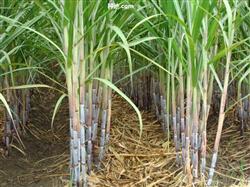
How to fertilize effectively in sugarcane cultivation? Key points of the method explained
How to fertilize effectively in sugarcane cultivation? Please note that because sugarcane has a well-developed root system and a long growth period, each crop removes a large amount of nutrients from the soil. Therefore, applying more organic fertilizer when growing sugarcane can improve soil structure and is very effective at increasing yield and improving the soil. Base fertilizer: apply enough base fertilizer...
-
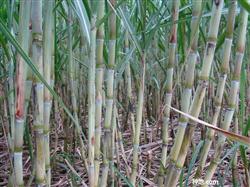
How to Fertilize Sugarcane for Good Results? Methods and Techniques Explained
How should sugarcane be fertilized? Please advise. Sugarcane is an important raw material for sugar production; in China, cane sugar accounts for 80% of total sugar consumption. When growing sugarcane, the light energy utilization rate and land productivity per unit area are relatively high. Compared with growing grain crops, sugarcane is a crop with relatively large economic returns. Especially the fruit cane eaten as a fruit...
-
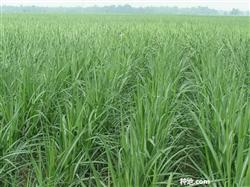
How to fertilize sugarcane scientifically? Key technical points explained
How to fertilize sugarcane scientifically? Please give guidance. Sugarcane has the nutritional characteristics of a high fertilizer requirement, a high potassium requirement, and high nutrient uptake in the middle and late growth stages. These characteristics must be grasped when fertilizing in order to achieve high yields. 1. Apply sufficient basal fertilizer. The basal fertilizer should be mainly organic fertilizer, used in combination with inorganic fertilizer. Generally, apply 1...
-
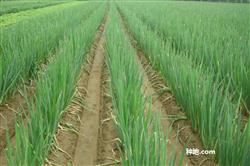
What pests and diseases affect Welsh onions? Common types explained in one article
What pests and diseases affect Welsh onions? How should they be controlled? Please explain. The control of Welsh onion pests and diseases should be based on prevention, implementing a 2-3 year rotation with crops other than Allium species; cleaning the field to eliminate sources of pests and diseases; selecting disease-resistant varieties; disinfecting seeds, that is, before sowing soak the seeds in 50°C warm water for 25 minutes while stirring constantly, then soak...
-
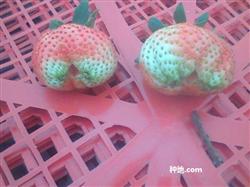
How to Prevent Deformed Strawberries? Practical Methods Explained
How to prevent deformed strawberries? Please guide the following methods that can prevent and control deformed strawberries for reference: 1. Introduce bees during the flowering period in the greenhouse. Strawberries cultivated under protection have an early flowering period, and there are few flower-visiting insects in the early stage. Therefore, when the first batch of flower buds forms, bees can be introduced into the greenhouse, with 2~3 boxes of bees per standard greenhouse, and the beehives placed evenly around the inside of the greenhouse...
-
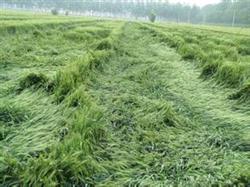
What are the spring lodging prevention measures for wheat? Explained clearly in one article
Lodging is one of the main factors affecting high and stable yields and good quality in wheat. Wheat lodging mainly occurs in high-yield wheat fields with ample fertilizer and water, excessive wheat growth, overly large populations, and dense, shaded field conditions. Early spring is the key period for preventing wheat lodging, and its comprehensive lodging prevention technical measures are: scientifically manage fertilizer and water. For high-yield wheat fields with a population of more than 650,000 plants per mu at the green-up stage, wait until the first internode of wheat has reached its final length (that is, late jointing stage), then apply topdressing and irrigation, applying 7.5-10 kg of urea per mu. This can reduce ineffective tillers, lower the length of basal internodes, promote thick and strong stems, and prevent lodging later, while also increasing grain number per spike and improving quality.
-

Rana chensinensis Breeding Technology Explained: Methods and Management Key Points
Breeding Technology for Rana chensinensis
条件筛选