How to Prevent Deformed Strawberries? Practical Methods Explained
How to prevent deformed strawberries? Please guide the following methods that can prevent and control deformed strawberries for reference: 1. Introduce bees during the flowering period in the greenhouse. Strawberries cultivated under protection have an early flowering period, and there are few flower-visiting insects in the early stage. Therefore, when the first batch of flower buds forms, bees can be introduced into the greenhouse, with 2~3 boxes of bees per standard greenhouse, and the beehives placed evenly around the inside of the greenhouse...
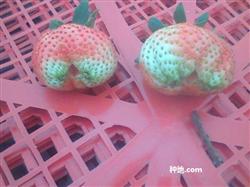
How to prevent deformed strawberries? Please guide
The following methods can prevent and control deformed strawberries for reference:
1. Introduce bees during the flowering period in the greenhouse. Strawberries cultivated under protection have an early flowering period, and there are few flower-visiting insects in the early stage. Therefore, when the first batch of flower buds forms, bees can be introduced into the greenhouse, with 2~3 boxes of bees per standard greenhouse. Placing the beehives evenly around the inside of the greenhouse can raise the pollination rate above 95%. The bee release times are 8~9 a.m. and 3~4 p.m.
2. Reasonably regulate temperature and humidity. Generally, after axillary flower bud differentiation and before entering dormancy, begin heat preservation. Keep the daytime temperature at 20°C~30°C and the nighttime temperature above 10°C. Especially during the flowering and fruit-setting period, ventilate frequently to reduce humidity and preserve heat. Keep the daytime temperature generally at 20°C~28°C, the nighttime temperature above 5°C, and relative humidity controlled at 50%~60%. Use drip-free film for the greenhouse to prevent water droplets from washing the strawberry stigmas. Using drip irrigation can effectively reduce air humidity.
3. Thin flowers and fruits in time. Promptly remove secondary flowers, small deformed fruits, and diseased fruits, and regularly remove old leaves, yellow leaves, and diseased leaves to reduce nutrient consumption, help ventilation and light penetration, reduce diseases, and increase light exposure. This can significantly reduce the rate of deformed fruits and help concentrate nutrients, ensure the development of normal fruits, and improve single-fruit weight and fruit quality.
4. Apply pesticides and fertilizers at the right time. Use virus-free seedlings, plastic film mulching, and other agricultural measures, and use pesticides as little as possible or reduce the amount and frequency. When pests and diseases are severe, apply pesticides before or after flowering. Spraying pesticides is strictly prohibited during the flowering period. In low-temperature rainy weather, when humidity in the greenhouse is high, move the beehives outside the greenhouse, then use "Yixunling" smoke fumigant for fumigation control. During the flower bud differentiation and development stage, appropriately apply additional nitrogen fertilizer or spray foliar fertilizer, which is beneficial to flower bud differentiation and development. Keep the soil moist. Especially during the flower bud development stage, flowering stage, and fruit expansion stage, irrigate in time to meet the needs.
Click to get more strawberry cultivation techniques
Click to get more fruit cultivation techniques