How to manage wampee cultivation? Key technical points explained
How do you manage wampee well when growing it? Please guide the methods. When planting wampee, you can refer to the following methods for management: 1. Base fertilizer management: it can speed up the maturation of new shoots, increase leaf thickness and the accumulation of organic matter, shorten the shoot period, and help multiple new shoots sprout. In addition, organic fertilizer should be deeply applied every winter. 2. Water management...
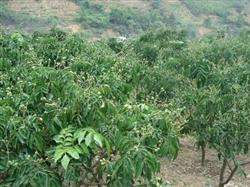
How do you manage wampee well when growing it? Please guide the methods
When planting wampee, you can refer to the following methods for management:
1. Base fertilizer management:It can speed up the maturation of new shoots, increase leaf thickness and the accumulation of organic matter, shorten the shoot period, and help multiple new shoots sprout. In addition, organic fertilizer should be deeply applied every winter.
2. Water management:Wampee is suitable for growing in a humid environment, but it dislikes waterlogging. Young trees grow vigorously, and their root systems are shallow and few, making them easily affected by changes in soil moisture. When air humidity is low and the soil is dry, the tree consumes a lot of water. If water is not replenished in time, the leaves will wilt, and in severe water shortage the plant will die. If there is too much water, soil aeration becomes poor, roots rot, and the plant dies. Therefore, soil moisture management should be strengthened: irrigate during drought and drain during waterlogging to keep the soil moist. From planting until the first new shoot matures, attention should be paid to maintaining soil moisture. After the plant survives, timely irrigation and drainage should be carried out according to soil moisture and the growth and development of branches and shoots, so that the soil is neither waterlogged nor dry, which helps the plant grow normally.
3. Soil management:
(1) Loosening the soil: loose, breathable soil promotes root growth and development. Young wampee orchards should loosen the soil multiple times a year, generally combined with weeding and intercropping. In summer and autumn, loosen the soil after rain to prevent soil compaction. Within the root zone, loosening should be shallow, preferably 5-10 cm.
(2) Soil improvement: deep soil layers help roots expand and take hold. Through soil improvement, the cultivated layer is thickened, organic matter content is increased, soil fertility is improved, and good conditions are created for root growth. Generally starting from the second year after planting, soil improvement should be carried out once a year, completing whole-orchard soil improvement within three years. For orchards on hilly slopes, the timing of soil improvement is: starting from the second year after planting, carried out in autumn and winter when branch and shoot growth stops; the method is: dig a ring-shaped trench outside the original planting hole, or dig one strip trench between rows (or between plants), 40-50 cm deep and 30 cm wide. Apply grass material, crop stalks, garbage and an appropriate amount of lime in layers, rotating positions each year, and deep-plow and improve the soil of the whole orchard once within 2-3 years. For flatland orchards or paddy field orchards with a relatively high groundwater table, use outside soil or earthing up to thicken the cultivated layer and apply more decomposed organic fertilizer; it is best to earth up once a year.
4. Training and pruning of young trees: wampee is an evergreen fruit tree, and a round-headed canopy with a low trunk, compact branches, and many strong terminal shoots is favorable for early fruiting, high yield and stable production. The method is: after seedlings are planted and survive, pinch or cut back the main trunk at a height of 40-50 cm to promote buds below the cut to sprout; after the main branches mature, pinch or cut back at 15-20 cm to promote buds below the cut to sprout, then select and retain 2-3 healthy, reasonably distributed branches on each main branch to train as secondary main branches; in this way, use the above method to train tertiary branches, quaternary branches, and so on. Winter pruning of young trees mainly involves cutting off and thinning out improperly distributed shoots or branch groups, and cutting off diseased and pest-damaged branches, weak branches, crossing branches, and drooping branches, so that the tree shape is attractive and the branch groups are reasonably distributed.
(II) Management of fruiting trees 1. Fertilization of fruiting trees
(1) First fertilization: the time is around Great Cold. The purpose is to promote flower bud differentiation and benefit the development of flower organs and fruiting branches. The fertilizer selected is mainly organic fertilizer such as compost and barnyard manure. Or, combined with soil improvement, use chicken manure, bran fertilizer, mushroom residue, grass material plus an appropriate amount of compound fertilizer, phosphate fertilizer, potassium fertilizer and lime, mix evenly with soil and apply. The fertilization method is: wampee orchards with a low groundwater table should dig holes and apply deeply, with holes 60 cm long, 30-50 cm deep, and 40 cm wide; wampee orchards with a relatively high groundwater table should cover the fertilizer near the drip line of the tree canopy, then cover with outside soil. The fertilization amount is: per plant apply 10 kg livestock and poultry manure + 0.5 kg bran cake + 10 kg mushroom residue + 15 kg grass material + 0.25 kg lime, bury and apply in the hole in layers of fertilizer and soil, then cover back with topsoil.
(2) Second fertilization: the time is after full bloom. The purpose is to promptly supplement the large amount of nutrients consumed by the tree due to flowering, strengthen flowers and fruits, and keep the leaves emerald green. The fertilizer is mainly compound fertilizer. The fertilization method is: broadcast near the drip line of the tree canopy, or open shallow holes near the drip line and apply. The fertilization amount is: 150-200 g compound fertilizer per plant.
(3) Third fertilization: the time is during the fruit enlargement stage, that is, after physiological fruit drop. The purpose is to promote fruit enlargement, normal fruit development, and increase yield. The fertilizer should preferably be compound fertilizer mainly based on potassium and nitrogen. Fertilization method: broadcast near the drip line of the tree canopy; fertilization amount: 150-200 g compound fertilizer per plant.
(4) Fourth fertilization: the time is after fruit harvest. The purpose is to restore tree vigor, promote autumn shoot growth, and cultivate timely, healthy fruiting mother branches. Generally, the fertilization amount is relatively large, but the specific amount depends on the age of the fruiting tree, fruit load, and soil conditions. The fertilizer is decomposed human and livestock manure or decomposed bran water, combined with quick-acting fertilizer mainly based on nitrogen. Fertilization method: water-soluble fertilizer by drenching, dry fertilizer by broadcasting; fertilization amount: use decomposed bran water at 10 times dilution, 15 kg per plant, open shallow trenches near the drip line around the canopy and drench, or directly drench on the tree plate. If applying dry fertilizer, choose a three-element compound fertilizer (15:15:15) at 200-300 g per plant or apply 200 g urea.
(5) Fifth fertilization: the fertilization time is after autumn shoots sprout. The purpose is to promote the maturation of autumn shoots and promptly promote a second batch of autumn shoots, and cultivate fruiting mother branches. The fertilizer applied and the fertilization amount refer to the previous fertilization.
2. Water management of fruiting trees: the water management of fruiting wampee trees should carry out reasonable irrigation and drainage according to different growth periods and water requirements, so as to facilitate high and stable yields. December to January of the following year is the flower bud differentiation period of wampee. During this period, irrigation should be reduced and water controlled appropriately, making the soil slightly dry, which helps flower bud differentiation proceed. February to April is the flowering and fruit-setting period of wampee. During this period, spring shoots sprout, flower panicles grow and develop, and flowering and fruit setting occur. With continuous spring rain and high air humidity, attention should be paid to draining accumulated water after heavy rain and keeping the soil moist. May to June is the fruit enlargement period. During this period, the water supply should be sufficient; when the weather is dry with no rain, spray water and irrigate with running water. This period is also the season of heavy rain, so attention should be paid to drainage to prevent root rot and fruit cracking. July to October is the harvest period and the period when autumn shoots emerge. Ensure a sufficient water supply to facilitate plant growth; during heavy rain, drain accumulated water to prevent fruit cracking and root rot.
3. Soil management
(1) Loosening the soil: after wampee enters the fruiting period, as the canopy expands, crops are generally not interplanted. In order to keep the soil loose and breathable, soil loosening is often carried out together with fertilization or weeding. Loosening should be shallow, generally about 10 cm deep.
(2) Soil improvement: orchards on hilly slopes and orchards with a relatively low groundwater table and a thin cultivated layer where whole-orchard deep plowing and soil improvement has not been completed should continue deep plowing and soil improvement to increase soil fertility. The method is the same as deep plowing and soil improvement for young trees.
(3) Flatland orchards and paddy field orchards with a high groundwater table should strengthen earthing up. In autumn and winter, spread organic fertilizer or farmyard manure evenly on the bed surface, then cover with pond mud or outside soil, so as to thicken the cultivated layer, lower the groundwater table, and improve soil fertility.
4. Pruning of fruiting trees and cultivation of fruiting mother branches: fruiting wampee trees grow relatively slowly, and their annual shoot-producing capacity is not strong. Especially after entering the fruiting period, they generally produce shoots only 2-3 times a year. The first is spring shoots, namely fruiting branches, with flower panicles at the top; the second is summer shoots. Fruiting wampee trees rarely produce summer shoots; only plants with a small fruit load or plants that do not bear fruit that year will sprout summer shoots; the third is autumn shoots, namely the fruiting mother branches for the following year. The vegetative growth and reproductive growth of the canopy mainly depend on spring shoots and autumn shoots, so pruning of fruiting wampee trees should be light rather than heavy. The purpose of pruning wampee trees is to reduce diseases and pests, quickly restore tree vigor, promote autumn shoots, and cultivate healthy fruiting mother branches, so as to ensure a healthy tree, consecutive years of high yield, high quality, and longevity.
The main methods are:
(1) Winter pruning: carried out together with winter orchard cleaning, mainly cutting off dead branches, diseased and pest-damaged branches, shaded branches, and weak branches, ensuring ventilation and light penetration in the tree, reducing diseases and pests and unnecessary nutrient consumption in the following year, so as to facilitate photosynthesis, promote autumn shoot growth and flower bud differentiation, and lay the foundation for a high yield the following year.
(2) Growing-season pruning: combined with fruit harvesting or promptly after fruit harvest, retract or cut back fruiting mother branches to promote autumn shoots and cultivate healthy fruiting mother branches.
(3) Growing-season pruning of young fruiting trees: young fruiting wampee trees are still very vigorous in vegetative growth. The vigorous early autumn shoots can be pinched to promote 2-3 buds below the cut to sprout a second batch of autumn shoots, increasing the number of terminal shoots (fruiting mother branches) and flower panicles, thereby increasing the yield of young wampee. Specifically, apply fertilizer once before fruit harvest to keep the soil moist, prompting timely sprouting of early autumn shoots after fruit harvest. After the autumn shoots mature, pinch them in time to promote 2 buds below the cut to sprout late autumn shoots, which become the fruiting mother branches for the following year, or to prompt several buds below the cut to develop directly into flower panicles the following year.
5. Flower bud differentiation: autumn shoots are the fruiting mother branches of wampee trees for the following year, and wampee autumn shoots pass through flower bud differentiation relatively easily.
The main measures to promote flower bud differentiation are:
(1) Cultivate healthy fruiting mother branches: apply pre-harvest and post-harvest fertilizer well, and timely topdress and supplement fertilizer during the growth and development period of autumn shoots, so as to promote timely and robust sprouting of fruiting mother branches. The autumn shoot sprouting period should be regulated from after fruit harvest to before the end of October, and growth should stop and shoots should mature in December. Healthy autumn shoots are generally about 15 cm long, 0.4-0.8 cm in basal diameter, with 6-8 compound leaves, dark green leaves, robust, and free of diseases and pests.
(2) Prevent and control diseases and pests: when autumn shoots sprout and grow, strengthen inspection of disease and pest occurrence. When diseases and pests are found, apply pesticide immediately to kill them, lower insect population density, and reduce disease occurrence.
(3) Appropriately control water and fertilizer: during the flower bud differentiation period, that is, from December to January of the following year, after autumn shoots mature, reduce irrigation and fertilization to promote the branches and shoots to enter a dormant state, which helps flower bud differentiation.
6. Flower thinning, fruit thinning, and fruit retention:
(1) Flower thinning: wampee flower panicles are large and have many small flowers, reaching more than a thousand per panicle, and the flowering period is long. Especially for young trees, the flowering period of flowers on the same panicle can last as long as 15-20 days, with a fruit-setting rate of 3%-6%, and up to about 10% at higher levels. Because the flowering period is long, it not only causes fruit drop, but also leads to uneven size and inconsistent maturity among fruits on the same panicle. In order to reduce nutrient consumption and make the flowering period and maturity period of the same panicle more consistent, methods such as appropriate flower thinning or cutting back flower panicles can be used. That is, after the flower panicle blooms and before full bloom, cut off about 1/3 of the total amount from the top of the flower panicle. If the flower panicle has small leaves, remove the small leaves at the same time.
(2) Fruit thinning: fruit thinning can enlarge the fruit and make fruit size and maturity more consistent. Fruit thinning can be carried out after physiological fruit drop. Generally, deformed fruits, diseased and pest-damaged fruits, and small fruits are thinned out, and then according to plant growth and nutritional level and fruit load, densely set fruits are thinned out.
(3) Fruit retention: from the fruit enlargement stage to the maturity stage, attention should be paid to preventing insects, preventing diseases, preventing birds from pecking the flesh, preventing fruit cracking, and preventing mechanical damage. The methods are: 1. Bagging the fruit. Make a cylindrical bag from white newspaper, about 35 cm long and about 25 cm wide, cover the fruit cluster, and tie the upper part. 2. Covering the tree plate. The fruit maturity period is the rainy season, and heavy rain often occurs. Cover the tree plate with plastic film to prevent rainwater from seeping into the soil where the root mass is most distributed, reduce soil moisture within the tree plate, and reduce the occurrence of fruit cracking after rain. 3. Strengthen soil moisture management. During the fruit development period, water and spray during drought, and drain during waterlogging, keeping the environment and soil moist. 4. In hot and stuffy weather, pay attention to inspecting and controlling diseases and pests that harm the fruit. Generally, pesticides should not be applied within one month before fruit harvest. If diseases and pests occur, promptly cut off diseased and pest-damaged fruits to reduce the spread of diseases and pests.
V. Prevention and control of wampee diseases and pests
1. Wampee anthracnose:Wampee anthracnose is a common disease in production, and it can be infected at all growth stages. The control methods are: (1) Use fertilizer and water scientifically to strengthen tree vigor, improve the plant's disease resistance, and prevent pathogen infection. (2) Do a good job of orchard sanitation, promptly cut off diseased branches and diseased leaves, dispose of rotten fruits, and reduce overwintering sources of disease. Apply pesticide in time to protect new shoots and young fruits. At the initial stage of new shoot sprouting and during the flower drop and fruit setting stage, pesticide should be applied in time. The pesticide can be 70% thiophanate-methyl wettable powder at 800-1000 times dilution, or 50% Tuzet at 500-600 times dilution, or 75% chlorothalonil at 700-1000 times dilution, or 50% carbendazim wettable powder at 500 times dilution.
2. Wampee gummosis: (1) Strengthen cultivation management. Appropriately apply more organic fertilizer, maintain appropriate moisture, strengthen tree vigor, and improve the plant's disease resistance; when cultivating, earthing up and weeding, never cause mechanical wounds, to prevent pathogen infection. (2) Apply pesticide at the right time to protect the trunk. Spring is warm and rainy, so pesticide should be applied in time to protect the trunk. Use 0.5% Bordeaux mixture or 50% Tuzet, or 50% carbendazim at 600-800 times dilution, spraying alternately 2-3 times, once every 7 days. (3) Promptly handle diseased trees. Inspect in time. For plants that have already developed the disease, use a small knife or bamboo stick to scrape off the diseased tissue. After cleaning thoroughly, apply pesticide to the wound the next day. The pesticide can be Bordeaux paste (made from 500 g copper sulfate, 500 g lime, and 20 L water), or 50% carbendazim wettable powder at 100 times dilution, or 70% thiophanate-methyl wettable powder at 100 times dilution. (4) Remove diseased plants. Plants that are severely diseased and wilted should be promptly removed and burned in a centralized manner. Sprinkle the affected site with 1:10 lime-sulfur powder to eliminate the source of disease.
3. Wampee shoot rot:Commonly known as "dead-top disease", it occurs widely in the main wampee production areas. The control methods are: (1) Do a good job of winter orchard cleaning, remove diseased branches, diseased leaves, and residual plant parts, burn them in a centralized manner, and reduce pathogens. (2) Strengthen management, prune in time, prevent excessive application of nitrogen fertilizer, appropriately apply more phosphate and potassium fertilizer, and improve the plant's disease resistance. (3) Apply pesticide in time during the new shoot sprouting period to protect new shoots. The pesticide can be 50% carbendazim wettable powder at 500-600 times dilution, or 40% Miebingwei at 500 times dilution, or 70% thiophanate-methyl wettable powder at 1000 times dilution, or sulfur suspension concentrate at 300 times dilution.
4. Wampee sooty mold:(1) Do a good job of controlling aphids and scale insects to reduce insect sources. This is the basic work. (2) Strengthen inspection, and apply pesticide in time in the early stage of the disease. The pesticide can be sulfur suspension concentrate at 300 times dilution, or 40% Miebingwei at 500 times dilution, or 30% copper oxychloride suspension at 600 times dilution.
5. Wampee downy blight: (1) Strengthen cultivation management, prune in time, do not apply excessive nitrogen fertilizer, keep plant growth normal, and keep the canopy ventilated and light-permeable. (2) Clean the orchard, promptly cut off diseased branches and diseased fruits, and reduce pathogens. (3) Apply pesticide in time for prevention and control. Spray pesticide 1-2 times each at the wampee flower bud stage, young fruit stage, and color-turning stage to prevent the disease. The pesticide can be 40% fosetyl-aluminum at 300 times dilution, or 58% metalaxyl-mancozeb at 600-800 times dilution, or 64% oxadixyl-mancozeb at 500-600 times dilution.
6. Wampee psyllid: (1) Avoid mixed planting with citrus and other Rutaceae fruit trees to reduce insect sources. (2) Strengthen management, use fertilizer rationally, and release shoots uniformly to reduce repeated damage. (3) Apply pesticide in time for prevention and control. Apply pesticide once each before and after new shoots emerge, to reduce damage to new shoots. The pesticide can be 40% isocarbophos emulsifiable concentrate at 1000 times dilution, or 40% omethoate emulsifiable concentrate at 1000 times dilution, or 20% fenpropathrin emulsifiable concentrate at 1000 times dilution, or 50% dichlorvos emulsifiable concentrate at 1000 times dilution.
7. Wampee scale insects: (1) Do a good job of orchard cleaning to reduce insect sources. (2) Pesticide control: during the spring shoot sprouting period, focus on applying pesticide to reduce the annual occurrence level. The pesticide can be 40% methidathion at 800-1000 times dilution, or 40% isocarbophos at 1000 times dilution.
8. Lawana imitata: (1) Cut off insect-infested branches in time and burn them in a centralized manner. (2) Grasp the early nymph hatching period and carry out pesticide control before they concentrate to cause damage and have not yet dispersed. The pesticide can be 80% dichlorvos at 800 times dilution, or 10% mibai ke at 2000 times dilution, or 40% dimethoate at 1000 times dilution.
9. Wampee aphids: (1) For aphid control, inspect frequently and detect early. Apply pesticide control after winged aphids migrate into the orchard and during the initial occurrence period of wingless aphids. (2) Aphids have smooth bodies with a waxy layer. When applying pesticide, a small amount of adhesive can be added to the spray liquid, such as diesel oil, soap powder, or flour. The pesticide can be 40% dimethoate emulsifiable concentrate at 800-1000 times dilution, or 50% acephate emulsifiable concentrate at 1000 times dilution.
10. Wampee leaf roller: (1) Do a good job of winter orchard cleaning, cut off insect-infested branches and leaves, burn them in a centralized manner, and reduce orchard insect sources. (2) Apply pesticide in time for prevention and control during the wampee shoot emergence period. Especially in spring and autumn, do a good job of protecting shoots. The pesticide can be 90% crystalline trichlorfon at 600-800 times dilution, or 20% fenvalerate at 3000 times dilution, or 25% bisultap at 500 times dilution, or 2.5% deltamethrin at 3000 times dilution.
11. Wampee noctuid: (1) Strengthen orchard management, clear nearby weeds and shrub thickets, especially Aristolochiaceae plants (that is, chicken-dung vine), to reduce overwintering sites for pests and resting sites for adults. (2) Apply pesticide control at the young larval stage to reduce adult density. The pesticide can be 90% crystalline trichlorfon at 800-1000 times dilution, 80% dichlorvos emulsifiable concentrate at 1000 times dilution, 20% fenvalerate emulsifiable concentrate at 2000-3000 times dilution. (3) Bag fruits early during the fruiting period to prevent damage.
12. Red spider mite: (1) Do a good job of winter orchard cleaning to reduce overwintering insect sources. (2) Strengthen cultivation management, apply more organic fertilizer, and improve the plant's resistance to diseases and pests. (3) Apply pesticide in time to protect new shoots and flower panicles and reduce the impact on yield. The key application times are the two seasons of warm spring and cool autumn, during the young mite occurrence period. Pesticide selection: 40% dicofol at 1000 times dilution, 73% propargite at 2000-3000 times dilution, 5% hexythiazox at 1000-2000 times dilution, 5% fenbutatin oxide at 1500-2000 times dilution, 40% sulfur suspension concentrate at 300 times dilution, 40% isocarbophos at 1000 times dilution. (4) Protect natural enemies and use biological control against pests. Red spider mites have many natural enemies, such as predatory mites, mite-eating lady beetles, green lacewings, flower bugs, and parasitic fungi (Cladosporium).
13. Citrus long-horned beetle: (1) Strengthen cultivation management, carefully clean the orchard in winter, whitewash the trunk, and reduce insect sources. (2) Manual capture. During the adult occurrence period, organize manual capture; during the larval occurrence period, according to the damaged part, use a wire hook to capture, or use a cotton ball dipped in pesticides such as dichlorvos to plug the insect hole and kill the larvae.
Click to get more wampee cultivation techniques
Click to get more fruit cultivation techniques