How to Fertilize Sugarcane for Good Results? Methods and Techniques Explained
How should sugarcane be fertilized? Please advise. Sugarcane is an important raw material for sugar production; in China, cane sugar accounts for 80% of total sugar consumption. When growing sugarcane, the light energy utilization rate and land productivity per unit area are relatively high. Compared with growing grain crops, sugarcane is a crop with relatively large economic returns. Especially the fruit cane eaten as a fruit...
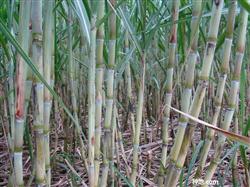
How should sugarcane be fertilized? Please advise.
Sugarcane is an important raw material for sugar production; in China, cane sugar accounts for 80% of total sugar consumption. When growing sugarcane, the light energy utilization rate and land productivity per unit area are relatively high. Compared with growing grain crops, sugarcane is a crop with relatively large economic returns. Especially the fruit cane eaten as a fruit, its economic income per unit area is generally 3 times or more higher than that of sugarcane used for sugar production.
In areas with a yield of about 5 tons per mu, for every ton of millable cane produced, the three elements nitrogen, phosphorus and potassium absorbed from the soil convert to 1.75~4.35 kg of urea, 1.95~8.35 kg of superphosphate, and 2.5~4.15 kg of potassium chloride. The above figures refer to the amounts of nitrogen, phosphorus and potassium that each ton of sugarcane absorbs from the soil, but the fertilizer applied cannot all be absorbed and used by the sugarcane: part is lost through volatilization, part is lost with water runoff, and part is fixed by certain elements in the soil and loses its fertilizer effect. Therefore, the amount of fertilizer needed for each ton of sugarcane produced is about 1 to 2 times more than the above amounts.
The life of sugarcane can be divided into the seedling stage, tillering stage, elongation stage, and technological maturity stage. The ratio of nitrogen, phosphorus and potassium absorbed by sugarcane is 2:1:2.2. At the seedling stage, the absorption amounts of nitrogen, phosphorus and potassium account for 8%, 9% and 4% of the total absorption during the whole growth period respectively; by the tillering stage they account for 16%, 18% and 14% respectively; by the elongation stage they account for 66%, 68% and 74% respectively; and by the maturity stage they account for 10%, 6% and 8% respectively. That is, in the early stage of sugarcane growth there must be a sufficient nutrient supply to promote root development, early tillering and more tillering, and to increase the number of effective stalks of sugarcane. The middle stage of sugarcane growth (the elongation stage) is a clear peak period of fertilizer absorption.
The middle growth stage is the stage of cane stalk elongation. With the massive proliferation and continuous renewal of the growing point, leaves and root system, as well as the rapid elongation of the cane stalk, assimilates gradually accelerate their accumulation, and the amount of fertilizer absorbed increases greatly, accounting for more than 50% of the total fertilizer requirement for the whole period. During this period, temperature, rainfall and sunlight are abundant, and sugarcane has the highest utilization rate of light energy and nutrients. Therefore, the beginning of elongation should be the key fertilization period, and fertilization should follow the principles below according to the growth conditions of the sugarcane:
①Apply appropriate tillering-promoting fertilizer and heavy stalk-attacking fertilizer. The tillering-promoting fertilizer mainly uses quick-acting nitrogen fertilizer (urea, ammonium bicarbonate, etc.), somewhat more than the seedling-strengthening fertilizer, accounting for about 15~20% of the whole-period dosage: the tillering-promoting fertilizer is applied together with medium hilling, and the stalk-attacking fertilizer is applied from the late tillering stage to the early elongation stage, together with large hilling.
②Increase the application of organic fertilizer. Organic fertilizer can replenish soil humus, improve soil structure, continuously decompose and release soil nutrients, and continuously supply the nutrients needed for sugarcane growth; the combined application of chemical fertilizer and organic fertilizer can improve the utilization rate of chemical fertilizer and also promote the mineralization and decomposition of organic fertilizer, achieving the effect of improved fertilizer efficiency and complementarity.
③Apply phosphorus and potassium fertilizer early. Phosphorus and potassium fertilizers should be applied early, preferably as a basal fertilizer; if they cannot be applied as a basal fertilizer, generally they should at the latest be applied as soon as possible during the early tillering stage.
Click to get more sugarcane growing techniques
Click to get more fruit growing techniques