How to fertilize effectively in sugarcane cultivation? Key points of the method explained
How to fertilize effectively in sugarcane cultivation? Please note that because sugarcane has a well-developed root system and a long growth period, each crop removes a large amount of nutrients from the soil. Therefore, applying more organic fertilizer when growing sugarcane can improve soil structure and is very effective at increasing yield and improving the soil. Base fertilizer: apply enough base fertilizer...
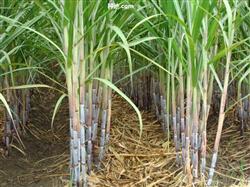
How to fertilize effectively in sugarcane cultivation? Please explain
Because sugarcane has a well-developed root system and a long growth period, each crop removes a large amount of nutrients from the soil. Therefore, applying more organic fertilizer when growing sugarcane can improve soil structure and is very effective at increasing yield and improving the soil.
Base fertilizer: Applying enough base fertilizer allows sugarcane to sprout quickly, spread its roots rapidly, and tiller early with strong seedlings. If the base fertilizer is insufficient and only later topdressing is relied on, the seedlings will not be strong, they will easily become thick at the top and thin at the bottom, the root base will be unstable, and lodging will occur easily. The base fertilizer is generally mainly organic fertilizer, supplemented by inorganic fertilizer; because sugarcane has a well-developed root system and a long growth cycle, the supplemental organic fertilizer can effectively improve the soil and replenish the needed fertility.
Topdressing: During the seedling stage, sugarcane has an urgent but small demand for nutrients, with a high demand for nitrogen, followed by potassium and phosphorus. Although sugarcane needs little fertilizer at the seedling stage, fertilizing at this stage is crucial to sugarcane growth. If fertilization at the seedling stage is insufficient, the seedlings and tillers will grow short and stunted and develop poorly, and even later fertilizer supplementation will make it hard to recover, ultimately leading to reduced yield and quality. For seedling fertilizer, a high-nitrogen quick-soluble fertilizer is best; compound fertilizer is recommended, and organic fertilizer can be added with an appropriate increase in the amount. When applying, it is suitable to combine it with intertillage and earthing up by applying directly in holes, or by applying in holes after mixing with water; in drought conditions, apply in holes after mixing with water. In addition, gaps should be checked and seedlings replanted in time so that the population grows uniformly.
The application of tillering fertilizer for sugarcane should be determined according to specific conditions. If fertilizer was sufficient in the early stage and the sugarcane seedlings are strong, it can be applied all at once at the tillering stage, and the amount should be small. The application method is the same as for seedling fertilizer.
During the elongation stage, sugarcane has a large demand for fertilizer, accounting for more than 50% of the entire growth period, so fertilization should be focused on this stage. Because phosphorus and potassium fertilizers are mainly used as base fertilizer and applied in the early stage, this stage mainly involves topdressing nitrogen fertilizer. The amount of stem fertilizer should be determined according to the field and the seedlings. If the sugarcane seedlings show signs of premature senescence, it can be applied all at once; if growth is steady, it can be applied in two split applications in early July and early August, with the earlier application heavier and the later one lighter. Fertilization is generally carried out after rain or when the soil is moist; it is best to combine it with weeding and earthing up, applying the evenly mixed fertilizer in strips or holes 10 cm beside the sugarcane clump and covering it with a thick layer of soil. Do not fertilize before heavy rain to prevent leaching by rainwater. If there is no rain for 3 days after fertilization and the loosened soil around the clump begins to dry, water should be applied in time. If the soil is dry, drought relief should be carried out first, and then fertilizer applied.
Final fertilizer: Some people believe that a final topdressing should be applied, on the grounds that both the later growth of sugarcane and the underground sugarcane buds require a certain amount of nutrients. Others believe that final topdressing should not be applied, because although sugarcane needs a small amount of nutrients in the later stage, these can be supplied through the redistribution of nutrients within the sugarcane plant and the nutrients stored in the soil, as long as fertilization in the early and middle stages is sufficient; in addition, the field is hot and stuffy in the later stage, making operations very difficult. We suggest that farmers should decide according to the fertility of the field. If the field is fertile and early-stage fertilization is sufficient, and stem fertilizer is applied according to steady-growing sugarcane seedlings, then final topdressing may be omitted. If the soil fertility is poor and early-stage fertilization is insufficient, an appropriate amount of potassium fertilizer may be applied. The application time should not be too late, and the amount should not be too much, so as not to delay maturity and reduce sugar content; after application, earth up the soil. If fertilizer deficiency appears 1 month before harvest, foliar fertilizer should be sprayed.
With the renewal of sugarcane varieties and the increase in yield and multiple cropping index, the deficiency of trace elements in the soil is becoming increasingly obvious. On the basis of stabilizing nitrogen, applying phosphorus, and increasing potassium, sugarcane farmers should also pay attention to supplementing medium and trace elements. Therefore, when growing sugarcane, applying an appropriate amount of farmyard manure can help, as the effective live bacteria in it can fix nitrogen, phosphorus, potassium, and trace elements in the soil very well.
Click to get more sugarcane cultivation techniques
Click to get more fruit cultivation techniques