How to fertilize sugarcane scientifically? Key technical points explained
How to fertilize sugarcane scientifically? Please give guidance. Sugarcane has the nutritional characteristics of a high fertilizer requirement, a high potassium requirement, and high nutrient uptake in the middle and late growth stages. These characteristics must be grasped when fertilizing in order to achieve high yields. 1. Apply sufficient basal fertilizer. The basal fertilizer should be mainly organic fertilizer, used in combination with inorganic fertilizer. Generally, apply 1...
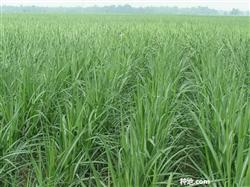
How to fertilize sugarcane scientifically? Please give guidance
Sugarcane has the nutritional characteristics of a high fertilizer requirement, a high potassium requirement, and high nutrient uptake in the middle and late growth stages. These characteristics must be grasped when fertilizing in order to achieve high yields.
1. Apply sufficient basal fertilizer The basal fertilizer should be mainly organic fertilizer, used in combination with inorganic fertilizer. Generally, apply 1500-2000 kg of organic fertilizer, 3-5 kg of urea, 15-20 kg of superphosphate, and 6-8 kg of potassium fertilizer or 100 kg of plant ash per mu. When fertilizer is plentiful, part of it can be broadcast over the whole field during land preparation, and the rest applied in the furrows at planting, then covered with soil after planting. If the amount of fertilizer is not large, it should be applied concentrated in the furrows at planting. In order to better play the role of the basal fertilizer, before application, the organic fertilizer and phosphate fertilizer should be composted together for more than 15 days, and mixed with quick-acting nitrogen, phosphorus and potassium fertilizers at the time of application. After sowing, apply 1500-2000 kg of human waste water.
2. Apply the seedling-promoting fertilizer early During the seedling stage, the root system grows abundantly, and leaves and tillers are continuously produced. Applying the seedling-promoting fertilizer early not only promotes the growth of sugarcane seedlings and the root system, but also promotes leaf growth, continuously expanding the leaf area, improving photosynthesis, and thereby promoting early and rapid tillering. The seedling-promoting fertilizer is applied when the seedlings have basically emerged evenly and have 3-4 leaves. The seedling fertilizer is mainly quick-acting nitrogen fertilizer, applying 40-50 loads of clear water and manure per mu, combined with 3-4 kg of urea, or 10 kg of ammonium bicarbonate. If the amount of phosphorus and potassium in the basal fertilizer is insufficient, it should be added at this time. Since the sugarcane plants have not yet closed the rows and the root system is not well developed, the ability to absorb fertilizer is not yet strong. In order to reduce fertilizer loss, it is advisable to apply it in holes combined with intertillage and earthing up, diluted with water, especially in drought conditions it should be applied with sufficient water.
3. Apply the tillering fertilizer steadily The amount and number of applications of the tillering fertilizer should be determined according to specific conditions. If the basal fertilizer and seedling-promoting fertilizer are relatively sufficient and the sugarcane seedlings are strong, it can be applied all at once at the peak tillering stage, and the amount applied should be small. If the basal fertilizer is insufficient and the seedling-promoting fertilizer is also inadequate, and the seedlings grow weakly, the amount applied should be increased and applied in two split applications. One application at the early tillering stage to promote tillering, called the tillering-promoting fertilizer. One application at the peak tillering stage to ensure strong tillers, called the strong-tiller fertilizer. The tillering fertilizer generally uses 30--40 loads of human and livestock manure per mu, and 6-8 kg of urea, applied in holes diluted with water just like the seedling fertilizer.
4. Apply the stem-promoting fertilizer heavily The stem-promoting fertilizer is the key to increasing sugarcane yield. It must be applied heavily. Phosphate and potassium fertilizers are mainly applied in the basal fertilizer and early stage, therefore, the stem-promoting fertilizer mainly topdresses nitrogen fertilizer. Generally, it is applied in two split applications at the early elongation stage and the peak elongation stage, applying 5-7 kg of urea or 15 kg of ammonium bicarbonate per mu each time by furrow application or hole application, combined with intertillage and heavy earthing up, to promote sugarcane root growth, strengthen the absorption function, stabilize the sugarcane plants, and enhance lodging resistance. If phosphorus and potassium were insufficient in the early stage, they should also be supplemented, so as to achieve maximum growth without reducing sugar content and yield due to excessive nitrogen fertilizer.
5. Supplement with a tail-strengthening fertilizer In order to promote and maintain late-stage growth, help cultivate the underground sugarcane buds, and lay a good foundation for the ratoon crop of the following year, a tail-strengthening fertilizer should be supplemented once. Generally, it is applied two months before entering maturity. The application time should not be too late, and the amount applied should not be too much, so as not to delay maturity and reduce sugar content. Generally, apply 5-7 kg of ammonium bicarbonate per mu diluted with water, and carry out heavy earthing up. If fertilizer deficiency appears one month before harvest, foliar spraying can be carried out as a supplementary application.
Click to get more sugarcane planting techniques
Click to get more fruit planting techniques