-
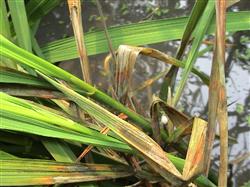
What are the common types of rice pests and diseases?
What pests and diseases affect rice? Please introduce control methods. Rice pests and diseases include rice blast, sheath blight, rice stem borers, rice planthoppers, and the rice red-spotted black spittlebug. They cause serious damage to rice, so control should be taken seriously. For control methods, refer to the following: Rice blast: long-term deep flooding or excessive drought, and excessive application of nitrogen fertilizer, lead to severe rice blast. Rice has three susceptible periods in its life, namely the seedling stage, the active tillering stage, and the full heading stage. Neck blast has the greatest impact on rice yield, so early prevention should be carried out at the booting stage and full heading stage. Rice blast is divided into: seedling blast, leaf blast, node blast, neck blast and grain blast. Rice blast control should adopt comprehensive control measures centered on planting disease-resistant high-quality varieties, based on healthy cultivation, and supplemented by chemical protection.
-
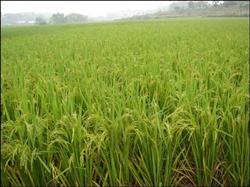
How should pests and diseases be controlled in the late growth stage of rice?
How should pests and diseases in the late stage of rice be controlled? Please provide guidance methods. Pests and diseases cause serious damage in the late stage of rice. The control methods can refer to the following: 1. Sheath blight: The disease has recently been rising faster. In a general survey of each town on September 10, the average rate of diseased hills was 13.7%, and the rate of diseased plants was 3.3%. The disease situation has clearly accelerated compared with the previous period...
-
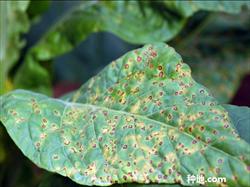
Control methods for tobacco wildfire disease and angular leaf spot
How to control tobacco wildfire disease and angular leaf spot? Tobacco wildfire disease and angular leaf spot are important diseases of tobacco. The two diseases are very similar in terms of pathogen characteristics, infection patterns and control methods. In the field, these two bacterial diseases often occur together and are relatively common in tobacco-growing areas across the country. Wildfire disease in...
-
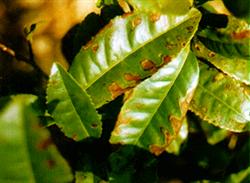
What are the methods for tea plant pest and disease control?
How to control tea plant pests and diseases? Please guide. The meaning of deep processing of tea: Deep processing of tea refers to using fresh tea leaves or finished tea as raw materials, or using tea, tea factory waste, defective products, or by-products as raw materials, and using corresponding processing techniques and methods to produce tea-containing products. Tea-containing products may be tea-based...
-
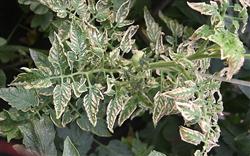
Tomato Growing Techniques: What Is Tomato Yellow Leaf Curl Virus Disease?
What is tomato yellow leaf curl virus disease? An introduction: After a tomato plant is infected with tomato yellow leaf curl virus disease, the upper leaves turn yellow and become smaller, the leaf margins curl upward, the leaves become crinkled and curled, the internodes shorten, flowering and fruiting become difficult, the fruit is small and ripens slowly. Infected plants grow slowly and are noticeably stunted. The damage caused by tomato yellow leaf curl...
-
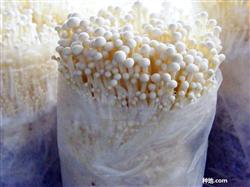
Control Methods for Black Spot Disease and Rust Spot Disease in Enoki Mushrooms
What to do when enoki mushrooms develop black spot disease and rust spot disease? Please advise. 1. Black spot disease: a bacterial disease caused by Pseudomonas bacteria. After infection, oval brown or dark brown spots appear on the caps of enoki mushrooms, initially needle-tip sized, expanding to 2-4 mm in diameter, with neat edges, and sometimes the caps crack. Control methods...
-
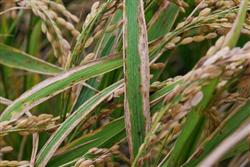
What are the control methods for the three major rice diseases?
How do you control the three major rice diseases? Please explain the control methods. The three major rice diseases can be controlled by referring to the following methods: 1. Rice blast (1) Leaf blast: dark green, nearly round or oval lesions, which later become slightly pointed at both ends; generally, when acute-type lesions appear or an infection center develops, especially in rice fields with high nitrogen fertilizer rates and tender, lush green growth, when the total number of leaf blast lesions occurring on 20 hills of rice during the entire growth period before heading reaches more than 400, spraying must be carried out, with an interval of 3 to 5 days, and continuous spraying 2 times.
-
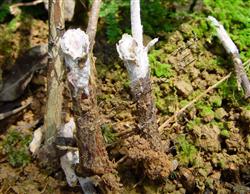
What are the common root diseases of tea plants?
What diseases affect tea roots? Please advise: tea roots are affected by the following diseases: 1. Tea seedling white silk blight 1.1 Distribution and symptoms: Tea seedling white silk blight is a common root disease in nurseries. It has a wide distribution range and causes serious damage. Besides tea, it can also harm more than 200 kinds of plants including cucurbits, Solanaceae crops, fiber crops, tobacco, and peanuts...
-
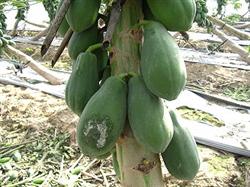
What disease is brown rot in papaya cultivation?
What is papaya brown rot? Here is an introduction and control methods. Symptoms of papaya brown rot: Brown rot mainly damages the fruit, but can also damage flowers and young shoots. When the fruit is affected, small brown, nearly round spots appear first, and as the disease develops, the spots continue to expand. When conditions are suitable, the spots quickly spread over the entire fruit surface,...
-
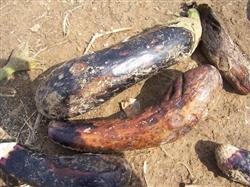
Common Summer Eggplant Pests and Diseases and Their Control Methods
Which pests and diseases need to be controlled in summer eggplant? The following are several pests and diseases that need to be controlled in summer eggplant for reference: I. Control of eggplant insect pests 1. Red spider mite: For agricultural control, keep the soil moist regularly, avoid excessive drought, remove weeds and fallen leaves in time, and reduce sources of the pest. For chemical control, strengthen...
条件筛选