How should pests and diseases be controlled in the late growth stage of rice?
How should pests and diseases in the late stage of rice be controlled? Please provide guidance methods. Pests and diseases cause serious damage in the late stage of rice. The control methods can refer to the following: 1. Sheath blight: The disease has recently been rising faster. In a general survey of each town on September 10, the average rate of diseased hills was 13.7%, and the rate of diseased plants was 3.3%. The disease situation has clearly accelerated compared with the previous period...
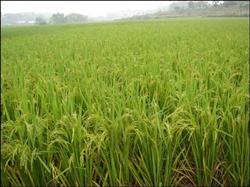
How should pests and diseases in the late stage of rice be controlled? Please provide guidance methods.
Pests and diseases cause serious damage in the late stage of rice. The control methods can refer to the following:
1. Sheath blight: The disease has recently been rising faster. In a general survey of each town on September 10, the average rate of diseased hills was 13.7%, and the rate of diseased plants was 3.3%. The disease situation has clearly accelerated compared with the previous period. In particular, the Wuyunjing series varieties are generally seriously affected by sheath blight. According to the current temperature and the rice growth period, the rate of diseased hills and the rate of diseased plants will continue to rise in the near future.
2. Fifth-generation small brown planthopper: This year, the population density of the small brown planthopper has remained high. In a general survey of each town on September 10, the average number of insects per 100 hills was 20.6, and the field population was relatively high. In order to reduce the base population, lessen the degree of damage in the late stage of rice, and reduce the source base for next year's insects, pesticide application is necessary for control.
3. Fourth-generation brown planthopper: This year, the immigration amount of the brown planthopper was low. The occurrence degree of the second and third generations of brown planthopper in this city was moderate, but the threat of the fourth generation still exists. On September 10, at the fixed monitoring field of the plant protection station, the number of insects per 100 hills was 24.6. On September 9, in a general survey of each town, the average number of insects per 100 hills was 7.9. In particular, some fields where pesticides were not applied according to the recommended formula had higher insect numbers, bringing serious effects on the late growth of rice.
4. Fourth-generation rice leaf roller: At present, the field population of eggs and larvae of the fourth-generation rice leaf roller is still relatively high. Each town investigated 35 fields. The average number of eggs and larvae per 100 hills was 170.4, including 20.4 larvae and 150 eggs. In particular, some late-planted direct-seeded rice may still be eaten white.
5. The rice seedling growth situation is extremely favorable for the occurrence of pests and diseases. The rice varieties planted in our city this year are all large-panicle, round-stem varieties, with tender green growth, large growth volume, and a high degree of field closure, which is favorable for rice planthoppers to feed and lay eggs. In particular, the Wuyunjing series varieties show especially rapid increases in sheath blight in the late stage. For direct-seeded rice and other varieties with late panicle emergence, the leaves are tender green, the upper functional leaves are long, and the growth period is late, which is extremely favorable for the occurrence and damage of the rice leaf roller.
6. Abnormal temperature is favorable for a major outbreak of pests and diseases. Since entering September, the temperature has been relatively high. The average temperature in early September was 26.0, obviously higher than in normal years. In addition, according to forecasts by the meteorological department, the temperature in mid-September will still be relatively high, creating very favorable conditions for the massive reproduction of the fourth-generation brown planthopper and fifth-generation small brown planthopper, as well as for sheath blight in the late stage.
II. Control recommendations
In view of the current severe trend of occurrence and damage of pests and diseases in the late stage of rice, and proceeding from the requirement of increasing production and ensuring a bumper harvest, the following recommendations are put forward for pest and disease control in the next stage:
1. Application time: For large areas, September 15-17.
2. Application methods: According to local cultivation forms, main planted varieties, and growth progress, provide classified guidance to ensure control effects. (1) For large-area conventional rice: use 25% pymetrozine suspension concentrate 20 g per mu, plus 5% jinggangmycin 400 ml per mu, mainly targeting rice planthoppers and sheath blight; (2) For direct-seeded rice, tender green conventional rice fields, and fields with a late growth period: use 25% pymetrozine suspension concentrate 20 g per mu, plus 40% diazinon-phoxim 80 ml, plus 5% jinggangmycin 400 ml per mu, mainly targeting rice planthoppers, rice leaf roller, and sheath blight. For some particularly late fields, add 20% Dingfeng jinggang-tricyclazole suspension concentrate 100 g to control ear neck blast. For the above formulas, dilute with 50-60 kg of water per mu and spray with a small machine, or dilute with 150 kg of water and spray with "Gongnong 36". In particular, fields where pymetrozine was not used on August 22-23 and for the panicle emergence treatment should be the focus of this application.
III. Precautions
1. The sericulture season has now begun. Diazinon-phoxim is relatively sensitive to silkworms. When applying pesticides in rice fields beside mulberry fields, pay attention to the wind direction to prevent direct contamination of mulberry leaves.
2. Improve the quality of pesticide application. Use the correct pesticide and dosage, add sufficient water, spray evenly, and insist on applying pesticides with water in the field. Keep water in the field for 2-3 days after application.
3. Diazinon-phoxim is relatively sensitive to fish, shrimp, and other aquatic animals. Pay attention to safety when applying pesticides. After application, field water must not be directly discharged into fish ponds or shrimp (crab) ponds.
Click to get more rice cultivation techniques
Click to get more grain crop cultivation techniques