What are the methods for tea plant pest and disease control?
How to control tea plant pests and diseases? Please guide. The meaning of deep processing of tea: Deep processing of tea refers to using fresh tea leaves or finished tea as raw materials, or using tea, tea factory waste, defective products, or by-products as raw materials, and using corresponding processing techniques and methods to produce tea-containing products. Tea-containing products may be tea-based...
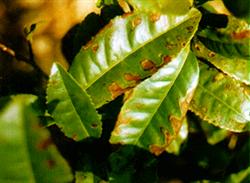
How to control tea plant pests and diseases? Please guide.
The meaning of deep processing of tea: Deep processing of tea refers to using fresh tea leaves or finished tea as raw materials, or using tea, tea factory waste, defective products, or by-products as raw materials, and using corresponding processing techniques and methods to produce tea-containing products. Tea-containing products may be tea-based or based on other substances.
Green food tea production should start from the entire ecosystem of crops, pests, diseases, and weeds, comprehensively apply various control technical measures, create ecological environment conditions that are unfavorable for the breeding of pests, diseases, and weeds and favorable for the reproduction of various natural enemies, maintain the balance of the agricultural ecosystem and biodiversity, and reduce losses caused by various pests and diseases.
I. Give priority to agricultural measures. Through a series of measures such as selecting disease-resistant and pest-resistant varieties, cultivating strong seedlings, strengthening cultivation management, intertillage and weeding, deep plowing and sun-drying soil in autumn, cleaning the field, crop rotation, and intercropping and relay intercropping, play a role in preventing and controlling pests, diseases, and weeds.
II. Use light, color, and sex pheromone attractants as much as possible to trap and kill pests, and mechanically capture pests. For diseases, special attention should be paid to early prevention, reducing opportunities for initial infection, and cutting off the cycle of re-infection.
III. Under special circumstances, when pesticides must be used, the guidelines for pesticide use on tea should be followed, and low-toxicity and low-residue targeted pesticides should be used, but their use should be strictly limited to non-tea-picking seasons such as winter garden closure.
(1) Leafhoppers: apply pesticide for control before the peak nymph period in May-June and August-September. Control can be carried out with 25% imidacloprid wettable powder, or 100 g/L bifenthrin emulsifiable concentrate, or 20% fenpropathrin emulsifiable concentrate, etc.
(2) Black citrus whitefly: apply pesticide from mid-to-late May to early October. Control can be carried out with 20% fenpropathrin emulsifiable concentrate, or 25% imidacloprid wettable powder.
(3) Tea aphid: apply pesticide in early-to-mid May and from late September to mid-October. Control can be carried out with 25% imidacloprid wettable powder, or 20% azophos? B acephate emulsifiable concentrate, or 20% fenpropathrin emulsifiable concentrate.
(4) Weevils: apply pesticide 1-2 times on the canopy and soil surface during the peak adult occurrence period from May to late June. Control can be carried out with 27% phoxim? B triazophos emulsifiable concentrate, or 20% fenpropathrin emulsifiable concentrate.
(5) Mites: control can be carried out with 20% azophos? B acephate emulsifiable concentrate, or 20% fenpropathrin emulsifiable concentrate, or 25% imidacloprid wettable powder.
(6) Tea blister blight: control can be carried out with 25% carbendazim? B wettable powder, or 75% chlorothalonil.
(7) Tea gray blight, tea anthracnose, and tea ring spot can be controlled with 70% thiophanate-methyl, or 80% carbendazim wettable powder.
Click to get more tea cultivation techniques
Click to get more flower cultivation techniques