What are the common root diseases of tea plants?
What diseases affect tea roots? Please advise: tea roots are affected by the following diseases: 1. Tea seedling white silk blight 1.1 Distribution and symptoms: Tea seedling white silk blight is a common root disease in nurseries. It has a wide distribution range and causes serious damage. Besides tea, it can also harm more than 200 kinds of plants including cucurbits, Solanaceae crops, fiber crops, tobacco, and peanuts...
What diseases affect tea roots? Please advise
Tea roots are affected by the following diseases:
1. Tea seedling white silk blight
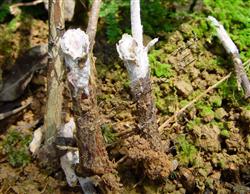
1.1 Distribution and symptoms: Tea seedling white silk blight is a common root disease in nurseries. It has a wide distribution range and causes serious damage. Besides tea, it can also harm more than 200 kinds of plants including cucurbits, Solanaceae crops, fiber crops, tobacco, and peanuts. It occurs at the root collar, where the diseased part first shows brown patches, with white cottony growth on the surface; after spreading, it encircles the root collar, forming a white silky mycelial membrane that can extend onto the soil surface. Later, rapeseed-shaped sclerotia form on the diseased part, changing from white to yellowish-brown to dark brown. Due to the pathogenic action of the fungus, the cortex of the diseased plant rots, water and nutrient transport is blocked, leaves wither and drop, and finally the whole plant dies.
1.2 Pathogen: It is a fungus of the genus Pellicularia in the Basidiomycotina. The mycelium is initially colorless, later slightly brown, dense, and forms sclerotia. The sclerotia are round, smooth and hard on the surface, and dark brown. Under hot and humid conditions, it produces reproductive bodies, namely basidia and basidiospores, but these are uncommon and play little role in disease transmission.
1.3 Occurrence pattern: It mainly overwinters as sclerotia in the soil or attached to diseased tissue, and can survive 5-6 years under dry conditions. At the turn of spring and summer the following year, when temperature and humidity are suitable, the sclerotia germinate and produce mycelium, which spreads along soil crevices or is transmitted by rainwater, irrigation water, and farm tools, infecting the root collar of seedlings and causing damage. High temperature and high humidity favor the disease, with the most severe occurrence from June to August. The disease is also more serious in sticky soil, soil with excessive acidity, low-lying terrain, poor tea seedling growth, and where the previous crop was a susceptible host.
1.4 Control methods: Choose virgin land or land that has not grown susceptible crops as a nursery. Pay attention to drainage in tea gardens, improve the soil, promote vigorous seedling growth, and enhance disease resistance. In affected nurseries, remove diseased seedlings promptly and disinfect the soil. Chemical agents include 50% carbendazim at 500 times dilution, 0.5% copper sulfate solution, or 70% thiophanate-methyl at 500 times dilution. Tea seedlings can also be soaked in 20% lime water for disinfection before transplanting.
2. Tea root crown gall disease (compared with tea seedling damping-off)
2.1 Distribution and symptoms: It mainly harms tea seedlings and occurs severely in some tea regions, causing tea seedlings to die. It is common in cutting nurseries, and both taproots and lateral roots can be affected. The pathogen invades through the cut surface of cuttings or root wounds, initially producing light brown spherical protrusions, which gradually expand into tumor-like growths, small ones like millet grains and large ones like peas; multiple tumors often merge with each other into irregular large tumors. The tumors are brown, lignified and hard, with a rough surface. After being affected, tea seedlings have fewer fibrous roots, and the aboveground part grows poorly or dies.
2.2 Pathogen: The tea root crown gall pathogen is a bacterium of the genus Agrobacterium [Agrobacterium tumefaciens (S. et T.) Conn.]. The cells are short rod-shaped, with 1-3 polar flagella. It forms grayish-white round colonies on ordinary culture medium. The optimum temperature for development is 25-29°C, and the lethal temperature is 51°C (10 minutes). It grows best at pH 7.3.
2.3 Occurrence pattern: The crown gall pathogen overwinters in soil or diseased tissue. When conditions are suitable the following year, it spreads and causes damage via water flow, soil insects, and farm tools. The pathogen invades through wounds or cuts on seedlings, grows and develops within the tissue, stimulates cells to divide rapidly, and produces tumors.
2.4 Control methods: Strictly inspect seedlings, control soil pests, and reduce root wounds. When necessary, seedlings can be soaked in 20% lime water for 10 minutes for disinfection before transplanting.
3. Tea seedling root-knot nematode disease
3.1 Distribution and symptoms: It is mainly distributed in warm tea-producing regions. This disease is caused by a very small nematode. When the nematode invades tea roots, it causes tumors to form on the roots, resembling soybeans, rapeseeds, and the like, and varying in size. Affected root systems have no fibrous roots and are deformed; sometimes the root tip is thicker than the front part. The aboveground part of the diseased plant grows poorly, the plant is short, growth is weak, leaves turn yellow, and in dry seasons the leaves easily drop in large numbers and the plant dies.
3.2 Occurrence pattern: Root-knot nematodes are aerobic organisms that favor high temperature and dryness. They have multiple generations per year. When soil temperature reaches 25-30°C and soil moisture is about 50%, in sandy soil on high terrain with loose soil structure, one generation can be completed in 20-30 days. Nematodes occur more in the surface soil than in the lower soil layers, and they stop activity below 10°C.
3.3 Control methods:
① Choose virgin land as a nursery; land that has grown peanuts, cucurbits, beans, sweet potatoes, and other crops is not suitable as a nursery. In midsummer, the soil should be deep-plowed, exposed to the sun for 10 days, and then plowed once more, which can kill nematodes in the soil.
② For seedlings that are already diseased, apply more phosphate fertilizer and potassium fertilizer to improve their disease resistance. At the same time, disinfecting with lime or applying 1:20 tea seed cake water into the soil also has a good control effect.
Click to get more tea cultivation techniques
Click to get more flower cultivation techniques