Tomato Growing Techniques: What Is Tomato Yellow Leaf Curl Virus Disease?
What is tomato yellow leaf curl virus disease? An introduction: After a tomato plant is infected with tomato yellow leaf curl virus disease, the upper leaves turn yellow and become smaller, the leaf margins curl upward, the leaves become crinkled and curled, the internodes shorten, flowering and fruiting become difficult, the fruit is small and ripens slowly. Infected plants grow slowly and are noticeably stunted. The damage caused by tomato yellow leaf curl...
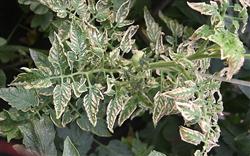
What is tomato yellow leaf curl virus disease? An introduction
After a tomato plant is infected with tomato yellow leaf curl virus disease, the upper leaves turn yellow and become smaller, the leaf margins curl upward, the leaves become crinkled and curled, the internodes shorten, flowering and fruiting become difficult, the fruit is small and ripens slowly. Infected plants grow slowly and are noticeably stunted.
Damage: Tomato yellow leaf curl virus disease is a devastating disease, and it can occur from the seedling stage through the harvest stage. Tomato yellow leaf curl virus disease is initially spread by whiteflies (Bemisia tabaci) among individual diseased plants, then gradually expands its range, and can also be spread through pests and through farmers' agricultural operations such as pruning during management. In the summer and autumn of 2006, the disease occurred on a large scale in Zhejiang and other provinces. From August to October 2007, the disease occurred in Fugou County in our province. In fields where tomato yellow leaf curl virus disease occurs commonly, yields can be reduced by 50%-80%, and in severe cases there is not a single fruit in the entire greenhouse. It is currently predicted that there is a trend of spread from south to north.
Control: The key to preventing tomato yellow leaf curl virus disease is to prevent the occurrence and damage of whiteflies in the early stages of the tomato crop. The seedling stage and about 1 month after transplanting are the most critical periods for controlling whiteflies. When raising seedlings, use 40-60 mesh insect-proof netting to strictly prevent whiteflies from entering, and also spray the systemic pesticide Actara 2500 times dilution; before transplanting, drench the roots with Actara 2500 times dilution again, with a period of effectiveness of 20-30 days, which can not only prevent the occurrence of whiteflies in the early stage but also help strengthen the seedlings; after transplanting, the greenhouse vents should be sealed with insect-proof netting of 40 mesh or more. It is best to hang insect-proof boards inside the greenhouse. When whiteflies are found, chemical control should be carried out. A relatively good control method is to close the greenhouse vents tightly, fumigate once with a smoke fumigant in the evening, and then the next day spray with Actara 2500 times dilution for control. Once the disease occurs, in addition to spraying insecticides to control whiteflies, it is also necessary to spray agents to control the disease, such as Virus A, sandanheganzuo, zhibingling, ningnanmycin, etc. High temperature and drought are also conditions for the occurrence of tomato yellow leaf curl virus disease. Ventilating frequently and watering lightly and frequently to lower the temperature inside the greenhouse can also effectively control the occurrence of the disease.
Click to get more tomato growing techniques
Click to get more vegetable growing techniques