-
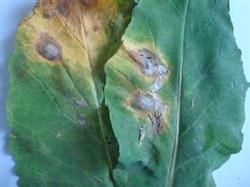
What are the control methods for rape black spot disease?
I. Symptoms Rape black spot disease mainly damages leaves, leaf stalks, stems and siliques. When leaves are infected, brown round spots appear initially, slightly concentric-ringed, sometimes with a yellow halo around them, and under high humidity black mold-like growth forms on them. When the leaf stalk and the junction between the leaf stalk and the main stem are infected, elliptical to spindle-shaped ring-patterned spots form, encircling...
-
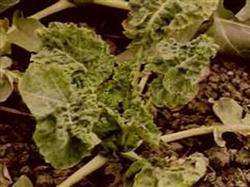
Symptom Identification and Control Methods of Rapeseed Viral Diseases
[Distribution and Damage] It occurs to varying degrees in all rapeseed-producing areas across the country, and generally the winter rapeseed areas suffer more severe disease than the spring rapeseed areas. This disease is caused by single or mixed infection of viruses such as Turnip mosaic virus (TuMV), Cucumber mosaic virus (CMV), Tobacco mosaic virus (TMV) and Rapeseed mosaic virus (YMV). Generally, yield is reduced by 20%-3...
-
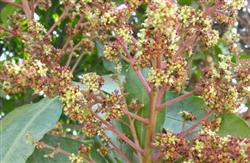
Pest and Disease Control Methods for Mango During the Flowering and Young Fruit Stages
The flowering and fruit-setting stage of mango is an extremely critical period in mango production management. The management measures for the flowering and fruit-setting stage include the following aspects: 1. Tidying up flowering branches and shoots. About 2 months before flower bud differentiation, remove overly dense branches, shaded weak branches and diseased or pest-infested branches, leaving only 1-2 shoots per branch. This can increase the tree canopy's...
-
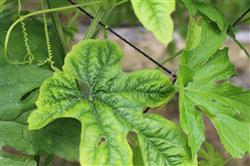
What are the methods for preventing and controlling pests and diseases in bitter melon?
How do you prevent and control pests and diseases in bitter melon? Please advise, thank you. The pests that are relatively difficult to control in bitter melon include the melon fruit fly, melon aphid, and melon webworm. 1. Melon fruit fly: commonly known as the "needle bee," the adult lays eggs in the fruit, and the larvae bore and feed inside the flesh, causing the fruit to rot and even drop, seriously affecting fruit quality and yield. Currently it is...
-
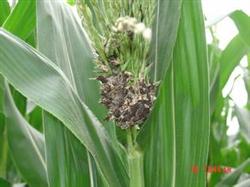
Occurrence Patterns and Control Methods of Black-Streaked Dwarf Disease in Spring Corn
Black-streaked dwarf disease is a viral disease transmitted by the virus-carrying small brown planthopper (Laodelphax striatellus), with the seedling stage being the main susceptible period. Since the 1990s, with changes in planting structure, black-streaked dwarf disease in single-season rice and spring corn in Chun'an County has worsened year by year, especially since 2000, when rice black-streaked dwarf disease has occurred throughout the county,...
-
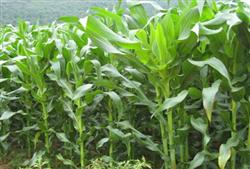
How to manage spring corn at the booting stage? Please keep this list of precautions
After the spring corn seedlings joint and the outer plants grow rapidly, the internal tassels and ears differentiate one after another; in the differentiation sequence, the tassel is slightly ahead of the ear. When the plant still has one to two leaves that have not yet extended their young leaves, this is commonly known as the small trumpet to large trumpet stage. Tassel and ear differentiation respectively enter the tetrad stage and the floret differentiation stage. The tassel is the key period for pollen formation...
-
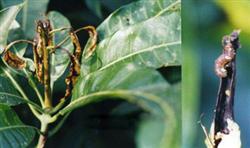
What are the methods for controlling mango pests and diseases?
How should mango pests and diseases be controlled? Which methods are effective? Integrated control of mango pests and diseases implements the plant protection policy of "prevention first, integrated control", based on improving the orchard ecological environment and strengthening cultivation management, comprehensively applying various control measures, giving priority to agricultural measures, biological control and physical control...
-
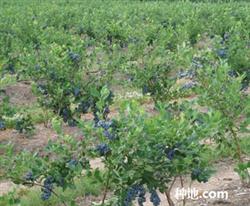
What are the common pests and diseases in blueberry cultivation?
What are the common pests and diseases in blueberry cultivation? The main pests and diseases of blueberries include "stem-boring longhorn beetles", the larvae of "scarab beetles", white grubs, as well as common pest and disease conditions such as "leaf chlorosis", "leaf blight", "mummy berry disease", and "leaf-eating nettle caterpillars". With good control, they can be avoided. Control principles...
-
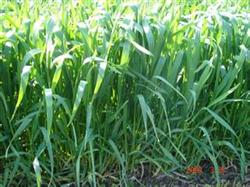
How to prevent and control wheat pests and diseases after spring? Practical tips are here
March 20 is "Spring Equinox," the day that falls exactly at the midpoint of the 90 days of spring, hence the name. There is a folk saying, "Spring Equinox and Autumn Equinox, day and night are equally divided." After the Spring Equinox, days grow longer and nights shorter, and temperatures gradually rise. "Spring Equinox" has an important influence on agricultural production activities. For the north, the Spring Equinox is the beginning of spring, ...
-
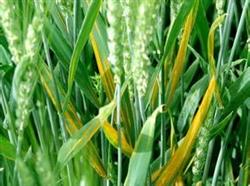
Spring disease, pest and weed control in wheat enters a critical period
If disease centers are found in the field, spray promptly to control them. If the diseased leaf rate reaches 5% and the severity is below 10%, use 50 g of 15% triadimefon wettable powder per mu, or 40 mL of 20% triadimefon emulsifiable concentrate per mu, or 30 g of 25% triadimefon wettable powder per mu, or 15-30 g of 12.5% diniconazole wettable powder per mu, ...
条件筛选