How to prevent and control wheat pests and diseases after spring? Practical tips are here
March 20 is "Spring Equinox," the day that falls exactly at the midpoint of the 90 days of spring, hence the name. There is a folk saying, "Spring Equinox and Autumn Equinox, day and night are equally divided." After the Spring Equinox, days grow longer and nights shorter, and temperatures gradually rise. "Spring Equinox" has an important influence on agricultural production activities. For the north, the Spring Equinox is the beginning of spring, ...
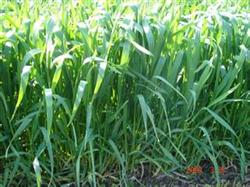 Green-up to jointing stage
The period from green-up to jointing of wheat is another peak period of infection and spread, as well as a peak period of damage, for root diseases such as wheat take-all, sheath blight and root rot, and viral diseases such as rosette dwarf disease and yellow dwarf disease. This period is also the peak period of damage by wheat spiders, underground pests and weeds, and is a key link in integrated control of wheat pests and diseases.
Strengthen fitness cultivation and prevent pests, diseases and weeds. Cultivation measures should be organically combined with pest and disease control, vigorously promoting high-yield fitness cultivation techniques such as timely hoeing, topdressing and watering to improve wheat's resistance to multiple diseases. Timely hoeing can remove weeds, and at the same time, it is necessary to seize the suitable control period after wheat green-up from late February to mid-March and carry out chemical weeding in time.
Do a good job in chemical control of pests and diseases. In recent years, wheat root diseases, mainly sheath blight, have occurred severely, greatly affecting wheat yield, especially in high-yield fields. The key technology for controlling wheat sheath blight is one seed treatment and one spray, namely chemical seed dressing at sowing time and spraying at green-up stage. In the control of wheat sheath blight, there is a tendency to neglect spray control at the green-up stage, and the control time is also too late, which is the main reason for poor control efficacy. Therefore, attention should be paid to control at the green-up stage, the suitable control period should be grasped, and according to pest and disease control thresholds, appropriate pesticides should be used for control, vigorously applying the technique of mixed application of insecticides and fungicides, and implementing scientific control.
Control thresholds for pests and diseases. The control thresholds for major pests and diseases from wheat green-up to jointing stage are: for sheath blight, 15%-20% diseased plants; for underground pests, 3% damaged wheat seedlings; for wheat spiders, 600 per meter of single row. To control sheath blight, 5% validamycin can be used at 150-200 ml per mu, mixed with 75-100 kg of water, and sprayed at the base of wheat stems, with a second spray after an interval of 10-15 days; to control underground pests, 40% isofenphos-methyl or 50% phoxim can be used at 40-50 ml per mu sprayed at the base of wheat stems; to control wheat spiders, 73% propargite emulsifiable concentrate can be used as a 1500-2000 times solution for spray control.
Ear stage
The ear stage of wheat is a period of concentrated occurrence and peak damage for many pests and diseases, including wheat aphids, first-generation armyworms, wheat blossom midges, powdery mildew, stripe rust, leaf rust, leaf blight, fusarium head blight and glume blight. In ordinary years, among these pests and diseases, wheat aphids have the largest occurrence area and cause the heaviest damage. The ear stage of wheat is the period when wheat finally forms yield, and it is also the peak period of concentrated occurrence and damage by multiple pests and diseases. Once pests and diseases cause damage, irreversible losses can result. Therefore, the ear stage of wheat is the last link and also the most critical period in integrated control of wheat pests, diseases and weeds. Prevention and control of pests and diseases should be effectively carried out to ensure high quality and high yield of wheat.
Use natural enemies to control wheat aphids. Wheat fields are overwintering sites and early-spring breeding bases for many natural enemies. Protecting natural enemies in wheat fields is not only beneficial for controlling wheat pests, but is also the main source of natural enemies of pests in subsequent crops, so attention should be paid to protecting and utilizing them.
Chemical control should be based on the control thresholds for wheat pests and diseases, seize the suitable control period, use appropriate pesticides for control, vigorously apply the technique of mixed application of insecticides and fungicides, and implement scientific control. ① The control thresholds for major pests and diseases at the wheat ear stage are: for wheat aphids, 500 per 100 ears; for first-generation armyworms, 25 per sq m; for wheat blossom midges, 5 per sample square (10 cm x 10 cm x 20 cm) at pupal stage and 10-25 at adult stage; for stripe rust, 2%-5% diseased leaves; for leaf rust, 5%-10% diseased leaves; for powdery mildew, 10% diseased leaves. ② The appropriate pesticides, doses and application methods are: to control wheat aphids, 2.5% deltamethrin emulsifiable concentrate at 10-15 ml per mu or 50% pirimicarb wettable powder at 8-10 g per mu can be sprayed for control; to control first-generation armyworms, 50% phoxim emulsifiable concentrate at 50-75 ml can be sprayed for control; to control rust and powdery mildew, 25% triadimefon wettable powder at 30 g per mu or 40% triadimefon emulsifiable concentrate at 50-75 ml per mu can be sprayed for control; to control fusarium head blight, leaf blight and glume blight, 50% carbendazim wettable powder at 75-100 g per mu can be sprayed for control. ③ The mixed pesticide application technique should be scientifically applied according to the control target and control threshold. When a single pest or disease occurs heavily while others occur lightly, single pesticide application should be used for control to avoid waste and pesticide pollution. ④ Fusarium head blight and glume blight of wheat should focus on prevention. If continuous cloudy weather occurs during the ear stage, pesticide should be sprayed for prevention after wheat flowering. Although wheat blossom midge is a pest that damages at the ear stage, the suitable control period is the pupal stage in mid-to-late April, and control should be carried out in time at the pupal stage to improve control efficacy. Per mu, 40% isofenphos-methyl emulsifiable concentrate at 150-200 ml can be mixed with 30-40 kg of fine sand or fine sandy soil and spread on the ground and hoed in; watering after application gives better control efficacy. If control cannot be carried out at the pupal stage, control at the adult stage of wheat blossom midge can be carried out when about 70% of wheat in the field has headed, using 50% phoxim emulsifiable concentrate at 50-75 ml for spray control.