What are the methods for controlling mango pests and diseases?
How should mango pests and diseases be controlled? Which methods are effective? Integrated control of mango pests and diseases implements the plant protection policy of "prevention first, integrated control", based on improving the orchard ecological environment and strengthening cultivation management, comprehensively applying various control measures, giving priority to agricultural measures, biological control and physical control...
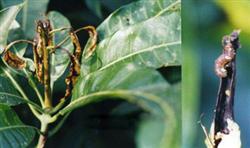
How should mango pests and diseases be controlled? Which methods are effective?
Integrated control of mango pests and diseases implements the plant protection policy of "prevention first, integrated control", based on improving the orchard ecological environment and strengthening cultivation management, comprehensively applying various control measures, giving priority to agricultural measures, biological control and physical control methods, combined with the use of high-efficiency, low-toxicity, low-residue chemical pesticides, banning highly toxic, high-residue chemical pesticides and improving pesticide application techniques, reducing pesticide dosage, keeping pests and diseases below the economic threshold, and ensuring that mango quality complies with the provisions of the NY5024 standard.
I. Agricultural control
Select excellent varieties resistant or tolerant to pests and diseases according to local conditions. A single variety should be planted in the same plot, avoiding mixed planting of varieties with different maturity periods. In the process of orchard construction and cultivation management, means such as planting protective forest belts, nectar source plants, intercropping between rows or growing grass are used to create an ecosystem favorable to fruit tree growth and natural enemy survival but unfavorable to pest and disease growth, maintaining biodiversity and ecological balance.
Through pruning during the mango shoot-flushing period, flowering period, fruiting period and after fruit harvest, remove crossing branches, overly dense branches and pest-and-disease-infected branches, and burn them in a centralized manner to reduce sources of infection. In winter, thoroughly clean the field, and burn dead branches and pest-and-disease-infected branches in a centralized manner to reduce sources of infection. Strengthen cultivation management, improve plant disease resistance, release shoots at the right time, promote the neat emergence of each flush, avoid peak pest periods, and remove scattered young shoots, which is conducive to unified pesticide spraying for control. Carry out intertillage, turn the soil and dry it in the sun to kill underground pests.
II. Physical and mechanical control
Use insect-attracting lamps to trap and kill pests active at night, and use yellow fluorescent lamps to drive away fruit-sucking noctuid moths.
Use manual or tool-based capture to kill pests such as scarab beetles and pupae.
Use colors to trap and kill pests, such as yellow boards, blue boards and white boards.
Use insect-proof nets and insect-catching nets to isolate and trap pests.
Use fruit bagging technology to control pests and diseases
III. Biological control
Plant nectar source plants around the orchard and between rows to create an ecological environment conducive to the reproduction of natural enemies. Use mechanical and manual weeding as much as possible, which both controls weeds and protects natural enemies. Collect, introduce, breed and release major natural enemies of pests, such as predatory mites. Use biological pesticides such as fungi, bacteria and viruses, biochemical agents and insect growth regulators, mainly including Bacillus thuringiensis emulsion, Bacillus thuringiensis powder, biological compound insecticides, avermectin, liuyangmycin, diflubenzuron, chlorfluazuron, flufenoxuron, polyoxin, miman, and nongkang 120.
Click to get more mango planting techniques
Click to get more fruit planting techniques