Pest and Disease Control Methods for Mango During the Flowering and Young Fruit Stages
The flowering and fruit-setting stage of mango is an extremely critical period in mango production management. The management measures for the flowering and fruit-setting stage include the following aspects: 1. Tidying up flowering branches and shoots. About 2 months before flower bud differentiation, remove overly dense branches, shaded weak branches and diseased or pest-infested branches, leaving only 1-2 shoots per branch. This can increase the tree canopy's...
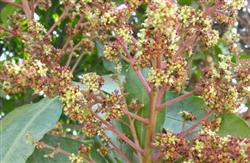 The main diseases of mango during the flowering stage are powdery mildew and anthracnose, and the pests are leafhoppers and aphids. If control is improper, it will lead to severe yield reduction and lower fruit quality.
Symptoms of powdery mildew: This disease mainly damages flowers, fruits, leaves, seedlings and young tender shoots. Affected parts first show small powdery spots, which gradually merge to form a layer of white powdery substance. After being damaged, flowers stop opening and then fall off. Young fruits are first covered with a powdery white substance, then the epidermis of the diseased part cracks and becomes suberized, and the diseased fruit falls off when it grows to the size of a pea. Chemical agents for controlling powdery mildew include: miebingwei suspension concentrate (avoid use during full bloom), triadimefon, fenbuconazole, dazomet M-45, thiophanate-methyl, mancozeb, and carbendazim.
Symptoms of anthracnose: This disease mainly damages tender leaves, flowers, fruits and tender shoots. After flowers are infected, small spots appear, which eventually turn black and rot, and cannot set fruit. After young fruits are infected, they become deformed, turn black and fall off. For controlling anthracnose, agents such as thiophanate-methyl, mancozeb, captan, and carbendazim can be selected.
The excrement of mango leafhoppers and aphids can both lead to the occurrence of sooty mold. If there are soot-like substances or oily bright spots on mango leaves, there are often large numbers of leafhoppers or aphids above them. Leafhoppers resemble cicadas; adults are dark in color, have wings, and measure 4-5 mm; nymphs are orange-yellow or light yellow, with a body length of 1-4 mm. Aphids are relatively plump; winged individuals are about 1.6 mm long, with colorless transparent wings; wingless individuals are about 2 mm long; nymphs are wingless and even smaller.
Chemical agents for controlling leafhoppers: dimethoate emulsifiable concentrate, malathion emulsion, miebaiike, and fenvalerate.
Chemical agents for controlling aphids: dimethoate emulsifiable concentrate, malathion emulsion, miebaiike, and kungfu.
If the above pests and diseases are found, select one or two chemical agents for control according to the symptoms. Use them according to the instructions on the chemical label, and switch to a different chemical agent for re-spraying once every 7-10 days. If multiple pests and diseases occur at the same time, they can be mixed and sprayed on your own, such as: miebaiike + thiophanate-methyl + fenbuconazole, but they must be mixed and used immediately.
Click to get more mango cultivation techniques
Click to get more fruit cultivation techniques