-
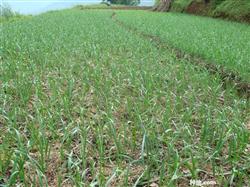
What are the common diseases in the process of growing garlic?
What diseases affect garlic? How to prevent and control them? Please introduce. I. Types of garlic diseases. 1. Round leaf (also called barrel): This disease mainly shows up in the period before the garlic scape emerges, when the top leaves of the garlic form a barrel shape that tightly wraps the scape inside the barrel, causing the scape to become trapped or break. 2. Garlic branching: that is, multiple branches on one plant...
-
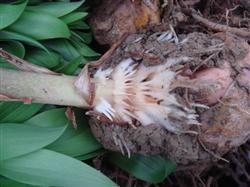
Symptom Identification and Control Methods for Rhizoctonia Disease in Lilies
Symptoms: If the infection is mild, it only affects the leaves in the soil and the green leaves at the lower part of young shoots, and sunken light brown spots appear on the leaves. Generally speaking, although the growth of the plant is somewhat affected, it can still continue to grow. In severely infected plants, aboveground growth is hindered, and the white underground leaves as well as the lowest aboveground leaves will rot or wilt and fall off, leaving only brown scars on the stems.
-
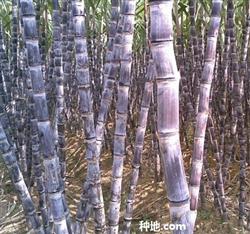
Control Methods for Mosaic Virus Disease in Black-Skinned Chewing Cane
How should black-skinned sugarcane be given micronutrient fertilizers? Please advise. A major reason for the low yield and poor quality of continuous cropping of chewing cane is the lack of medium and trace elements such as magnesium, silicon, calcium, zinc, boron, iron, molybdenum and manganese in the soil, resulting in an insufficient supply of medium and trace elements, which causes poor growth of chewing cane, not only stunted plants and shortened internodes...
-
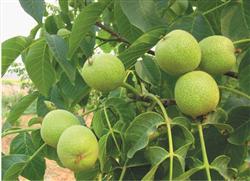
How to prevent and control pests and diseases in walnut cultivation
How to prevent and control pests and diseases when growing walnuts? Please give guidance. Here are two walnut pest and disease control methods for reference: Control method for the walnut shoot borer: The walnut shoot borer, commonly known as "walnut black," has adults that appear from June to July, and larvae that cause the most serious damage in July. This pest has weak resistance to pesticides, so you can choose pollution-free pesticides such as 10% cyhalothrin EC at 1500-2000 times dilution, or 15% imidacloprid at 3000 times dilution, and begin control at the end of June. Spraying once more after 7-10 days gives better results.
-
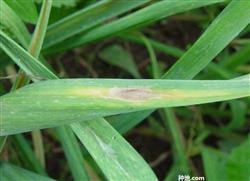
What is garlic mosaic virus disease? A comprehensive guide to this disease
What is garlic mosaic virus disease? How to prevent and control it, please advise. Garlic mosaic virus disease: 1. Symptoms In the early stage of the disease, intermittent yellow dotted lines appear along the leaf veins, which later connect into long stripes of alternating yellow and green. Plants become stunted, and the central leaves of some plants are wrapped by adjacent leaves, showing curled deformity and unable to fully extend for a long time, causing the leaves to twist...
-
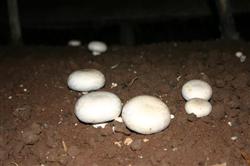
Eight Key Points for the Prevention and Control of Diseases and Pests in Button Mushrooms
With the rapid development of mushroom production, finding ways to improve economic returns and reduce costs is the direction that growers and related technical personnel are striving toward. North China has large amounts of corn straw, and using it instead of rice straw to cultivate mushrooms can greatly reduce costs. The relevant techniques are introduced as follows: 1. Mushroom compost formula...
-
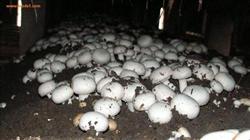
How to prevent and control button mushroom diseases? These measures must be mastered
Disease prevention and control principles: prevention first, with equal emphasis on prevention and control. 1. Rot disease: a fungal disease, mainly characterized by white mycelium as fine as spider silk appearing on the casing soil layer of the mushroom bed, growing irregularly and arranged in a spider-web pattern; infected mushroom bodies basically stop growing and gradually turn brown, soften and rot. Prevention and control measures: treat the casing soil material to prevent disease before it appears. For chemical treatment of the mushroom shed, generally use Baibingsha to spray the mushroom shed in a carpet-like manner to thoroughly kill pathogenic bacteria; after sealing for 2 days, it can be put into use. Keep the shed temperature above 12°C and shed humidity below 90%. If disease is found, immediately take measures to dig out and clean up.
-
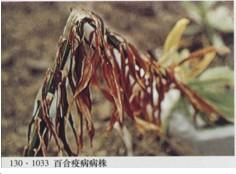
Common pest and disease control methods in lily cultivation
Lily blight, also known as lily foot rot, is distributed in Hebei, Gansu, Shaanxi, Shandong, Zhejiang, Jiangxi, Henan, Hubei, Hunan, Sichuan, Guizhou, Yunnan, Tibet and other provinces and regions. 1. Damage symptoms: It mainly attacks stems, leaves, flowers, scales and bulbs. When the stem is infected, water-soaked brown rot appears at first, gradually...
-
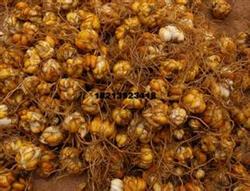
Major Pests and Diseases of Lilies and Their Control Methods
After sowing, lilies must undergo several years of cultivation and management before commercial bulbs suitable for harvest can be obtained. Generally, asexual propagation is used first to obtain seed bulbs, or seed propagation may be used first to obtain seed bulbs; the seed bulbs are then planted in the field and, through field management, grow into commercial lilies. Seed bulbs are various propagation materials first cultivated into 50-100 g small...
-

How to prevent and control pests and diseases of Agapanthus (lily of the Nile)?
Also called love flower, the name Agapanthus comes from the Greek words agapé (god of love) and anthos (god of flowers), but in reality, the reason this flower is called the "flower of love" is a distant, forgotten mystery. In 1788, L'Heritier established the genus Agapanthus. It was once classified in the Liliaceae family, and was subsequently classified in...
条件筛选