How to manage spring corn at the booting stage? Please keep this list of precautions
After the spring corn seedlings joint and the outer plants grow rapidly, the internal tassels and ears differentiate one after another; in the differentiation sequence, the tassel is slightly ahead of the ear. When the plant still has one to two leaves that have not yet extended their young leaves, this is commonly known as the small trumpet to large trumpet stage. Tassel and ear differentiation respectively enter the tetrad stage and the floret differentiation stage. The tassel is the key period for pollen formation...
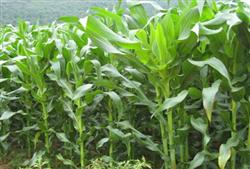
After the spring corn seedlings joint and the outer plants grow rapidly, the internal tassels and ears differentiate one after another; in the differentiation sequence, the tassel is slightly ahead of the ear. When the plant still has one to two leaves that have not yet extended their young leaves, this is commonly known as the small trumpet to large trumpet stage. Tassel and ear differentiation respectively enter the tetrad stage and the floret differentiation stage. The tassel is the key period for pollen formation, while the ear is the key period that determines how many florets can form, and the number of florets in turn determines how many kernels can form. Nutrition and water supply during this period play a decisive role. After a relatively long period of growth and development, the available nutrients in the soil have been consumed to a considerable extent. If nutrients cannot be replenished in time and the needs of ear differentiation cannot be met, ear differentiation will be affected, causing abortion, a reduction in pollen amount, decreased activity, and a reduction in normal florets on the ear, which lowers the number of grains per ear and reduces yield. Therefore, this is the key period for heavy topdressing with ear fertilizer. In irrigated land, seize the time to topdress more than 20 kg of ammonium nitrate or urea per mu, preferably by opening a hole about 25 cm beside the plant to a depth of 20 cm, applying the topdressing, covering with soil, and then watering thoroughly. After the water seeps down and the field can be entered, carry out one deep intertillage to break up surface crusting, and at the same time earth up around the plants to promote aerial root growth, increase the plant's absorption capacity, and reduce lodging.
Because dryland lacks irrigation conditions, the topdressing period is difficult to control strictly, and operations can only be flexibly carried out according to soil moisture. Generally, on the basis of applying sufficient base fertilizer, from after jointing to the trumpet stage, topdress with rainfall, that is, after a soaking rain, topdress while soil moisture is sufficient. The topdressing amount should be flexibly controlled according to the amount of base fertilizer applied and the condition of the seedlings. If more base fertilizer was applied and the seedlings are relatively strong, topdressing 7-10 kg of ammonium nitrate or urea per mu is enough. If the amount of base fertilizer is relatively small and the seedlings are relatively weak, when soil moisture is good, more than 15 kg per mu can be topdressed. After topdressing, likewise carry out intertillage and loosen the soil to preserve moisture, remove crusting, and reduce fertilizer loss.
The trumpet stage is also the key period for controlling corn borers. You can use 150 ml of 50% phoxim emulsifiable concentrate, mix with 0.5-1 kg of water, add 5 kg of sieved coal cinders, mix evenly and pile to ferment for 1-2 hours, make granules and place them into the heart leaf trumpet, about 3 grams per plant; alternatively, use 150 ml of BT emulsion per mu, mix with 15 kg of sandy soil to make granules, and use 3-4 grams per plant placed into the heart leaf.