-
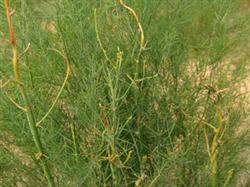
How to prevent and control asparagus pests and diseases? A detailed explanation of practical technical points
Asparagus stem blight and brown spot are the main diseases harming asparagus, developing quickly and causing severe damage. At present, there is no specific cure. Practice has proven that adopting a comprehensive disease prevention strategy based mainly on agronomic measures, supplemented by chemical control, can achieve twice the result with half the effort. The specific methods are: 1. Pinch off the growing tips at the right time to prevent lodging. As...
-
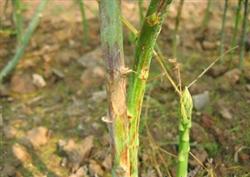
Comprehensive Control Methods and Techniques for Asparagus Pests and Diseases Explained in Detail
For pest and disease control, scientific control measures must be adopted, pollution-free control techniques vigorously promoted, and highly toxic and high-residue pesticides banned, so as to effectively control pest and disease damage while keeping pesticide residues in the product within limits. In control, adopt the measures of "prevention first, comprehensive control" and carry out early prevention in good time. (1) Agricultural...
-
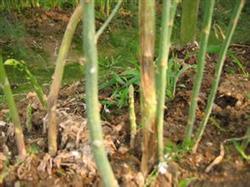
Occurrence Characteristics and Control Methods of Common Asparagus Diseases
I. Asparagus Fusarium Wilt 1. Symptoms. Asparagus fusarium wilt, also known as wilt disease, is a soil-borne disease. Initially, individual plants in the field turn yellow and wilt, and as the disease spreads, the entire plant dies. When young stems are infected, the cladodes and stems turn brown or split longitudinally. Brown lesions can appear on the underground stems and roots of diseased plants, and in later stages the affected parts rot, producing white to pink mold. When young spears are infected, the stems are thin or unable to emerge from the soil.
-
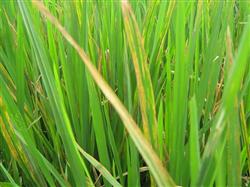
How to prevent and control bacterial brown stripe disease of rice?
Control of bacterial brown stripe disease of rice: 20% Yekuning (Chuanhua 018) wettable powder at 6000 times dilution; 25% Dikushuang at 1500 to 2000 times dilution; 20% Shakujing (Yekujing) wettable powder at 300 to 400 times dilution (not to be used after heading); during the seedling stage, Daisenzam at 1000 to 1500 times dilution may be used; during the main field stage, use 2 to 1 to 500...
-
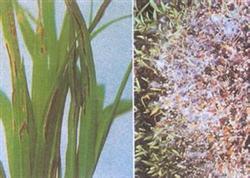
How to prevent and control rice Phytophthora disease? Detailed explanation of control methods
Rice Phytophthora disease: Diseased fields should be drained and dried in time, which can effectively inhibit the spread of the disease. Chemical control should focus on protecting early rice seedlings at the 3-leaf stage. Generally, pesticides should be applied before cold-protection irrigation or after drainage. The pesticides include: 50% carbendazim 1000-fold solution; 50% thiophanate or 50% benomyl 500-fold solution; 40% Phytophthora-killing 500-fold solution....
-
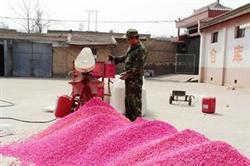
Opinions on the Prevention and Control of Diseases, Insects and Weeds during the Sowing and Seedling Stages of Wheat
Seed dressing of wheat can prevent soil-borne and seed-borne diseases such as take-all, root rot, sheath blight and loose smut, as well as some insect pests. When dressing seed, note the following: 1. The type of pesticide should be determined according to the occurrence of diseases and insect pests. If insect pests occur only slightly during the wheat seedling stage while diseases occur relatively severely, dressing seed with a fungicide alone is sufficient, and there is no need to use an insecticide...
-

Growing Succulents to This Level: Brave Souls, Please Drink This Cup of Poison
Main Text Image and Text: Curator. A heart that loves succulents is full of restlessness. I heard you like succulents. The curator got deeply poisoned in South Korea. The curator thinks such strong poison should be shared with everyone, right? Today I am just here to simply release some poison. It is simple. I will release some poison and leave,...
-
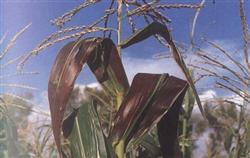
How can corn red leaf disease be controlled effectively?
Symptoms: When improved varieties bred with Huangzaosi encounter low temperatures and rainy, overcast weather during the grain-filling stage, their leaves turn red, which is called red leaf disease. Cause: The occurrence of this disease is related to the fast grain-filling of this variety. When large amounts of synthesized sugars cannot be quickly converted due to metabolic disorders, they become anthocyanins, and the green leaves turn red. Control methods: (1) In areas where it occurs severely, do not...
-
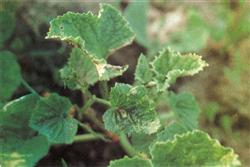
What to Do When Open-Field Melons Get Mosaic Virus Disease? Symptom Identification and Control Methods
Symptoms: In the early stage of the disease, the leaves show mosaic mottling interwoven with yellow-green and dark green, the leaves become smaller, and the leaf surface is wrinkled, uneven, and curled. The main vine is distorted and stunted, the plant is dwarfed, the melons are small, and the fruit surface has mottled patches of alternating light and dark, or slight bump-like protrusions. Causes: The incidence of mosaic virus disease has been relatively high in recent years...
-
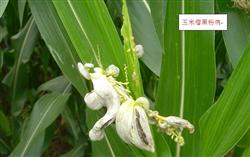
Control of corn smut disease cannot be ignored
The symptoms of this disease can occur on all aboveground parts of the corn throughout the entire growth period, and are especially obvious at the tasseling stage. Tumor-like growths of varying sizes develop on the affected parts. Initially, the tumors are covered with a white membrane, which later turns gray and, after drying and cracking, releases black powdery material, namely the spores of the pathogen. On the leaves, bean-sized tumor-like masses are easily produced, while on the tassel...
条件筛选