-

Detailed Guide to Identifying and Controlling Common Hawthorn Diseases
Common Hawthorn Diseases and Their Control
-
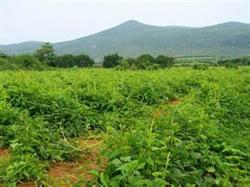
How to prevent diseases in yam during the hot and rainy period?
I. Planting and growth period: generally planted in February-March, and harvesting begins in September-December. II. Main cultivation techniques 1. Soil selection: sandy loam soil that is loose and deep, with a water source for irrigation, should be selected. 2. Preparation and treatment of seedlings (1) Planting with yam cuttings: at present, ...
-
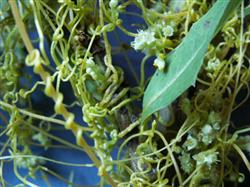
Control Methods for Three Major Soybean Diseases
What does soybean dodder look like? What should you do if soybean dodder appears? Dodder, also called yellow silk vine or tangled silk vine, is a malignant weed. It harms many crops, can cause total loss of soybean yield, and occurs commonly in various regions. (1) Morphology: The stem of soybean dodder is yellow, orange-yellow, or yellow-green, smooth and hairless,...
-
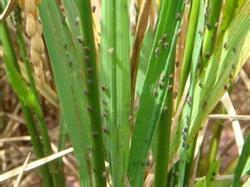
Detailed Explanation of Rice Pest and Disease Identification and Control Methods (Part 2)
The brown planthopper, also known as the brown rice planthopper, is commonly called roundworm, soft-shell roundworm, spindle worm, or midge. Scientific name Nilaparvata lugens (Stal), order Homoptera, family Delphacidae. The brown planthopper is one of the main pests on rice in China, causing damage in all major rice-growing regions across the north and south of the country. Every year it occurs and causes damage mixed with the white-backed planthopper, and the two planthoppers do not...
-

-
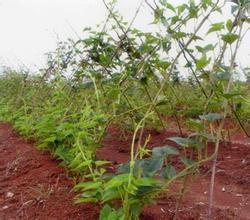
How to grow yam for high yields? New methods help you increase production
1. Shallow topdressing and skillful watering: When fertilizing, apply into the shallow soil layer so the yam roots can absorb it. Shallow topdressing or less topdressing can both ensure high yam yields. Yam fears waterlogging but should not be too dry either; if too dry, it will seriously affect the swelling of the yam. Spray New High Lipid Film to reasonably match water and fertilizer distribution. 2. Build sturdy trellises: After seedlings emerge, set up trellises in time...
-
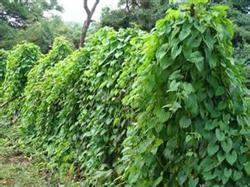
Yam Pest and Disease Control Methods and Key Technical Points
I. Anthracnose. Yams are prone to anthracnose during hot, rainy seasons, and after onset it causes stem blight and leaf drop. In the early stage, black spots appear on the leaves; in the later stage, the leaf color turns black, and the lesions become water-soaked; in severe cases it affects plant growth and causes reduced yield. Control: In the early stage of the disease, spray once every 7 days with 50% Tuzet 600x solution, or 7...
-
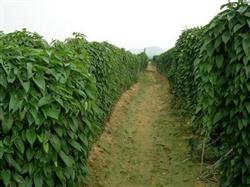
Key Technical Points for Integrated Pest and Disease Control in Chinese Yam
I. Agricultural Control 1. Selecting disease-resistant varieties is an effective method for controlling Chinese yam pests and diseases. When cultivating disease-resistant varieties, rational layout is necessary, rotating varieties every 2 to 3 years, and attention should be paid to variety purification and rejuvenation. 2. Crop rotation can reduce or avoid damage from Chinese yam stem rot and root-knot nematodes. Rotate at least once every 3 years with crops that are not infected, such as corn (2343, -3.00, -0.13%), wheat, radish, and watermelon; in old areas where Chinese yam is cultivated year-round, rotate once every year; where conditions permit, paddy-upland rotation can be implemented for better control results.
-
A complete guide to the basics of southern rice black-streaked dwarf disease
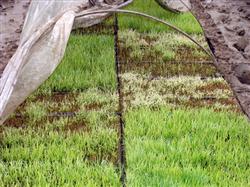
Rice seedling rot is the collective term for seed rot, bud rot and dead seedlings that occur at the seedling stage. Rice seedling rot can be divided into two types: physiological and infectious. Physiological seedling rot is mainly caused by low temperatures and mistakes or poor management practices in the seedling nursery; infectious seedling rot is caused by pathogen infection, and the main diseases include rice cottony rot, rice putrefactive disease and rice...
-
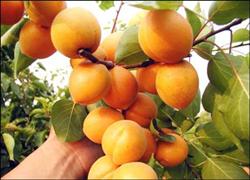
How to increase the fruit set rate of apricot trees? Master these technical measures
1. Choose superior varieties. Choosing varieties with a high percentage of perfect flowers, strong self-fruitfulness, frost resistance, a later blooming period, and early bearing and high yield as the main planted varieties is the key to increasing the fruit set rate. For example, Jintaiyang, Kate apricot, etc. In addition, varieties with early, mid, and late ripening can also be chosen in combination to reduce losses caused by early spring frost...
条件筛选