Eight precautions for the prevention and control of pests and diseases in button mushrooms
Strengthening the comprehensive management of button mushroom cultivation and creating an environment conducive to the growth of button mushrooms while unfavorable to the reproduction of pests and diseases is the key to growing organic button mushrooms. 1. Do a good job of environmental sanitation. Spawn production and operating personnel must establish a normal cleaning and sanitation management system, continuously remove contaminants and disinfect them with chemicals,...
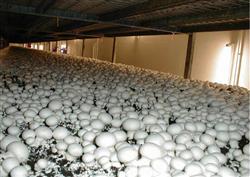
Strengthening the comprehensive management of button mushroom cultivation and creating an environment conducive to the growth of button mushrooms while unfavorable to the reproduction of pests and diseases is the key to growing organic button mushrooms.
1. Do a good job of environmental sanitation. Spawn production and operating personnel must establish a normal cleaning and sanitation management system, continuously remove contaminants and disinfect them with chemicals. The mushroom house, tools and all equipment indoors must be cleaned and disinfected frequently. When entering the mushroom house, pay attention to the cleanliness of shoe soles and clothing, and it is best to change them promptly.
2. Choice of disinfection methods. Give priority to physical disinfection methods such as high-pressure steam sterilization, intermittent atmospheric-pressure sterilization, pasteurization and ultraviolet lamp sterilization. For chemical disinfection, give priority to alkaline and phenolic agents, and avoid disinfectants such as heavy metal salts.
3. Handle raw materials properly. Button mushroom compost must be protected from dampness, mold or infestation by insect pests. For piles of sawdust, wheat straw, cattle and horse manure, etc., plastic film or felt should be laid underneath to prevent moisture, and the top should be covered well to prevent rain or debris from falling in. Chicken manure, cattle and horse manure, rice bran, wheat bran, cake feed, etc. are prone to mold and should be stored sealed. The compost must undergo high-temperature disinfection or fermentation and decomposition, and secondary fermentation must be consistently carried out. Casing soil material must be disinfected with steam or formalin.
4. Adjust water quantity and pH. Moisture should be appropriate and pH should be suitable, and both should be tested and adjusted at any time. The mushroom house should maintain good ventilation at all times, and the relative air humidity should not exceed 95%.
5. Properly store the culture medium. Bottles of substrate taken out of the pot or sterilized culture medium should be protected to prevent secondary contamination. They should be covered with gauze or film. When placed in a box for fumigation, they should also be wiped with medicinal solutions such as benzalkonium bromide to prevent dust contamination.
6. Strictly implement operating procedures. Inoculation work is highly technical, so you must be patient and meticulous, and be sure to avoid touching, rubbing or carrying contamination. For all tools and containers, those that can be washed should be washed clean, those that can be fumigated should be fumigated, those that can be wiped with alcohol should be wiped with alcohol, and those that can be burned with an alcohol lamp flame should be burned with flame.
7. Use artificial physical methods to prevent and control pests and diseases. For example, use black light lamps to trap and kill mosquitoes and flies, fully ferment the compost to kill nematodes and gall midges, remove rotted parts, and disinfect with lime water. Improve the environment and adjust temperature (for example, lowering the temperature can prevent Diehliomyces microsporus), humidity (for example, lowering humidity can prevent Neurospora) and pH (for example, lowering the pH can prevent white mold, etc.).
8. Strictly prohibit the use of highly toxic pesticides. Do not use organic mercury preparations or organophosphorus preparations, or pesticides with long residual periods that are not easily decomposed. Give priority to botanical insecticides such as pyrethrum, derris, tobacco extract, and microbial insecticides (such as Bacillus thuringiensis and Beauveria bassiana), etc.