What are the control methods for sunflower sclerotinia rot?
How do you control sclerotinia rot in sunflowers? Please provide guidance on methods. Sclerotinia rot in sunflowers is caused by infection with Sclerotinia sclerotiorum. In addition to damaging sunflowers, it also damages economic crops such as soybean, rapeseed, sesame and tobacco. It can occur at all growth stages of sunflowers, with more cases occurring after flowering. It mainly damages the stems and flower heads, becoming...
How do you control sclerotinia rot in sunflowers? Please provide guidance on methods
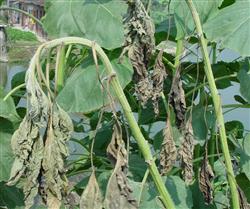
Sclerotinia rot in sunflowers is caused by infection with Sclerotinia sclerotiorum. In addition to damaging sunflowers, it also damages economic crops such as soybean, rapeseed, sesame and tobacco. It can occur at all growth stages of sunflowers, with more cases occurring after flowering. It mainly damages the stems and flower heads, producing two types of symptoms: stem rot and head rot.
Causes of the disease:
The pathogen overwinters as sclerotia on diseased plant residues in the soil or in seeds. When the sclerotia germinate, they produce mycelium that directly infects the stem base tissue of the host, or they produce apothecia and ascospores that spread with wind, rain and insects and infect stems, leaves and flower heads. A temperature of 20°C and a relative humidity above 80% are suitable for sclerotial germination.
Control methods:
1. Agricultural measures: choose disease-resistant varieties such as Longkui Hybrid No. 1 and Ro-924; remove diseased plant residues and bury them deeply or burn them.
2. Seed treatment: first screen out the sclerotia mixed among the seeds, then treat the seeds with 50% procymidone wettable powder, or 50% dimethachlon wettable powder, at a rate of 0.3%-0.5% of seed weight.
3. Spray control: during the flowering period, spray the lower part of the plants and the back of the flower heads 1-2 times with a 500-1000 fold dilution of 50% dimethachlon wettable powder, or a 1000-1500 fold dilution of 50% procymidone wettable powder, or a 1000 fold dilution of 50% carbendazim, with an interval of 7 days between each application.
Click to get more sunflower cultivation techniques
Click to get more grain and oil crop cultivation techniques