-
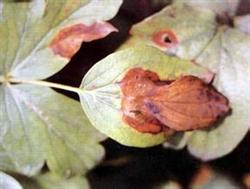
What are the control methods for peony brown spot disease?
Peony brown spot disease is a common disease in the late growth stage of peonies. Symptoms: pale white spots of varying sizes appear on the leaf surface, generally round spots 3-7 mm in diameter. A leaf may have as few as 1-2 spots, or as many as 30. The center of the spot gradually turns brown, with very tiny black...
-
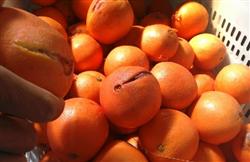
Causes of Navel Orange Fruit Cracking and Control Methods
Why do navel oranges crack? How should they be prevented and controlled? Please give guidance. Generally, navel orange fruit cracking mostly occurs during the rapid fruit expansion stage and the fruit ripening stage. This is caused by the combined effects of fluctuations in soil moisture, temperature and relative air humidity, which make the flesh grow faster than the peel. Preventing and controlling navel orange fruit cracking...
-
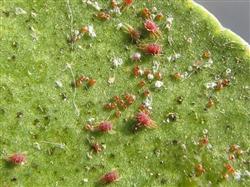
What are the pest and disease control methods for Fuchuan navel oranges?
Which pests and diseases need to be controlled when growing Fuchuan navel oranges? Please provide an introduction and control methods. The following is an introduction to common navel orange pests and diseases and their control methods for reference: Rust mite: from late May to early June during the young fruit stage, start spraying when 3-5 mites are found on the fruit surface, spray once every 10-15 days, for 2-3 consecutive sprays, then spray 1-2 more times from July to September...
-
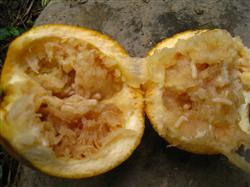
What are the control methods for navel orange fruit drop caused by insect damage?
What methods can control navel orange fruit drop caused by insect damage? Please provide guidance. Navel orange fruit drop caused by insect damage is mainly due to damage by fruit-boring moths. The severe damage occurs in the later stage, because earlier control combined with other pests and diseases achieved simultaneous control, and production habits have formed such that after September, pesticides are rarely used, and some growers even stop spraying altogether. 9...
-
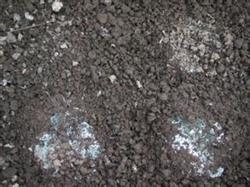
Strictly control the spawn production process when cultivating oyster mushrooms
Green mold, also known as Trichoderma viride, is one of the most serious pathogens harming oyster mushrooms. It causes damage at different production stages of oyster mushrooms. Once the disease occurs, it leads to reduced yields in mild cases and total crop failure in severe cases, becoming an important obstacle restricting the development of oyster mushroom production. Through several years of exploration and experimentation, the integrated control measures are summarized and introduced as follows...
-
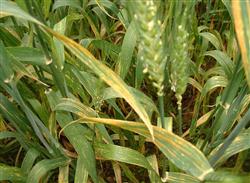
When is the best time to control wheat pests and diseases?
When is the best time to control wheat pests and diseases? Please advise. The timing of wheat pest and disease control is most critical. If you want to control pests and diseases more effectively, you can refer to the following methods: the best control period for rosette dwarf virus disease is mid-March, using a 1000-fold dilution of 50% methamidophos or a 1500-fold dilution of 40% omethoate to spray the edge rows of wheat fields adjacent to insect sources...
-
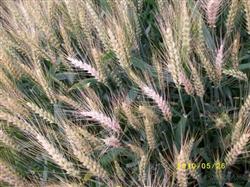
What are the control methods for wheat head blight (Fusarium head blight)?
What methods are used to control wheat head blight? Please provide guidance. Due to the continuous increase in the degree of mechanized wheat harvesting, large amounts of straw returned to the field, and wheat chaff blown and scattered across the field, the occurrence of wheat head blight has gradually worsened. Head blight is one of the major diseases harming wheat; the affected wheat heads turn pink, which is why it is called head blight...
-
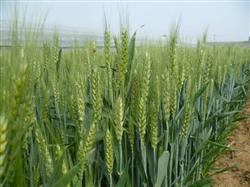
Common pests and diseases during the wheat grain-filling stage and their control methods
What pests and diseases should be watched for during the wheat grain-filling stage? Please explain. During the Start of Summer period, winter wheat in the north generally enters the flowering and grain-filling stages and has a relatively high demand for water. Because field humidity is high, pests and diseases such as wheat aphids and stripe rust have further developed and spread, so recently winter wheat areas in the north still need to...
-
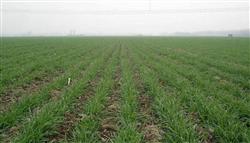
Wheat Seedling Stage Pest and Disease Control Methods and Key Technical Points
How to control pests and diseases at the wheat seedling stage? Please advise. Generally, about 15 days after wheat sowing, the seedlings have basically emerged fully. In the time that follows, how to manage and protect the wheat seedlings is extremely critical. The author recommends several methods for controlling pests and diseases at the wheat seedling stage. Wheat rust: 15 to... days after wheat emergence
-
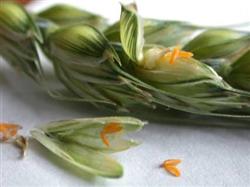
How to control wheat blossom midge? These methods you need to master
How to control wheat blossom midge? Please explain the methods. Wheat blossom midge can be controlled by referring to the following methods: 1. Occurrence patterns of wheat blossom midge. Wheat blossom midge has one generation per year. Overwintering larvae form cocoons in the soil at 20 cm to oversummer and overwinter. In the spring of the following year, when the temperature rises to 10 degrees (at this time wheat is at the jointing stage), the midge begins to break the cocoon and moves up into the 3-10 cm soil layer to prepare for pupation. When the temperature reaches 12 degrees (at this time it is the booting stage of wheat, mid-to-late April), the larvae successively pupate at about 3 cm on the soil surface. This is the best time to apply poisoned soil to control wheat blossom midge. Otherwise, after wheat heading, adult midges emerge in large numbers. Newly emerged adults can mate and lay eggs the same day. Each adult can lay dozens to over a hundred eggs. After 5-6 days, the eggs hatch into larvae, which bore into the wheat glumes and feed on the grain that is filling. In the late filling stage, mature larvae crawl out of the glumes after rain or when dew wets the wheat heads, fall to the soil, and oversummer and overwinter there. By wheat harvest, the damaged grains become "sparrow tongues" or "small black spots", shriveled and black, causing serious yield reduction.
条件筛选