What are the pest and disease control methods for Fuchuan navel oranges?
Which pests and diseases need to be controlled when growing Fuchuan navel oranges? Please provide an introduction and control methods. The following is an introduction to common navel orange pests and diseases and their control methods for reference: Rust mite: from late May to early June during the young fruit stage, start spraying when 3-5 mites are found on the fruit surface, spray once every 10-15 days, for 2-3 consecutive sprays, then spray 1-2 more times from July to September...
Which pests and diseases need to be controlled when growing Fuchuan navel oranges? Please provide an introduction and control methods
The following is an introduction to common navel orange pests and diseases and their control methods for reference:
Rust mite: from late May to early June during the young fruit stage, start spraying when 3-5 mites are found on the fruit surface, spray once every 10-15 days, for 2-3 consecutive sprays, then spray 1-2 more times from July to September. Available pesticides include 40% isocarbophos at 1000-2000 times dilution, tricyclohexyltin at 1500-2000 times dilution, propargite at 3000-5000 times dilution, and zineb at 800-1000 times dilution. To control canker, thoroughly remove summer shoots and prune out diseased branches and leaves. Focus on spraying for control after summer rains, and you can choose 0.5:0.5:100 Bordeaux mixture plus 2% laundry detergent, 77% copper hydroxide at 600-800 times dilution, Guobingke at 1000-1200 times dilution, or Kasumin at 600-800 times dilution.
IV. Pest and disease control for navel oranges
[Occurrence pattern]
The pathogen overwinters in diseased parts. Its optimum growth temperature is 20-30 degrees. From spring to autumn, when environmental conditions are suitable, the pathogen continuously escapes from diseased parts and spreads over short distances via wind, rain, insects and contact between crossing branches. Long-distance spread occurs through diseased nursery stock, scions and fruit. The pathogen can invade young tender tissues through stomata, lenticels and hydathodes, and invade mature tissues through wounds. This disease often occurs severely during hot, rainy weather or after typhoon rain.
[Control methods]
(1) Strictly implement the quarantine system.
(2) Cultivate disease-free nursery stock.
(3) Reduce sources of disease in the orchard. For winter or spring fertilizer, use more biological organic compound fertilizer containing actinomycetes. During summer and autumn shoot growth and winter orchard cleanup, concentrate on removing diseased leaves and pruning out diseased branches and fruit, then burn them in a centralized manner. This is an effective measure for controlling canker in production.
(4) Strengthen control of pests such as the citrus leafminer to reduce wounds on branches and leaves, so as to prevent pathogen invasion. Remove irregularly growing tender shoots.
(5) Chemical control. Spray once each when each flush of tender shoots grows to 3 cm, at the leaf expansion stage and when the leaves turn green. Available pesticides include: 80% Mancozeb at 600 times dilution, agricultural streptomycin at 600-1000 units/ml plus 1% alcohol, 77% copper hydroxide at 1000 times dilution, and 30% copper oxychloride at 600-800 times dilution.
Anthracnose
[Pathogen]
The pathogen of anthracnose is a fungus of the Deuteromycotina. This disease is a major disease in nurseries, orchards and during fruit storage. It damages tender leaves, tender shoots, flowers and fruit, causing leaf drop, shoot blight, fruit drop and fruit rot during storage.
[Symptoms]
This disease mainly damages leaves and is divided into acute and chronic types. The acute type is more common in nurseries. Acute anthracnose strikes fiercely and spreads rapidly, and is very common in nurseries in early summer under high temperature and high humidity. After tender leaves before turning green are infected, the leaf tip or leaf margin initially shows dark green water-soaked patches, and the lesions expand rapidly with indistinct edges. Chronic anthracnose occurs commonly on mature trees, can cause large numbers of fallen leaves, and causes shoots to dry up from top to bottom, with a clear boundary between diseased and healthy parts.
[Occurrence pattern]
The pathogen overwinters in diseased parts as conidia or mycelium. Its optimum growth temperature is 21-28 degrees. The disease is especially severe after heavy rains in early summer with high temperature and abundant rain. New shoots before leaves turn green, trees with excessive nitrogen fertilizer, trees with weakened vigor, and overripe fruit or fruit with wounds are all susceptible to this disease.
[Control methods]
The suitable control periods are the new shoot emergence stage, flowering stage, fruit growth stage, after strong winds and heavy rains, and when fruit approaches maturity. (1) Strengthen fertilizer and water management to improve the tree's disease resistance. (2) Thoroughly clean the orchard in winter, prune and burn diseased branches and leaves, and eliminate overwintering sources of disease. (3) Spray for control. When the incidence rate on shoots, leaves, flowers or fruit reaches 4-5%, spraying is needed,
if it is the acute type, spray as soon as symptoms appear. Spray once during each shoot emergence period, and spray 1-2 times during the young fruit stage. You can choose 0.5% equal-amount Bordeaux mixture, or 70% thiophanate-methyl WP, or 75% chlorothalonil WP at 800-1000 times dilution, or 50% carbendazim WP at 600 times dilution, or mancozeb WP at 600-800 times dilution, or 25% prochloraz EC (emulsifiable concentrate)/WP at 2000 times dilution, or 47% carbendazim 800-1000 times dilution, 50% thiram WP at 500-700 times dilution, or 77% copper hydroxide WP at 600 times dilution, or 30% copper sulfate SC at 600 times dilution, etc.
Main pest control
Citrus red spider mite
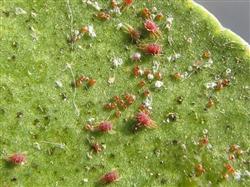
Damage symptoms: After leaves are damaged, many small gray spots appear, chlorophyll content decreases, leaf photosynthesis weakens, leaves lose their luster, causing leaf drop and shoot blight, affecting tree vigor, and reducing flower bud differentiation and yield. It is a pest commonly occurring in navel orange producing areas in China. It uses piercing-sucking mouthparts to pierce into leaves, branches and fruit epidermis, sucking sap and chlorophyll.
Living habits: It overwinters as adults or eggs. Red spider mites have strong reproductive capacity, and generations overlap severely. The number of generations occurring per year is greatly related to temperature and rainfall. A ten-day average temperature of about 25 degrees and relative humidity of 60-80% are favorable conditions for its occurrence.
In Yizhang County, 18 generations occur per year, with 2 peak occurrence periods each year. The first is from April to May, damaging spring shoots, and the second is from September to October, damaging autumn shoots.
Control methods:
Agricultural control:
① Reasonable intercropping and sod culture in the orchard. Interplanting Aixiangji, sumac hemp, etc. in the orchard helps protect and multiply natural enemies.
② Strengthen fertilizer and water management to promote vigorous plant growth and improve resistance to pests and diseases. Implement soil turning, reasonable pruning, orchard cleaning, and thorough winter orchard cleanup to reduce overwintering pest sources and lower the overwintering pest population base.
Biological control:
① Give priority to microbial-source and plant-source biological pesticides.
② Choose insecticides and acaricides that are less harmful to natural enemies such as predatory mites, lacewings and ladybird beetles that feed on mites.
Utilize and protect natural enemies. There are many kinds of natural enemies of red spider mites, mainly including predatory mites, lacewing larvae, mite-eating ladybird beetles, six-spotted thrips, parasitic fungi, etc. A. Adopt the sod culture method. B. Protect natural enemies and carry out spot treatment. When red spider mites occur on only some plants, it is not necessary to spray the whole orchard; spraying only the central infested plants and surrounding plants is sufficient, to reduce the killing of natural enemies by pesticides. C. Artificially rear and release natural enemies such as predatory mites.
Chemical control
Implement forecasting and monitoring, inspect pests before spraying, and grasp the key control periods. Before spring and autumn shoot leaves turn green, closely monitor orchard pest conditions. When red spider mite density reaches 100 mites per 50 leaves, the whole orchard must be sprayed, to reduce the pest population base before the peak period so that the first and second damage peaks cannot form.
Citrus rust mite
Suitable control period and thresholds: From May to June, 1-2 mites per field of view on leaves or fruit under a 10x magnifier, or the first signs of damage appear on the underside of spring shoot leaves of the year; from July to October, 3-4 mites per field of view on leaves or fruit under a 10x magnifier, or 1 damaged fruit is found in the orchard; or 5% of leaves or fruit have rust mites.
Control techniques: Refer to the control methods for citrus red spider mite.
Citrus leafminer
Damage symptoms:
Damaged leaves become deformed and curled, harden, and photosynthesis efficiency decreases. The wounds created are very easily invaded by canker pathogens. Curled leaves provide overwintering sites for mites, scale insects, aphids, etc., increasing the difficulty of winter control. Also known as the drawing insect, commonly called "ghost scribbles." Newly hatched larvae use chewing mouthparts to lift the epidermis of tender leaves and tender stems, and bore inside to feed on leaf mesophyll and tender cortex, forming winding silvery-white tunnels.
Living habits:
It overwinters as pupae and a very small number of larvae on leaves, and the mortality rate after overwintering often reaches over 98%. Generally about 10 generations occur per year, with severe generation overlap. Spring shoots often begin to be damaged in May. Damage to summer and autumn shoots is most severe from June to September. Adults mostly emerge and mate in the early morning and lay eggs in the evening. Eggs are mostly laid on tender shoots whose leaves have not yet unfolded, and mostly near the midrib on the underside of tender leaves, appearing as transparent small water-drop shapes. After hatching, larvae immediately burrow under the epidermis of tender leaves and tender stems to feed, advancing as they eat. Mature larvae often roll the leaf edge up to wrap around their bodies and pupate inside.
Control methods: Spray when most new shoot buds are 0.5-2 cm long, once every 7-10 days, for 2-3 consecutive sprays.
(1) Strengthen cultivation management. Implement bud removal and shoot control during summer and autumn shoots, removing as many summer shoots and scattered early autumn shoots as possible so that shoots emerge uniformly.
(2) Implement forecasting and monitoring, and release shoots during the adult low peak period. There is a low peak period of adult egg-laying from early July to early August.
(3) Chemical control. During the shoot release period, when most summer or autumn shoot buds are 0.5-2 mm long, spraying should be carried out immediately for control, once every 7-10 days, for 2-3 consecutive sprays. You can choose 10% or 20% imidacloprid WP at 2000-3000 times dilution or 10% nicotine EC at 500-800 times dilution, or 80% dichlorvos EC at 800 times dilution, or 40.7% chlorpyrifos EC at 1200 times dilution, or pyrethroid pesticides at 1500-2500 times dilution, or 1.8% abamectin EC at 2500-4000 times dilution, or 20% diflubenzuron SC at 1500-2500 times dilution, or 25% tebufenozide SC at 1000-1500 times dilution, etc.
Chaff scale
Damage symptoms: Adults and nymphs mostly gather on branches, leaves and the stem end of fruit to cause damage. Damaged areas turn yellow, dry and shrink, inducing sooty mold. In severe cases, branches die and leaves fall, affecting tree vigor and yield and reducing the commercial value of the fruit. Also known as gray scale, chaff scale insect, and round scale. It is distributed in citrus producing areas throughout the country. Host plants include citrus and many other fruit trees and woody plants.
Living habits: Generally 3 to 4 generations occur per year. The peak periods of each generation are: the first generation nymph peak from May to early June, the second generation from early July to early August, and the third generation from mid-August to early September)..
Click to get more navel orange growing techniques
Click to get more fruit growing techniques