Common pests and diseases during the wheat grain-filling stage and their control methods
What pests and diseases should be watched for during the wheat grain-filling stage? Please explain. During the Start of Summer period, winter wheat in the north generally enters the flowering and grain-filling stages and has a relatively high demand for water. Because field humidity is high, pests and diseases such as wheat aphids and stripe rust have further developed and spread, so recently winter wheat areas in the north still need to...
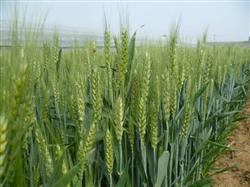
What pests and diseases should be watched for during the wheat grain-filling stage? Please explain
During the Start of Summer period, winter wheat in the north generally enters the flowering and grain-filling stages and has a relatively high demand for water. Because field humidity is high, pests and diseases such as wheat aphids and stripe rust have further developed and spread, so recently winter wheat areas in the north still need to strengthen late-stage management according to soil moisture and crop growth in the wheat fields to ensure normal wheat growth.
Rain provides sufficient water for wheat during the grain-filling stage, but it also provides conditions for the occurrence and development of pests and diseases. Wheat aphids and stripe rust have been found in some winter wheat areas in the north, and everyone should take control measures in time. In addition, about 10 days after wheat flowering, wherever irrigation conditions allow, the grain-filling water should be applied well, but note that watering is best stopped when it is windy to prevent lodging.
Information: wheat aphids
Wheat aphids are extremely widely distributed, occurring in almost every wheat-producing country in the world. In China, there are many species of aphids that harm wheat. The commonly seen and important ones are: the English grain aphid, the greenbug, the rose-grass aphid, and the rice root aphid.
In China, except for the rice root aphid, which has a narrow distribution range, the others commonly occur in all wheat regions, but the English grain aphid and the greenbug usually occur in the largest numbers and cause the most serious damage. Generally, the English grain aphid has quite high densities in both the south and the north, but damage is more severe toward the north; the greenbug mainly occurs in the provinces north of the Yangtze River, with the highest frequency especially in the drier winter and spring wheat regions of the northwest. As for the English grain aphid and the greenbug, in addition to hosts such as wheat, barley, oats, broomcorn millet, sorghum, and corn, the English grain aphid can also harm gramineous crops such as rice, sugarcane, and wild rice stem, as well as weeds such as Kentucky bluegrass, shortawn foxtail, crabgrass,Polypogon fugax, bermudagrass, and wild oats. The greenbug can feed on gramineous weeds such as Leymus, wheatgrass, brome, Puccinellia tenuiflora, and crabgrass.
Damage symptoms
The damage caused by wheat aphids mainly includes two aspects: direct damage and indirect damage. Direct damage mainly involves adults and nymphs sucking sap from leaves, stems, tender heads, and tender ears. The English grain aphid mostly damages the upper surfaces of upper plant leaves; after heading and grain filling, it rapidly multiplies and gathers on the ears to cause damage. The greenbug prefers to damage crops at the seedling stage, and the damaged parts form necrotic spots; other aphids do not have this symptom. Indirect damage means that while causing damage, wheat aphids can transmit wheat viral diseases, among which the transmission of wheat yellow dwarf disease causes the greatest damage.
Living habits
The overwintering stage and location of wheat aphids vary with the climatic conditions of each place. In the south there is no overwintering period. In northern wheat regions and the Yellow River basin wheat regions, wingless viviparous female aphids overwinter at the base leaf clusters of wheat plants or in soil cracks. In the colder wheat regions of the north, they mostly overwinter as eggs on dead wheat leaves, weeds, stubble tubes, and in soil cracks, and the farther north, the higher the rate of overwintering as eggs. From the perspective of occurrence time, the greenbug occurs earlier than the English grain aphid, and the English grain aphid generally gradually worsens only after wheat jointing.
Wheat aphids occur in intermittent outbreaks, which is closely related to climatic conditions. The English grain aphid likes moderate temperatures and cannot tolerate high temperatures, requiring humidity of 40%-80%, while the greenbug tolerates high temperatures of 30°C, prefers dryness and fears moisture, with 35%-67% humidity being suitable. Generally, in early-sown wheat fields, aphids migrate in early, reproduce quickly, and cause severe damage; the types and areas of summer and autumn crops directly affect the oversummering and reproduction of wheat aphids.
Control methods
1. Agricultural control
(1) Arrange crops reasonably; in areas where winter and spring wheat are mixed, make them as uniform as possible, and make autumn crops such as corn and foxtail millet as much as possible.
(2) Select some wheat varieties that are resistant to insects and tolerant of disease, creating unfavorable food conditions.
(3) Sow winter wheat appropriately late, carry out winter irrigation, and harrow and press in early spring.
2. Chemical control
Chemical control should pay attention to seizing the appropriate control period and protecting the controlling role of natural enemies.
(1) Appropriate control period
For the greenbug, control should be well carried out at the autumn seedling stage, the greening stage, and the jointing stage; for the English grain aphid, control at the late flowering stage is best.
(2) Selection of chemicals
① Use 40% dimethoate emulsifiable concentrate at 2000-3000 times dilution or 50% phoxim emulsifiable concentrate at 2000 times dilution, mixed with water for spraying;
② Use 10 grams of 50% pirimicarb wettable powder per mu, mixed with 50-60 kg of water for spraying;
③ Use 50% pirimicarb at 4000-5000 times dilution for spray control.
Click to get more wheat cultivation techniques
Click to get more grain cultivation techniques