What are the control methods for peony brown spot disease?
Peony brown spot disease is a common disease in the late growth stage of peonies. Symptoms: pale white spots of varying sizes appear on the leaf surface, generally round spots 3-7 mm in diameter. A leaf may have as few as 1-2 spots, or as many as 30. The center of the spot gradually turns brown, with very tiny black...
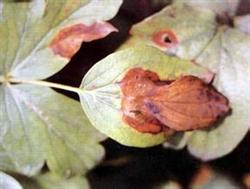
Peony brown spot disease is a common disease in the late growth stage of peonies.
Symptoms: pale white spots of varying sizes appear on the leaf surface, generally round spots 3-7 mm in diameter. A leaf may have as few as 1-2 spots, or as many as 30. The center of the spot gradually turns brown, with very tiny black dots scattered on the upper surface, appearing hairy under a magnifying glass, with several concentric rings. When adjacent spots merge, they form large irregular spots. In severe cases, the entire leaf surface becomes covered with spots and dies. On the underside of the leaf, the spots are dark brown with indistinct rings.
Pathogen: The pathogen of brown spot disease is Cercospora variicolor Winter, belonging to the class Hyphomycetes, order Moniliales. The conidiophores are pale, occasionally septate or bent, unbranched, measuring 10-35 x 2-4 micrometers. The conidia are colorless to pale brown, measuring 40-120 x 2.0-3.5 micrometers.
Transmission route: The pathogen overwinters as mycelium and conidia in diseased tissues and fallen diseased leaves, becoming the source of infection for the following year. It spreads through wind and rain and directly invades through wounds. The disease mostly occurs from July to September, and is severe when there is a lot of rain during typhoon season. The lower leaves are affected first; when late-stage management is neglected and the potting soil is too dry or too wet, the disease is severe.
Control methods: After harvest, thoroughly remove diseased plant residues and fallen leaves and burn them in a centralized manner.