How to control wheat blossom midge? These methods you need to master
How to control wheat blossom midge? Please explain the methods. Wheat blossom midge can be controlled by referring to the following methods: 1. Occurrence patterns of wheat blossom midge. Wheat blossom midge has one generation per year. Overwintering larvae form cocoons in the soil at 20 cm to oversummer and overwinter. In the spring of the following year, when the temperature rises to 10 degrees (at this time wheat is at the jointing stage), the midge begins to break the cocoon and moves up into the 3-10 cm soil layer to prepare for pupation. When the temperature reaches 12 degrees (at this time it is the booting stage of wheat, mid-to-late April), the larvae successively pupate at about 3 cm on the soil surface. This is the best time to apply poisoned soil to control wheat blossom midge. Otherwise, after wheat heading, adult midges emerge in large numbers. Newly emerged adults can mate and lay eggs the same day. Each adult can lay dozens to over a hundred eggs. After 5-6 days, the eggs hatch into larvae, which bore into the wheat glumes and feed on the grain that is filling. In the late filling stage, mature larvae crawl out of the glumes after rain or when dew wets the wheat heads, fall to the soil, and oversummer and overwinter there. By wheat harvest, the damaged grains become "sparrow tongues" or "small black spots", shriveled and black, causing serious yield reduction.
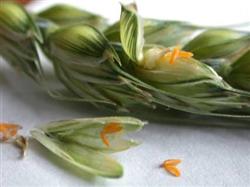
How to control wheat blossom midge? Please explain the methods
Wheat blossom midge can be controlled by referring to the following methods:
1. Occurrence patterns of wheat blossom midge
Wheat blossom midge has one generation per year. Overwintering larvae form cocoons in the soil at 20 cm to oversummer and overwinter. In the spring of the following year, when the temperature rises to 10 degrees (at this time wheat is at the jointing stage), the midge begins to break the cocoon and moves up into the 3-10 cm soil layer to prepare for pupation. When the temperature reaches 12 degrees (at this time it is the booting stage of wheat, mid-to-late April), the larvae successively pupate at about 3 cm on the soil surface. This is the best time to apply poisoned soil to control wheat blossom midge. Otherwise, after wheat heading, adult midges emerge in large numbers. Newly emerged adults can mate and lay eggs the same day. Each adult can lay dozens to over a hundred eggs. After 5-6 days, the eggs hatch into larvae, which bore into the wheat glumes and feed on the grain that is filling. In the late filling stage, mature larvae crawl out of the glumes after rain or when dew wets the wheat heads, fall to the soil, and oversummer and overwinter there. By wheat harvest, the damaged grains become "sparrow tongues" or "small black spots", shriveled and black, causing serious yield reduction.
2. Control techniques for wheat blossom midge
In wheat fields where wheat blossom midge occurred severely last year, or in fields where soil-washing monitoring this spring shows more than 2 insects per sample square (20 cm x 20 cm x 20 cm), control must be given attention.
Control of wheat blossom midge should follow the principle of "pupal-stage control as the main approach, adult control as the supplement." The specific method is: at the booting stage of wheat, use 2-3 bags of 2.5% Dida per mu, mix evenly with 15 kg of fine soil to make poisoned soil, and evenly broadcast it into the wheat field on a windless day. If irrigation conditions are available, irrigating once after application gives higher control efficacy, which can reach more than 85%.
Adult-stage control is the last line of defense for controlling wheat blossom midge damage. It should be applied at the early heading and flowering stage of wheat, that is, at the early stage when adults emerge from the soil. Per mu, use 50-60 ml of Jiangyawang or 40-50 ml of Yage, dilute with 15-30 kg of water for spraying.
Click to get more wheat cultivation techniques
Click to get more grain cultivation techniques