What to Do When Brown Rot Occurs in Cherry Trees? Detailed Control Methods
What to do when brown rot occurs in cherry trees? How to control it. Damage symptoms: Cherry brown rot is also called sclerotinia disease, gray rot, etc. It can attack flowers, leaves, shoots and fruit, but fruit suffers the most serious damage. After infecting the flower organs, the stamens and petals first develop brown water-soaked spots, after which the entire flower rapidly rots, with gray...
What to do when brown rot occurs in cherry trees? How to control it
Damage symptoms
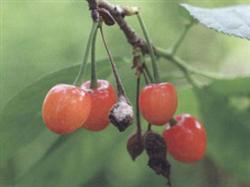
Cherry brown rot is also called sclerotinia disease, gray rot, etc. It can attack flowers, leaves, shoots and fruit, but fruit suffers the most serious damage. After infecting the flower organs, the stamens and petals first develop brown water-soaked spots, after which the entire flower rapidly rots, with gray mold growing in clusters on the surface. When leaves are affected, dark brown water-soaked spots mostly appear first at the edges of young leaves and rapidly spread to the petiole, causing the whole leaf to wilt and droop, as if damaged by frost. Fruit can be affected from young fruit to mature fruit, with fruit nearing maturity being more severely affected. In the early stage of the disease, brown round spots appear on the fruit surface; if conditions are suitable, the spots can spread to the entire fruit within a few days, and the flesh turns brown and soft-rots. Later, grayish-brown to grayish-white velvet-like tufts of mold grow on the surface of the spots. Diseased fruit tends to drop after rotting, but it can also lose water and shrivel into mummified fruit that hangs on the tree.
Occurrence pattern
The brown rot pathogen mainly overwinters as mycelium in mummified fruit and diseased shoots on the tree or on the ground. During the growing season it spreads through water and insects, invading through wounds and lenticels. Low-temperature and humid conditions from the flowering stage to the young fruit stage easily cause flower rot or fruit rot. During the fruit ripening stage, high-temperature and humid conditions easily cause fruit rot. Weak tree vigor, excessively dense branches and leaves, and poor ventilation and light penetration make the disease more likely to occur.
Scientific control
① After temperatures rise in spring, spray 1 application of 3-5 degrees Baumé lime sulfur mixture. ② Prune reasonably to improve ventilation and light penetration in the orchard and reduce orchard humidity; strengthen pest control to reduce the spread of the pathogen. ③ After cherry petals fall, spray 70% thiophanate-methyl at 800-1000 times dilution, or 50% dimethirimol at 1000-1200 times dilution, or 65% zineb wettable powder at 500 times dilution, etc., then spray 2 more times at intervals of about 15 days. ④ Starting 30 days before maturity, spray 50% dimethirimol at 1000 times dilution, 75% chlorothalonil wettable powder at 700 times dilution, validamycin aqueous solution at 500 times dilution, or 50% iprodione at 1000 times dilution, with remarkable disease control results. ⑤ Eliminate overwintering pathogens. Along with winter pruning, thoroughly prune off mummified fruit and diseased branches from the tree and burn them in a centralized manner. At the same time, clean the orchard floor, then carry out 1 deep plowing. Along with orchard plowing, bury mummified fruit below 10 cm.
Click to get more cherry cultivation techniques
Click to get more fruit cultivation techniques