-
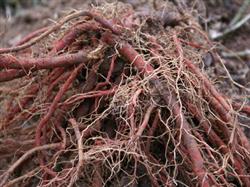
What are the control methods for root-knot nematode disease in Danshen (Salvia miltiorrhiza)?
How to control root-knot nematode disease in Danshen (Salvia miltiorrhiza)? What are the symptoms of root-knot nematode disease in Danshen (Salvia miltiorrhiza)? The control methods for root-knot nematode disease in Danshen (Salvia miltiorrhiza) can be referred to as follows: 1. Damage symptoms. The disease damages the roots of Danshen (Salvia miltiorrhiza). The affected taproots, lateral roots and fibrous roots all bear tumor-like root galls; the taproots and lateral roots become thinner, and the fibrous roots increase in number. On the galls...
-
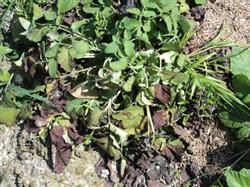
What are the control methods for root rot in red sage (Salvia miltiorrhiza)?
How do you control root rot in red sage? Please provide an introduction. Red sage root rot: 1. Harmful symptoms: Red sage root rot occurs in hot, rainy seasons and harms the plant's roots. In the early stage, only a few roots or part of the underground rhizome become diseased first, gradually spreading to the entire root system. After the roots are damaged, wet rot occurs, the outer skin turns black,...
-
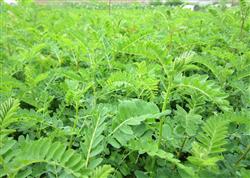
Astragalus Planting: Fertilization and Pest Control Methods
How do you fertilize and control pests when planting astragalus? Please help explain the methods. For astragalus fertilization and pest control, you can refer to the following methods: 1. Fertilization management. Astragalus prefers fertile soil, so in addition to applying sufficient base fertilizer, it also needs topdressing 2-3 times each year. The first time, after the seedlings are complete or after greening resumes, apply farmyard manure as topdressing; the second time, after intertillage and weeding, apply pen...
-
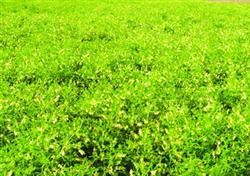
What are the control methods for purple root rot of Astragalus membranaceus?
How to control purple root rot of Astragalus membranaceus? Please explain the methods. The pathogen of purple root rot of Astragalus membranaceus is a kind of basidiomycete fungus, which mainly damages the underground roots. It first occurs on the underground fibrous roots, then spreads to the lateral roots and the main root. In the early stage of the disease, a layer of white thread-like material can be seen wrapped around the roots; as the disease develops, it turns purplish brown and...
-
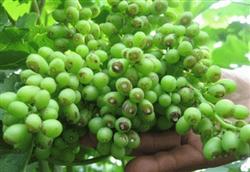
What are the control methods for grape anthracnose?
What harm does anthracnose do to grapes? How do you control grape anthracnose? We also ask netizens to help introduce it. Zhongdi Network has compiled the harm, causes and control methods of grape anthracnose, listed below for your reference. The harm of anthracnose to grapes: anthracnose mainly damages the fruit, while leaves, new...
-
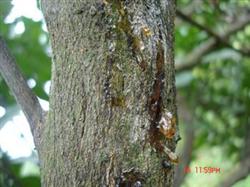
What to do about gummosis on navel orange trees? Analysis of control methods
What to do about gummosis on navel orange trees? What causes gummosis on navel orange trees? Please advise. After navel orange trees enter June, temperatures rise, rainfall is plentiful, and with high temperature and high humidity, various pests and diseases begin to occur in large numbers. Gummosis is a fungal disease caused by Phytophthora, mainly damaging the trunk, followed by large branches, weakening the tree...
-
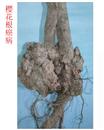
What are the control methods for cherry blossom crown gall disease?
How do you control cherry blossom crown gall disease? Here are the methods. The gorgeous cherry blossom is deeply loved by people, but it is easily infected by a fatal crown gall disease. This disease mainly occurs on the roots and on the trunk and lateral branches of the aboveground part of the cherry blossom. In the early stage of the disease, the root crown swells into spherical or hemispherical tumor-like growths; young galls are white, with a soft texture...
-
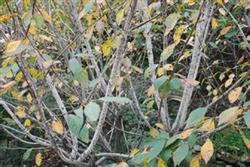
What are the control methods for the white peach scale (Pseudaulacaspis pentagona) on cherry blossoms?
How do you control the white peach scale on cherry blossoms? Please explain the methods. The white peach scale on cherry blossoms is mainly found in cherry cultivation areas and occurs commonly. Due to the currently suitable climate and high field humidity, it has become quite severe in some fields. The damage has already caused leaves to basically fall off, and the pest population is extremely dense, appearing pure white from near or far. It is estimated...
-
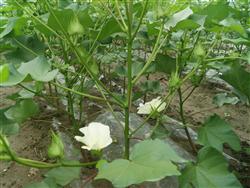
Control methods for cotton boll rot (bolls) during the rainy season
How to prevent cotton boll rot (bolls) during the rainy season? Please provide an introduction. During the rainy season, the following methods can be used to prevent cotton boll rot (bolls): 1. Scientific fertilization: Most of the cotton currently cultivated is insect-resistant cotton, which generally requires large amounts of base fertilizer and bud fertilizer, and no flower and boll fertilizer, to prevent excessive growth and increased shading. Nitrogen should be controlled, phosphorus increased, and...
-
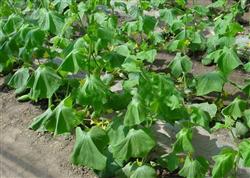
Causes and Control Methods of Acute Wilting of Cotton After Rain
What causes acute wilting of cotton after rain and why should it be prevented? Please give an introduction to the causes of acute wilting in cotton: First, insufficient soil oxygen. After cotton fields are waterlogged, the roots receive insufficient oxygen, causing root suffocation and affecting the normal absorption function of the root system. The longer the suffocation lasts, the more severe the root damage. Second, improper fertilization. A one-time topdressing...
条件筛选