Control methods for cotton boll rot (bolls) during the rainy season
How to prevent cotton boll rot (bolls) during the rainy season? Please provide an introduction. During the rainy season, the following methods can be used to prevent cotton boll rot (bolls): 1. Scientific fertilization: Most of the cotton currently cultivated is insect-resistant cotton, which generally requires large amounts of base fertilizer and bud fertilizer, and no flower and boll fertilizer, to prevent excessive growth and increased shading. Nitrogen should be controlled, phosphorus increased, and...
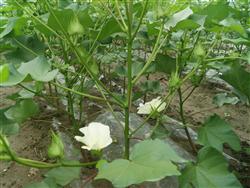
How to prevent cotton boll rot (bolls) during the rainy season? Please provide an introduction
During the rainy season, the following methods can be used to prevent cotton boll rot (bolls):
1. Scientific fertilization: Most of the cotton currently cultivated is insect-resistant cotton, which generally requires large amounts of base fertilizer and bud fertilizer, and no flower and boll fertilizer, to prevent excessive growth and increased shading. Nitrogen should be controlled, phosphorus increased, and potassium supplemented, together with foliar fertilization. For example, spray a mixed solution of 2% urea and 2% potassium dihydrogen phosphate or other foliar fertilizers.
2. Reasonable irrigation and drainage: Water imbalance will obstruct metabolism and cause bud and boll shedding. However, the flowering and boll stage coincides with the rainy season, so irrigation is generally not needed. The main thing is to pay attention to drainage in the cotton field to prevent waterlogging and ensure that excessively high humidity does not occur in the cotton field. When watering, avoid midday.
3. Timely chemical regulation: Chemical regulation can effectively control excessive vegetative growth, improve ventilation and light penetration in the cotton field, reduce shedding, and increase yield. Spray mepiquat chloride once around the early flowering stage, with the amount based on growth conditions at 45 g to 90 g per hectare.
4. Careful pruning: The contents of careful pruning at the flowering and boll stage include topping, removing superfluous buds, tipping the branches, and removing old leaves. It plays an important role in reducing cotton bud and boll shedding, increasing ventilation and air permeability in the cotton field, advancing maturity, and improving quality. Generally, topping is done in mid-to-late July. Branch tipping can be done at the appropriate time according to the local effective flowering period, concentrating on tipping the branches once; for cotton fields with higher density and sufficient fertilizer and water, it can also be done in stages. For shaded cotton fields, old leaves should be removed and empty branches pruned early. The operation sequence is main stem first, then branches; base first, then middle and lower parts. Through pruning, create a population in the field with good ventilation and light penetration and a reasonable distribution of branches and leaves.
5. Intertillage and hilling: During the flowering and boll-setting stage, due to irrigation and rainfall, the soil in the cotton field tends to become compacted and has poor air permeability, so intertillage and hilling are needed. In addition, the cotton boll stage often has strong winds and heavy rain, leading to lodging and boll rot, so before the wind and rain arrive, soil should be hilled around the roots, and after the wind and rain, the plants should be straightened promptly.
6. Pushing plants and merging rows: For cotton fields that stay green and mature late and become shaded, on sunny days push the cotton plants by hand every other row so that ventilation channels form between rows. After one week, push apart the two rows of cotton plants that were merged. By alternately pushing and merging in this way, ventilation and light penetration conditions can be improved, which helps lower temperature, prevent boll rot, and promote early maturity.
7. Eliminate pests: The resistance of insect-resistant cotton to cotton bollworm in the later stage is not as strong as in the earlier stage. Cotton bollworm and pink bollworm often cause boll rot, so measures should be taken to control them. For chemical control, generally deltamethrin or cyhalothrin can be used at 450 mL to 900 mL per hectare by spraying, or mianlingbao, mielingling, etc. at 600 mL to 900 mL per hectare, and phoxim, monocrotophos, omethoate, etc. can also be used by spraying for control.
8. Treat diseases and protect bolls: The main diseases causing boll rot include red rot, pink rot, black boll disease, and blight, etc. When boll rot first appears in the cotton field, promptly spray with 40% carbendazim suspension concentrate at 800 times dilution, or 90% fosetyl-aluminum technical powder at 600 times dilution or 70% mancozeb wettable powder at 600 times dilution. Spray 75 kg to 100 kg of liquid per mu each time, once every 10 days, for 3 days to 4 days continuously.
9. Harvest yellow bolls promptly: Harvesting yellow bolls promptly is an effective measure to achieve no rotten bolls during cloudy and rainy weather and no rotten flowers from rotten bolls. Generally, when the boll skin turns yellow, pick promptly. It is especially important to pick promptly before cloudy and rainy weather arrives.
10. Chemical ripening: 15 days before the local killing frost, and when most cotton bolls are basically mature, spray ethephon 500 PPM solution, 50 kg per mu, which can advance boll opening and reduce boll rot. However, note that the spray should be uniform, especially on green bolls.
Click to get more cotton planting techniques
Click to get more grain crop planting techniques