What to do about gummosis on navel orange trees? Analysis of control methods
What to do about gummosis on navel orange trees? What causes gummosis on navel orange trees? Please advise. After navel orange trees enter June, temperatures rise, rainfall is plentiful, and with high temperature and high humidity, various pests and diseases begin to occur in large numbers. Gummosis is a fungal disease caused by Phytophthora, mainly damaging the trunk, followed by large branches, weakening the tree...
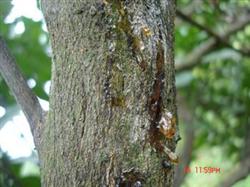 What to do about gummosis on navel orange trees? What causes gummosis on navel orange trees? Please advise
After navel orange trees enter June, temperatures rise, rainfall is plentiful, and with high temperature and high humidity, various pests and diseases begin to occur in large numbers. Gummosis is a fungal disease caused by Phytophthora, mainly damaging the trunk, followed by large branches, weakening tree vigor. In severe cases, the diseased area expands and causes "girdling" of the trunk, leading to plant death. Sweet oranges are relatively susceptible. For control methods, you can refer to the following methods for prevention and control.
1. Select disease-resistant rootstock.
2. Strengthen cultivation management: pay attention to drainage and irrigation, apply more organic fertilizer, avoid unreasonable intercropping, and thin out plants in time to reduce orchard humidity and enhance tree resistance.
3. Thoroughly control jewel beetles and longhorn beetles: because the pathogen invades through wounds, when the pathogen is present, the more wounds there are, the higher the incidence. Usually, about 80% of field infections are caused by wounds created by jewel beetles and longhorn beetles.
4. Chemical control: use the control method of shallow scraping and deep cutting on the diseased area. First scrape off the coarse bark of the diseased area (until the greenish-yellow bark is exposed), then make several longitudinal cuts (about 1 cm apart), deep enough to reach the xylem, and apply 100-200 times diluted thiophanate-methyl solution, or 50% carbendazim 100-200 times diluted solution, or use tung oil for control.
Click to get more navel orange cultivation techniques
Click to get more fruit cultivation techniques