-
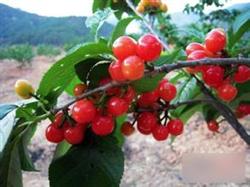
Detailed Explanation of Key Management Techniques for Sweet Cherry After Harvest
The technical management of sweet cherry trees after fruit harvest is very important, because at this time the tree has gone through the earlier processes of leaf expansion, shoot growth, flowering, fruit set and fruit growth and development, consuming a large amount of nutrients stored in the tree, and after fruit harvest it enters the stage of photosynthetic nutrient accumulation. The quality of management during this period determines the yield. Its techniques...
-
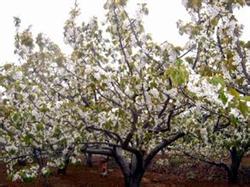
What are the key points of sweet cherry fertilization techniques?
The main fertilization techniques and methods for sweet cherries are as follows: 1. Fertilization techniques. 1. Autumn application of base fertilizer. Autumn application of base fertilizer is generally carried out in late August. Autumn application of base fertilizer coincides with the autumn growth peak of the root system, which is conducive to the absorption of nutrients, while damaged roots can also recover well, and it helps to produce more...
-
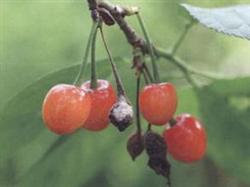
What pesticides are commonly used for cherry pest and disease control?
Cherry trees are often attacked by pests and diseases during cultivation, and correct prevention and control of pests and diseases is very important for planting returns. Below we introduce the pesticides corresponding to cherry pest and disease control, for farmers' reference. 1. Pesticides corresponding to the main cherry diseases: 1.1 Pesticides for bacterial canker...
-
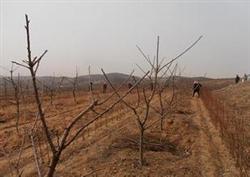
How to manage and care for young sweet cherry trees in autumn and winter
I. Autumn management 1. Thin where dense, plant where sparse. Sweet cherry is a light-loving tree species. To ensure ventilation and light penetration throughout the tree, some overlapping main branches or "gatekeeper" branches close to the trunk that cannot fill the space on the main branches should be removed early; upright and lateral branches on the main branches that cannot fill the space should be appropriately headed back to promote new shoots and form new fruiting branch groups.
-
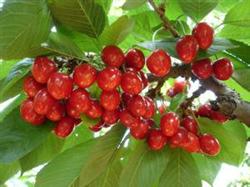
Detailed Explanation of High-Yield and Efficient Cultivation Techniques for Sweet Cherry
Jinzhou District is located at the southern tip of the Liaodong Peninsula, with an average annual temperature of 10-12°C, annual sunshine of 2505.5h, annual precipitation of 500-700mm, and a frost-free period of about 180d. It is mostly hilly and gently sloping terrain, with loose soil and moderate permeability, suitable for the growth and development of sweet cherry, and has a long history of cultivation. However, before 1998, due to a single variety and backward technology...
-
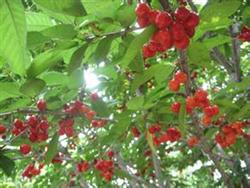
Key Technical Points for Early, High-Yield and Efficient Cultivation of Sweet Cherry
1. Selection of Orchard Site Based on the characteristics of sweet cherry, such as drought tolerance, poor waterlogging tolerance, poor cold tolerance, poor saline-alkali tolerance, and shallow root system, the sweet cherry orchard site should be selected in areas with deep soil layers, loose loam or sandy loam soil, low groundwater level, no water accumulation, good drainage and irrigation conditions, and not prone to wind damage. In areas with high groundwater level, overly heavy soil...
-
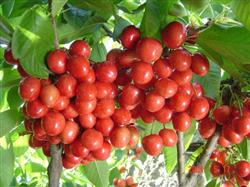
Under what climatic conditions is the sweet cherry (Western cherry) suitable for cultivation?
The sweet cherry (also known as the large cherry) has not been cultivated for long since its introduction to our country, only just over one hundred years. Cultivation is concentrated in the provinces along the coast of the Bohai Bay, with Shandong Province having the most. In recent years, many places have also tried introducing and cultivating it. But all have shown vigorous tree growth, excessive elongation of shoots, few flower buds formed, severe flower and fruit drop...
-
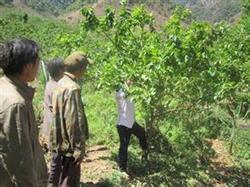
What are the key points to note for summer pruning of cherry trees?
Pinching new shoots: To promote flower bud differentiation and prevent excessive vegetative growth, the method of pinching new shoots should be adopted for control. That is, pinch the new shoots that have not stopped growing, and the pinching position is generally at the half-leaf mark; after pinching, growth stops for 10 to 15 days and then secondary shoots emerge, and when they grow to 15 to 20 cm, a second pinching is carried out, at...
-
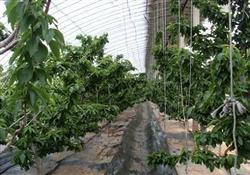
A Complete Analysis of the Key Technical Points of Cherry Cultivation
(1) Soil management. For soil management, a good foundation must first be laid before planting, and the soil must also be continuously improved after planting. 1. Expanding the planting hole and deep plowing. The method is to start from the edge of the planting hole and expand outward every year or every other year, digging a ring-shaped trench about 50 cm wide and 60 cm deep, until the deep plowing trenches between two trees connect. Deep plowing...
-
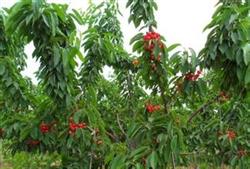
Detailed Explanation of Cherry Planting, Cultivation Techniques and Management Methods
I. Variety Selection, Orchard Establishment and Planting Chinese cherries have weak cold resistance and prefer a warm and moist climate, making them suitable for cultivation in areas with an annual average temperature of 15-16°C. Sweet cherries prefer cool and dry conditions. The natural dormancy period of cherries is about 80-100 days. The chilling requirement for sweet cherries to complete dormancy is 1100-1300 hours below 7.2°C. Sour...
条件筛选