-
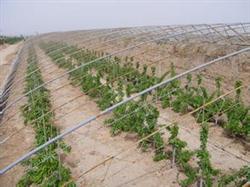
Detailed Explanation of Greenhouse Management Techniques for Sweet Cherry
1. Soil, Fertilizer and Water Management Sweet cherry is a shallow-rooted tree species with vigorous root respiration, so the requirements of water, fertilizer, air and heat needed for root growth should be met as much as possible. Each growing season requires at least 4 to 5 intertillages, with a depth of 5 to 10 cm being appropriate, which both removes weeds and preserves soil moisture, activates the soil and enhances permeability. After harvest, shallow plowing should be carried out...
-
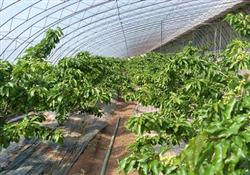
Sweet Cherry Pest and Disease Control Methods and Techniques
(1) Main diseases 1. Cherry brown spot disease: also known as leaf shot hole disease, it is the most important leaf disease of sweet cherry. (1) Symptoms: At the early stage of the disease, small purple spots the size of a needle tip form, then enlarge, and some join together to form round brown lesions, on which small black dots appear, namely conidia masses and perithecia. ...
-
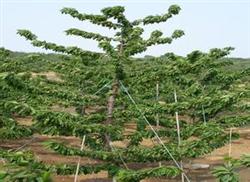
Cherry post-harvest management methods and key points of summer pruning techniques
Pinching new shoots: To promote flower bud differentiation and prevent excessive vegetative growth, the method of pinching new shoots should be adopted for control. That is, pinch the new shoots that have not stopped growing, and the pinching position is generally bounded by the half-leaf point; after pinching, growth stops for 10-15 days and then secondary shoots emerge, and when they grow to 15-20 cm, a second pinching is carried out,...
-
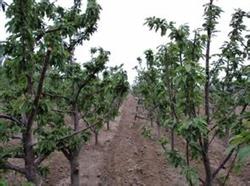
Identification and Control Methods for Common Cherry Diseases and Pests
Many of the diseases and pests affecting cherries are the same as those of other stone fruit trees, so their control methods can be used for reference. The main diseases harming cherries are shot hole disease, crown and root collar rot, and gummosis. Crown and root collar rot mostly occurs on trees in their first fruiting stage, causing the crown and root collar to decay. Control methods: mainly avoid piling soil around the root collar for long periods, and control underground pests that gnaw and wound the bark. At the same time, check frequently; when diseased plants are found, scrape and treat them promptly, and after scraping, disinfect with Bordeaux mixture or lime sulfur mixture. For severe crown and root collar rot, the aboveground growth can also be restored through spring bridge grafting. The main pests harming cherries include the red-necked longhorn beetle, the golden-line jewel beetle, the small clearwing moth, the spherical scale insect, and the phalera caterpillar. The small clearwing moth has one generation per year, and its larvae cause damage within the cortex of large branches. Control measures mainly include spraying during the peak emergence period of adults, whitewashing the branches and trunk to prevent egg laying, and promptly spraying or digging out larvae when their frass is found in the field.
-
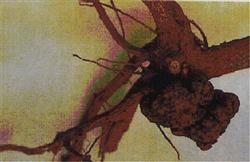
How to prevent and treat cherry crown gall? A detailed guide to prevention and treatment methods
Based on your description, 1. Dig out the diseased trees and clear away the remaining roots. 2. Apply organic fertilizer. 3. Dip the roots in K84 before planting the trees. 4. Backfill the soil, preferably with topsoil. 5. You can change the tree pits.
-
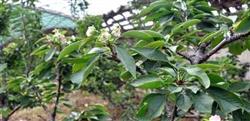
Detailed Explanation of Key Technical Points for Post-Bloom Management of Cherry Trees
Sweet cherries bloom in spring and fruit in summer. Recently, many cherry growers have called to ask about post-bloom management techniques for cherry trees. In response, the reporter visited Zhang Zhicheng, an expert on miscellaneous fruits at Northwest A&F University. Zhang Zhicheng reminds farmers that sweet cherries mature successively more than 30 days after bloom, and the period from post-bloom to fruit maturity is currently a critical stage for technical management...
-
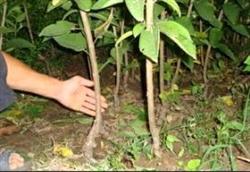
Detailed Explanation of Post-Grafting Care Techniques for Cherry Trees
1. Untie promptly. After cherry grafting, if rain or watering occurs, it easily causes gummosis and affects survival. Therefore, do not water within half a month after grafting. After the bud-grafted seedlings survive, untie the binding promptly to prevent rainwater from seeping along the binding material into the bark and causing gummosis. 2. Cut the rootstock at the right time. For bud-grafted seedlings that have already survived, the rootstock should be cut...
-
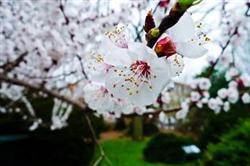
The role and method of autumn application of base fertilizer for cherry trees
Large cherries bloom in spring and fruit in summer. Recently, many cherry growers have called to ask about management techniques after cherry flowering. In response, the reporter visited Zhang Zhicheng, a miscellaneous fruit expert at Northwest A&F University. Zhang Zhicheng reminds farmers that large cherries mature successively more than 30 days after flowering, and they are currently in the critical period of technical management from after flowering to fruit maturation...
-
What to Do When Cherry Tree Leaves Curl? Here Are the Solutions
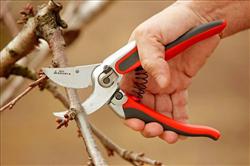
1. Pinching The purpose of pinching: mainly to control excessive growth of branches, increase branching levels and branch quantity, accelerate crown expansion, promote the transformation of branches into fruiting branches, and help achieve earlier fruiting. Timing of pinching: first, early pinching, carried out 10 days after flowering, pinching young tender shoots while leaving about 10 cm. This helps control...
-
What are the key points of soil management measures in cherry orchards
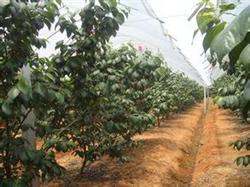
Although large cherries have a well-developed root system, they have no taproot, only a large number of fibrous roots and hair roots distributed horizontally at about 20-30 cm underground, so the timing and method of fertilization must be well understood. Large cherries are best fertilized 3-4 times a year. The first fertilization should be completed within 10 days after the fruit is finished. 40 days after the fruit is finished...
条件筛选