What are the key points of sweet cherry fertilization techniques?
The main fertilization techniques and methods for sweet cherries are as follows: 1. Fertilization techniques. 1. Autumn application of base fertilizer. Autumn application of base fertilizer is generally carried out in late August. Autumn application of base fertilizer coincides with the autumn growth peak of the root system, which is conducive to the absorption of nutrients, while damaged roots can also recover well, and it helps to produce more...
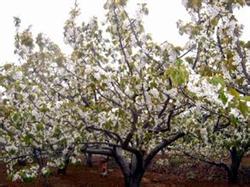
The main fertilization techniques and methods for sweet cherries are as follows:
1. Fertilization techniques
1. Autumn application of base fertilizer
Autumn application of base fertilizer is generally carried out in late August. Autumn application of base fertilizer coincides with the autumn growth peak of the root system, which is conducive to the absorption of nutrients, while damaged roots can also recover well, and it helps to produce more roots. The fertilizer effect can be exerted in the same year of application, increasing the nutrient reserves before overwintering.
The types of base fertilizer applied in autumn include: farmyard manure, cake fertilizer and an appropriate amount of nitrogen, phosphorus and potassium compound fertilizer. Farmyard manure is mainly fermented and decomposed pig manure, cow manure, horse manure and chicken manure.
2. Topdressing
The topdressing periods for sweet cherries. Topdressing is divided into four periods, namely topdressing before bud break, mainly organic calcium fertilizer and boron fertilizer; topdressing before flowering, mainly quick-acting high-nitrogen potassium-type nitrogen-phosphorus-potassium compound fertilizer; topdressing during the young fruit swelling period, mainly high-speed high-nitrogen high-potassium-type nitrogen-phosphorus-potassium compound fertilizer; and topdressing after fruit harvest, mainly organic-inorganic compound fertilizer.
3. Foliar topdressing
Generally, foliar topdressing is carried out 3-4 times a year, from after petal fall to before harvest, together with pesticide spraying. In the early stage, spray 1000 times vitality essence plus 0.3% urea solution, or spray "Shima Green" foliar fertilizer 1500 times solution; in the later stage, spray 1000 times vitality essence plus 0.3% potassium dihydrogen phosphate solution, or spray 1500 times "Shima Gold" foliar fertilizer.
2. Fertilization methods
1. Radial trench fertilization. Suitable for topdressing. With the trunk as the center, dig 4-6 radial trenches 0.5-1.0 m away from the trunk, with the trench length exceeding the outer edge of the tree canopy. The trench depth is 15-20 cm and the trench width is 20-30 cm.
2. Strip trench application. Suitable for applying base fertilizer. Dig trenches on both outer edges of the canopy corresponding to the tree body for fertilization. Each year, dig a strip trench in one direction and use them alternately. When applying base fertilizer in autumn, the strip trenches are dug relatively large, generally 30-40 cm.
3. Ring trench application. Dig a ring-shaped trench around the outer periphery of the canopy. This method is suitable for young trees with a relatively small root distribution range.
4. Spot application. Suitable for topdressing young trees and when plastic film is mulched under the tree disk.
Only by using the above methods alternately can the fertilizer distribution range be expanded, which is beneficial to root absorption. Note that the main roots should not be damaged when digging trenches.