-
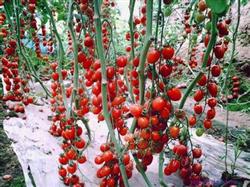
How can cherry tomatoes be grown to achieve high yields?
1. Throw the seedlings at the right time to give full play to the advantage of early and rapid growth. Rice seedling trays contain little soil, so on the premise that the seedlings can be picked up without the soil falling apart, the earlier they are thrown, the better. Generally, 15-20 days after sowing for the early crop and 8-10 days for the late crop, the seedlings can be thrown once they have about three leaves. The shorter the seedlings, the faster they establish and resume growth, and the...
-
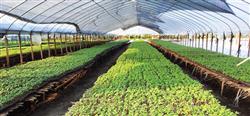
Detailed explanation of key points for cherry tomato seedling cultivation, teaching you to grow robust seedlings
Before sowing, seeds should first be disinfected and pre-germinated. For disinfection, use hot water soaking or chemical disinfection. Choose the soaking method selectively based on common local diseases. Hot water soaking: soak tomato seeds in cool water for 10 minutes, then place them in 55°C hot water, stirring constantly and quickly to heat the seeds evenly, maintaining the water...
-
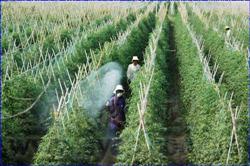
What are the seed treatment methods for cherry tomatoes?
1. Aphids. Aphids, also known as greenflies and honeydew aphids, are found all over the country. They gather in groups on the undersides of cherry tomato leaves and the tender stem tips and heart leaves, piercing and sucking sap while secreting honeydew, which affects photosynthesis, causing severe 4, nutritional deficiency, leaf curling and yellowing, making normal growth difficult. In addition, aphids can also...
-
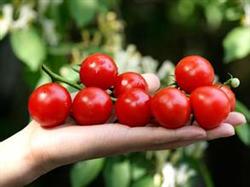
Key Technical Points for Early Spring Cultivation of Fresh-Eating Cherry Tomatoes
Cherry tomato, originally from Taiwan, China, is a type of cherry tomato grown mainly for fresh fruit consumption, commonly known as cherry tomato. For early spring cultivation, a 6 m span plastic greenhouse can be used, with seedlings raised in mid-November, transplanting in February of the following year, and fresh fruit harvest in early May, yielding 6000 kg of fresh fruit per mu. 1. Seed treatment....
-
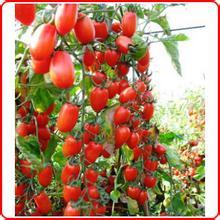
Detailed Guide to Cherry Tomato (Sainte Tomato) Cultivation Techniques
I. Cultivation Season: In the northern region, sowing is from mid-September to early January of the following year, with harvest from late December to mid-May of the following year; in the southern region, sowing is from late August to mid-December, with harvest from late November to April of the following year. II. Variety Selection: Choose varieties that are disease-resistant, heat-tolerant, high-quality, high-yielding, suitable for storage and transport, and have good marketability...
-
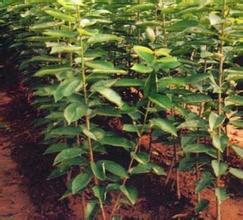
Methods and Technical Key Points for Cultivating Dwarf Sweet Cherry Nursery Stock
Cherry trees are tall and not suitable for growing in greenhouses; under natural production they need 5 to 6 years to bear fruit and only enter the full-bearing period after 10 years, resulting in a long payback period and high management costs. After years of exploration, fruit tree experts in China developed a method using Nanking cherry as the rootstock, FL-80 plum as the interstock, and grafting sweet cherry varieties onto it, ...
-
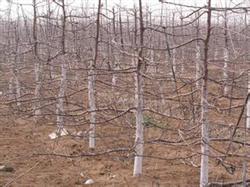
Detailed Explanation of Spring Planting Time and Methods for Cherry Trees
Currently, in protected cultivation of sweet cherries, the main tree forms are the natural open-center form, the improved central-leader form, the central-leader stratified form, and the slender spindle form. The natural open-center form has a trunk height of 30-40 cm, 3-5 main branches, each main branch with 6-7 side branches, and an angle of 30-45 degrees between the main branches and the trunk. Tree height is controlled at 1.5-1.8 m, ...
-
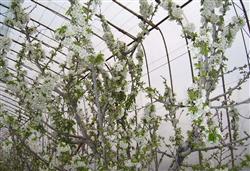
Key Techniques for Ratoon Cultivation of Cherry Tomatoes in Greenhouses
Ratoon cultivation of cherry tomatoes by lowering the vines and pressing soil averaged 4,653.2 kg per mu, an increase of 816.9 kg over conventional cultivation, a gain of more than 20%, while also extending the harvest period by more than 30 days. The main reason for the yield increase is that this cultivation method keeps the fruiting position of cherry tomatoes in the middle and upper part of the greenhouse, and by pressing soil to promote new roots, shortens...
-
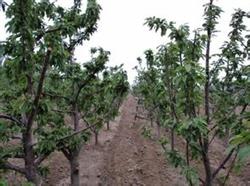
Key Points and Methods of Thinning Fruit on Sweet Cherry Trees
Technical management of sweet cherry trees after harvest is very important, because at this time the tree has gone through the earlier processes of leaf expansion, shoot growth, flowering, fruit set and fruit growth and development, consuming a large amount of the nutrients stored in the tree, and after fruit harvest it enters the nutrient accumulation stage of photosynthesis. Management during this period [affects] yield. Its techniques...
-
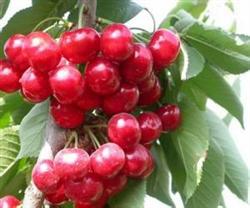
What are the key technical points for summer management of sweet cherry trees?
Summer is a critical period for the growth of sweet cherry trees, and pests and diseases are also very likely to occur, so fruit growers should pay attention to the summer management of sweet cherry trees. Doing the following points well will allow sweet cherry trees to smoothly pass through this growing season in summer. Pinching In summer, sweet cherry trees grow vigorously, and excessive leaves and branches have a certain impact on the fruiting of the following year...
条件筛选