How to manage and care for young sweet cherry trees in autumn and winter
I. Autumn management 1. Thin where dense, plant where sparse. Sweet cherry is a light-loving tree species. To ensure ventilation and light penetration throughout the tree, some overlapping main branches or "gatekeeper" branches close to the trunk that cannot fill the space on the main branches should be removed early; upright and lateral branches on the main branches that cannot fill the space should be appropriately headed back to promote new shoots and form new fruiting branch groups.
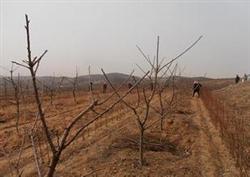
I. Autumn management
1. Thin where dense, plant where sparse. Sweet cherry is a light-loving tree species. To ensure ventilation and light penetration throughout the tree, some overlapping main branches or "gatekeeper" branches close to the trunk that cannot fill the space on the main branches should be removed early; upright and lateral branches on the main branches that cannot fill the space should be appropriately headed back to promote new shoots and form new fruiting branch groups.
2. Branch bending and pinching. For thick, vigorous branches that do not respond well to branch softening, carry out autumn branch bending; the effect is better than spring or summer bending, as it allows all buds to develop evenly and reduces upright branches on the upper side. To ensure the branches are well ripened, pinching the tips at both ends helps them overwinter safely.
3. Weed control and clearing. After rain, spray Gramoxone plus acetochlor-atrazine mixture to control weed growth. However, avoid spraying the chemicals onto the leaves, which would cause phytotoxicity.
4. Loosening the soil and fertilizing. For topdressing, apply 0.5 kg per tree of special fruit tree fertilizer plus potassium sulfate (4:1). With each pesticide spray, add 0.3% potassium dihydrogen phosphate to protect the late-season leaves. In late October, apply base fertilizer: after composting a mixture of human and animal manure plus cow dung (or chicken manure) plus sand, apply 50 kg per tree in trenches 1.5 m from the trunk. Irrigate an appropriate amount after each fertilization. After autumn fertilization and watering, once the soil is no longer sticky, plow the entire orchard once to improve soil permeability, which benefits root growth.
5. Pest and disease control. For autumn outbreaks of cotton leafworm, tent caterpillar and peach leafminer moth, spray 2.5% deltamethrin 3000x solution plus methamidophos 1000x solution.
II. Winter management
1. Early winter orchard cleanup. In early winter, promptly sweep up fallen leaves, collect diseased fruit, diseased branches, etc., and burn or deeply bury them in a centralized manner to eliminate overwintering sources of disease and reduce pest and disease occurrence the following year.
2. Whitewashing the trunk. Whitewashing the trunk can avoid or reduce freeze damage and sunscald, and can also eliminate pests and diseases overwintering in the trunk and bark cracks. Whitewash the trunk in early November. The whitewash ingredients are lime, salt, lime-sulfur mixture and water, in a ratio of 12:1:2:400
3. Building ridges and mulching with film. Low winter temperatures have a relatively large impact on sweet cherry; at -15°C, incompletely developed new shoots and weaker-growing young trees can suffer branch and trunk dieback. To ensure safe overwintering, for 1-year-old young trees, build a crescent-shaped ridge 50 cm to the north of the tree, with a ridge length of 1.5-2 m and a height of 0.5 m, and mulch with plastic film in front of the ridge, which serves to block wind, prevent cold, protect roots and prevent branch dieback. For 2-year-old young trees, build ridges and mulch with film for weaker-growing ones; for normally growing ones, no ridge is needed, only plastic film mulch. As the trees age, the crescent ridge and film mulch can be discontinued.
4. Water the freezing water well. Begin watering the freezing water in mid-November; water thoroughly and sufficiently to ensure water needs through winter and spring and prevent winter drought and freeze damage.
5. Mulch with grass around the tree disk. For young trees 3 years and older, to reduce the thickness of the frozen soil layer, delay the next year's budbreak period and prevent late frost damage, mulch with grass (wheat straw, rice straw, weeds, etc.) around the tree disk to a thickness of 10-15 cm. After mulching, press soil around the edge of the canopy to prevent wind from blowing it away.