Detailed Explanation of Key Management Techniques for Sweet Cherry After Harvest
The technical management of sweet cherry trees after fruit harvest is very important, because at this time the tree has gone through the earlier processes of leaf expansion, shoot growth, flowering, fruit set and fruit growth and development, consuming a large amount of nutrients stored in the tree, and after fruit harvest it enters the stage of photosynthetic nutrient accumulation. The quality of management during this period determines the yield. Its techniques...
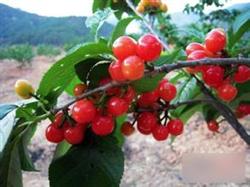
The technical management of sweet cherry trees after fruit harvest is very important, because at this time the tree has gone through the earlier processes of leaf expansion, shoot growth, flowering, fruit set and fruit growth and development, consuming a large amount of nutrients stored in the tree, and after fruit harvest it enters the stage of photosynthetic nutrient accumulation. The quality of management during this period determines the yield. Its techniques include summer pruning, thinning of excessively dense branches, chemical control, fertilization, disease and pest control and other main techniques.
1. Reasonable summer pruning and timely chemical control
1.1 Branch thinning After sweet cherry harvest, those excessively dense branches, thin and weak branches, whip-like branches and diseased and pest-damaged branches should be thinned out or cut back, so as to open up the light path, plump up the branches, reduce unnecessary consumption, and facilitate flower bud differentiation and branch maturation. This mainly targets trees that are too strong at the top and overly dense trees, and should be carried out from top to bottom. When thinning branches on trees with too many upper branches, do not do it all at once; it is better to do it in two rounds, 1-2 large branches each time, with an interval of 1 month; thin out the thin and weak branches behind the inner canopy and ineffective branches all at once; thin out the excessively dense shoots on the back all at once; for vigorous shoots produced by the extension branch, retain 1 extension shoot and 1-2 heavily pinched shoots, and thin out all the rest. The intuitive standard for a reasonable amount of branches and leaves is that when the sun shines directly on the canopy, the ground light-shadow coefficient is 30%-40%.
1.2 Shoot twisting and pinching Shoot twisting is to twist vigorous water sprouts and competing branches 180 degrees when they are semi-lignified, weakening their growth vigor, promoting flower bud differentiation, and transforming them into fruiting branch groups. Those that still grow vigorously after twisting should be lightly pinched continuously to inhibit growth. Lightly pinching the extension shoot can moderate tree vigor, but the secondary shoots produced after pinching should extend on a single axis.
Pinching: Pinching is removing the tender young part at the tip before the new shoot has lignified, which is called pinching. It is the most widely used method in summer pruning of sweet cherry. Pinching young trees can promote the sprouting of more branches and promote flower bud formation. Pinching trees in the initial fruiting stage and full fruiting stage can save nutrients, increase fruit set rate and fruit quality, etc. Pinching can be divided into light pinching, moderate pinching and heavy pinching.
Light pinching: Only remove about 5 cm from the top; after pinching, only 1-2 new shoots can sprout and extend. By controlling the growth amount at 10-20 cm and pinching lightly continuously, fruiting branches can be formed.
Moderate pinching: The purpose is to promote multiple branches; wait until the new shoot grows to more than 40 cm, then remove more than 15 cm, and generally 3-4 branches can sprout.
Heavy pinching: When the branch develops to more than 40 cm, retain about 15 cm and pinch, which can not only promote branching, but also make the lower buds sprout and grow into short branches or leaf cluster branches, forming small fruiting branch groups. The length of the branch retained by pinching should be determined according to the branch's growth space and the different uses of the branch. As a main skeletal branch, the retained branch is longer and should be more than 40 cm.
When the new shoot has grown longer while the retained branch is shorter, and the pinching site has already become semi-lignified, pruning with shears is needed, which is called shoot pruning. The effect of shoot pruning is stronger than pinching.
1.3 Branch bending Bend vigorous branches toward places with space to make up for the deficiency of main skeletal branches. It can accelerate shaping, delay the growth vigor of shoots, improve inner canopy lighting, and promote flower bud differentiation. In the vertical direction, each main branch should maintain 80-90 degrees; overlapping branches can be bent horizontally to a suitable direction; the vertical spacing between main branches in the same direction should reach 80-100 cm.
1.4 Timely chemical control When vigorous trees still cannot be inhibited from growing after taking various summer pruning measures, spray 200-300 times paclobutrazol or 180-200 times PBO in a timely manner for control, following the principle of spraying only vigorous shoots at intervals of half a month; generally, vigorous trees sprayed 2-3 times can achieve a good inhibitory effect.
2. Timely supplementary fertilization to increase tree reserves
Generally carried out from the end of May to early June, that is, completed within half a month after fruit harvest. This is because sweet cherry begins flower bud differentiation about 10 days after fruit harvest. The fertilizer type is best a quick-acting fertilizer containing multiple nutrients. Such as decomposed human manure and urine water, decomposed bean cake water, compound fertilizer and other organic and inorganic fertilizers containing multiple elements. The amount used depends on thermal energy and fertilizer type. For large fruiting trees, the general fertilizer amount is: decomposed human manure and urine water, about 70 kg per tree (or 100 kg decomposed pig manure water); if compound fertilizer is used, 1.5-2 kg per fruiting tree. Radial trench application can also be used.
2.1 Early application of base fertilizer The fertilization time should preferably be in early September. At this time the ground temperature is still high, the root system can absorb sufficient nutrients during the second growth peak, and trenching and root cutting will promote the growth of many fibrous roots; sufficient stored nutrients are a favorable guarantee for flower bud development, flowering and fruit set, and the first rapid fruit growth in the coming year.
2.2 Trench application of base fertilizer The trench depth is 40 cm and the width is 60-100 cm, carried out alternately between plants and between rows. With a target fruit yield of 2000 kg per 667 mu, apply 2500-3000 kg of decomposed pure chicken manure, duck manure and pig manure, mixed with 70-80 kg of high-quality potassium sulfate compound fertilizer, mix well with soil, then apply and water. For orchard plots lacking iron and zinc, apply 25 kg ferrous sulfate and 15 kg zinc sulfate per 667 mu, mixed evenly with organic fertilizer and fermented before application.
2.3 Foliar topdressing
Within one week after harvest, combined with disease and pest control, spray 0.3%-0.5% potassium dihydrogen phosphate + 0.5% urea 1-2 times to delay leaf fall and promote good flower bud development.
3. Disease and pest control
3.1 Mites and caterpillar pests The key period for mite control is before Grain in Ear, and avermectin-type drugs can be sprayed; for caterpillar types, pyrethroid pesticides can be sprayed. The peach leafhopper, also called floating sinker, is the main disease in the late growth period of cherry, and is most severe from July to September. Damaged peach leaves show yellow-white spots, and in severe cases the whole leaf withers and yellows, falls early, causing weakened tree vigor, affecting flower formation, etc., and reducing the next year's yield. Spray 20% fenvalerate EC 3000 times solution, 2.5% deltamethrin 2500-3000 times solution. In addition, fenpropathrin, imidacloprid, avermectin, chlorobenzuron, etc. can also be selected for control.
3.2 Bacterial shot hole disease, leaf spot disease, etc. The control period is mainly from leaf expansion to before the rainy season. Agricultural streptomycin 1000 times solution plus thiophanate-methyl or Daconil M-45 600 times solution can be sprayed alternately at intervals of 10-15 days, which both prevents disease and significantly improves fruit surface smoothness.
3.3 Gummosis For the gumming sites on the tree, promptly remove the gum after rain, apply quicklime powder or thiophanate-methyl paste, then wrap well with film. Check frequently and control as soon as it occurs.
4. Irrigation
After fruit harvest, flower bud differentiation is mainly carried out. To restore the tree and ensure normal flower bud differentiation, fertilization and irrigation should be carried out immediately after harvest, but the irrigation amount should be only enough to wet the surface soil; short-term drought after irrigation is beneficial to flower bud differentiation. During the sweet cherry growing season, irrigation must not be excessive; generally keep soil moisture at about 70% of field capacity.
5. Drought prevention and drainage
The root distribution layer of sweet cherry is relatively shallow, and it is afraid of both drought and waterlogging. In drought, water should be applied lightly and frequently to keep soil moisture stable. Sweet cherry trees are most afraid of water accumulation and waterlogging. After waterlogging damage, yellow leaves, wilting, dead branches, poor tree growth, reduced yield, and even dead trees appear, causing the orchard to be uneven and the unit yield to be low. It aggravates the occurrence of gummosis. Therefore, the sweet cherry orchard must have smooth drainage, ensuring that water is drained within 2 hours after rain, and artificial drainage should be used to ensure no water accumulation in the orchard. Before the rainy season, drainage ditches should be dug; plots with a history of waterlogging should adopt ridge cultivation, and soil can be added 5 cm each time to gradually form ridges.